Updated on February 18, 2026, by OpenEDR
What is phishing in cyber security, and why does it remain one of the most successful attack methods in the world? Despite advanced security tools, phishing attacks continue to trick employees, executives, and even security teams.
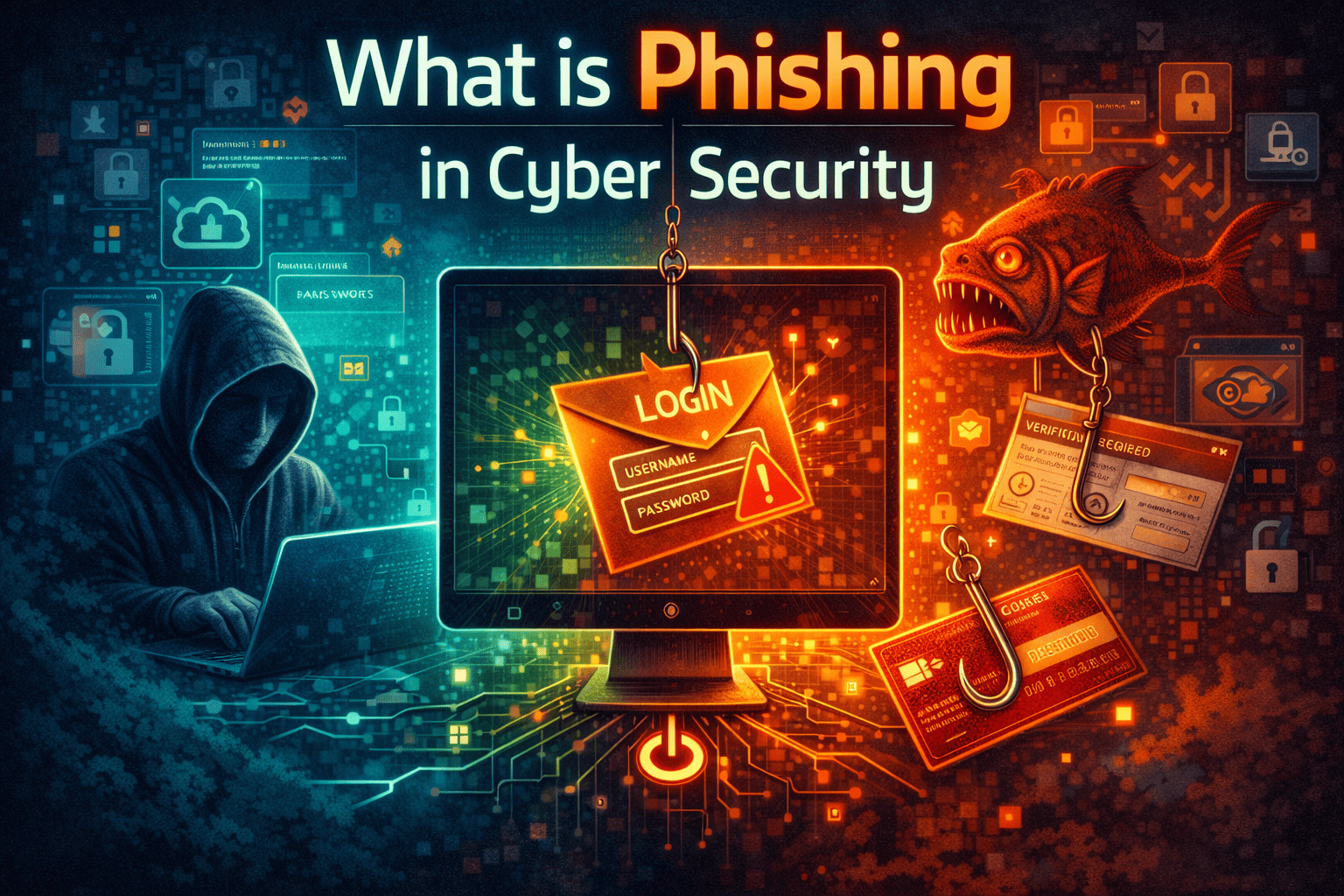
In simple terms, what is phishing in cyber security? It is a cyberattack where criminals impersonate trusted entities to steal sensitive information such as passwords, credit card details, or corporate credentials. These attacks often arrive through email, text messages, phone calls, or fake websites.
For IT managers, cybersecurity professionals, CEOs, and founders, understanding phishing is critical. One careless click can lead to data breaches, ransomware, or financial loss. Let’s break it down clearly and practically.
What Is Phishing in Cyber Security?
To fully understand what is phishing in cyber security, think of it as digital deception. Attackers pose as legitimate organizations—banks, cloud providers, colleagues, or executives—to manipulate victims into taking harmful actions.
These actions may include:
Clicking malicious links
Downloading infected attachments
Sharing login credentials
Approving fraudulent transactions
Phishing is not about breaking systems. It’s about tricking people.
That’s why phishing attacks are considered a form of social engineering. Instead of exploiting software vulnerabilities, attackers exploit human trust.
Why Phishing Is So Dangerous for Organizations
You might wonder why phishing remains effective despite widespread awareness. The answer lies in scale and psychology.
Cybercriminals send millions of phishing emails daily. Even if only a small percentage of recipients fall for the scam, attackers profit.
Here’s why phishing is especially dangerous:
It bypasses technical defenses.
It targets employees directly.
It can lead to credential theft.
It enables ransomware deployment.
It causes reputational damage.
When executives ask, “What is phishing in cyber security, and why should we care?” the answer is simple: it is often the first step in major cyberattacks.
How Phishing Attacks Work
Understanding the mechanics helps prevent them.
Step 1: Impersonation
Attackers create a message that appears legitimate. They may spoof:
A bank notification
A Microsoft 365 login alert
An HR request
A vendor invoice
A CEO urgent email
Step 2: Urgency or Fear
Phishing emails often include phrases like:
“Your account will be locked.”
“Immediate action required.”
“Payment overdue.”
“Confidential request.”
The goal is to trigger an emotional reaction.
Step 3: Malicious Action
Victims are directed to:
Fake login pages
Malware downloads
Fraudulent payment portals
Once the victim responds, attackers gain access.
That is the core answer to what is phishing in cyber security—it is manipulation combined with technical deception.
Common Types of Phishing Attacks
Phishing comes in many forms. Each targets different vulnerabilities.
1. Email Phishing
This is the most common method. Attackers send bulk emails pretending to be trusted companies.
Example:
A fake PayPal email asks you to confirm your password.
2. Spear Phishing
Spear phishing targets specific individuals. The message is personalized using real information.
Example:
An attacker emails a finance manager pretending to be the CFO.
3. Whaling
Whaling targets executives and high-level decision-makers.
These attacks often involve:
Fake legal notices
Fraudulent wire transfer requests
Business email compromise (BEC)
4. Smishing (SMS Phishing)
Attackers send malicious text messages with fake delivery notices or banking alerts.
5. Vishing (Voice Phishing)
Cybercriminals call victims pretending to be IT support or financial institutions.
6. Clone Phishing
Attackers replicate legitimate emails but replace links or attachments with malicious ones.
Each variation reinforces why understanding what is phishing in cyber security is essential for all industries.
Real-World Phishing Scenarios
Let’s look at practical examples that businesses face.
Compromised Microsoft 365 Accounts
An employee receives a fake login alert. They enter credentials into a phishing site. Attackers gain access to email accounts and launch internal phishing campaigns.
Fake Invoice Fraud
A finance department employee receives a spoofed invoice from a trusted vendor. The company transfers funds to a fraudulent account.
Ransomware via Phishing Attachment
An employee downloads a “shipping confirmation” attachment. Malware spreads across the network, encrypting critical systems.
These incidents often begin with one question: What is phishing in cyber security—and why wasn’t it detected?
Psychological Tactics Used in Phishing
Phishing succeeds because it exploits human behavior.
Authority
Attackers impersonate executives or government agencies.
Urgency
Victims are pressured to act immediately.
Fear
Threats of account suspension or penalties drive action.
Curiosity
Messages promise confidential information or rewards.
Recognizing these tactics reduces risk.
Warning Signs of Phishing Emails
Train your teams to spot red flags:
Misspelled domain names
Generic greetings (“Dear User”)
Suspicious links
Unexpected attachments
Grammar mistakes
Unusual sender addresses
Hover over links before clicking. Verify requests through official channels.
Awareness is a powerful defense.
How to Prevent Phishing Attacks
Now that we’ve answered what is phishing in cyber security, let’s focus on prevention.
1. Security Awareness Training
Employees are the first line of defense.
Conduct regular training on:
Recognizing phishing emails
Reporting suspicious messages
Safe browsing practices
2. Multi-Factor Authentication (MFA)
Even if credentials are stolen, MFA prevents unauthorized access.
Require MFA for:
Email accounts
VPN access
Cloud applications
Administrative accounts
3. Email Filtering and Anti-Phishing Tools
Advanced email security solutions can:
Detect malicious links
Block suspicious attachments
Analyze sender reputation
4. Endpoint Detection and Response (EDR)
Phishing often delivers malware.
EDR tools help:
Detect abnormal behavior
Contain threats
Automate remediation
5. Zero Trust Security Model
Never assume users or devices are safe.
Verify continuously. Limit privileges. Monitor access patterns.
Phishing and Compliance Risks
Organizations in regulated industries face additional consequences.
Phishing-related breaches can trigger:
GDPR penalties
HIPAA violations
PCI DSS fines
Legal liabilities
Understanding what is phishing in cyber security is not just about technical security—it’s about protecting your business reputation and compliance standing.
Industries Most Targeted by Phishing
Phishing affects every sector, but certain industries are prime targets.
Healthcare
Patient data is highly valuable.
Finance
Attackers seek direct financial gain.
Education
Universities store large amounts of personal data.
Technology Companies
Intellectual property and access credentials are lucrative.
Government Agencies
Sensitive information makes them attractive targets.
No industry is immune.
Building a Phishing-Resilient Organization
Strong security culture makes the difference.
Key Steps:
Conduct simulated phishing campaigns.
Monitor suspicious login attempts.
Implement strict access controls.
Use threat intelligence feeds.
Maintain regular software updates.
Security is ongoing—not one-time.
FAQ: What Is Phishing in Cyber Security?
1. What is phishing in cyber security in simple terms?
It is a cyberattack where criminals trick people into revealing sensitive information by pretending to be trusted sources.
2. How common are phishing attacks?
Phishing is one of the most common cyber threats worldwide and often serves as the entry point for ransomware and data breaches.
3. Can phishing bypass antivirus software?
Yes. Phishing primarily targets human behavior, not just software vulnerabilities.
4. How can businesses protect against phishing?
Use employee training, MFA, email security tools, and endpoint detection solutions.
5. What should I do if I click a phishing link?
Immediately disconnect from the network, report the incident to IT, and change your passwords.
Final Thoughts: Don’t Let Phishing Be Your Weakest Link
So, what is phishing in cyber security? It is deception at scale. It targets people, not just systems. And it continues to evolve.
Organizations that ignore phishing awareness put their data, finances, and reputation at risk. But those that invest in layered protection, strong endpoint security, and employee education significantly reduce their exposure.
Cyber threats are growing more sophisticated. Your defense must grow stronger.
👉 Take the next step in protecting your organization. Register now and strengthen your endpoint security with advanced threat detection:
https://openedr.platform.xcitium.com/register/
Stop phishing attacks before they become breaches.

 Loading...