
Updated on May 14, 2026, by OpenEDR
Businesses today rely on cloud platforms more than ever. From remote collaboration and file storage to enterprise applications and customer databases, cloud technology powers modern operations. But as organizations move sensitive data and workloads to the cloud, cyber threats are growing just as quickly.
So, what is cloud security, and why does it matter so much?
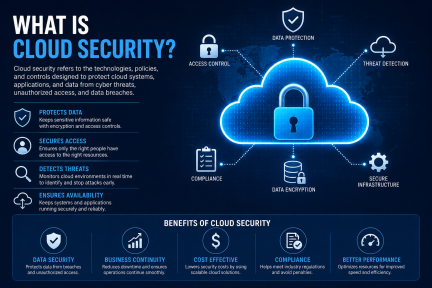
Cloud security refers to the technologies, policies, controls, and practices designed to protect cloud systems, applications, and data from cyberattacks, unauthorized access, and data breaches. Without strong cloud security, organizations risk losing sensitive information, facing compliance penalties, and suffering operational downtime.
For IT managers, cybersecurity teams, CEOs, and growing businesses, understanding cloud security is essential for protecting digital infrastructure and maintaining customer trust.
In this guide, we’ll explain what cloud security is, how it works, common cloud threats, key benefits, best practices, and why cloud security is critical for modern organizations.
What Is Cloud Security?
Cloud security is the process of protecting cloud-based systems, applications, networks, and data from cyber threats. It includes a combination of technologies, security policies, encryption, identity management, monitoring tools, and access controls.
Cloud security helps organizations secure:
- cloud storage
- SaaS applications
- virtual machines
- cloud databases
- cloud workloads
- remote access environments
Whether a company uses public, private, or hybrid cloud environments, cloud security ensures that sensitive data and systems remain protected from unauthorized access and attacks.
Modern cloud security strategies focus on:
- visibility
- threat detection
- identity security
- compliance
- continuous monitoring
- zero trust access control
Why Cloud Security Matters
Many businesses assume cloud providers handle all security responsibilities. However, cloud security operates under a shared responsibility model.
This means:
- cloud providers secure infrastructure
- organizations secure their data, applications, identities, and configurations
Without proper cloud security, organizations may face:
- ransomware attacks
- data breaches
- insider threats
- compliance violations
- account takeovers
- cloud misconfigurations
As remote work and cloud adoption continue growing, cloud environments have become major targets for cybercriminals.
How Cloud Security Works
Cloud security combines several technologies and strategies to protect cloud environments.
Identity and Access Management (IAM)
IAM controls who can access cloud resources and what actions they can perform.
Strong IAM policies include:
- multi-factor authentication (MFA)
- role-based access control (RBAC)
- least privilege access
- single sign-on (SSO)
Limiting access reduces the risk of unauthorized activity.
Data Encryption
Encryption protects sensitive data both:
- at rest
- in transit
Even if attackers intercept encrypted data, they cannot easily read or use it without decryption keys.
Encryption is essential for:
- financial records
- healthcare data
- customer information
- intellectual property
Threat Detection and Monitoring
Modern cloud security platforms continuously monitor environments for suspicious behavior.
These systems can identify:
- unusual login activity
- malware infections
- unauthorized access attempts
- abnormal network traffic
- data exfiltration attempts
Real-time monitoring helps organizations respond quickly to threats.
Endpoint Security Integration
Endpoints connected to cloud services can become attack entry points.
Cloud security solutions often integrate with:
- endpoint detection and response (EDR)
- extended detection and response (XDR)
- mobile device management (MDM)
to strengthen overall visibility and protection.
Types of Cloud Security
Different organizations require different cloud security approaches.
Public Cloud Security
Public cloud security protects environments hosted by third-party providers such as:
- AWS
- Microsoft Azure
- Google Cloud
Organizations must secure workloads, identities, and configurations.
Private Cloud Security
Private clouds are dedicated environments used by a single organization.
Private cloud security focuses on:
- internal access controls
- network segmentation
- compliance management
Hybrid Cloud Security
Hybrid cloud environments combine public and private cloud systems.
Security teams must manage:
- data movement
- visibility
- policy consistency
- access control
across multiple environments.
Multi-Cloud Security
Many businesses use multiple cloud providers simultaneously.
Multi-cloud security helps organizations:
- centralize monitoring
- enforce security policies
- reduce visibility gaps
across different platforms.
Common Cloud Security Threats
Understanding cloud threats is essential for building stronger defenses.
Cloud Misconfigurations
Misconfigured cloud settings are among the most common causes of cloud breaches.
Examples include:
- publicly exposed storage buckets
- weak access permissions
- disabled encryption
- unsecured APIs
Even small configuration mistakes can expose sensitive data.
Data Breaches
Attackers target cloud environments to steal:
- customer records
- financial data
- credentials
- intellectual property
Weak authentication and poor access management increase breach risks.
Account Takeovers
Cybercriminals often use phishing or stolen credentials to compromise cloud accounts.
Once attackers gain access, they may:
- move laterally
- steal data
- deploy ransomware
- disrupt operations
Insider Threats
Employees or contractors with excessive access may intentionally or accidentally expose sensitive data.
Strong identity controls help reduce insider threat risks.
Malware and Ransomware
Cloud-connected systems remain vulnerable to:
- ransomware attacks
- malware infections
- fileless attacks
Compromised endpoints can spread threats into cloud environments.
Benefits of Cloud Security
Strong cloud security offers both operational and business advantages.
Better Data Protection
Cloud security safeguards sensitive information from unauthorized access and cyberattacks.
This helps organizations maintain customer trust and protect valuable business assets.
Improved Compliance
Many industries must comply with regulations such as:
- GDPR
- HIPAA
- PCI DSS
- SOC 2
Cloud security tools help organizations maintain compliance through:
- encryption
- access controls
- audit logging
- monitoring
Increased Visibility
Modern cloud security platforms provide visibility into:
- user activity
- cloud workloads
- application behavior
- endpoint connections
Visibility is essential for identifying suspicious activity early.
Faster Threat Detection
AI-driven cloud security solutions can detect threats in real time using:
- behavioral analytics
- anomaly detection
- threat intelligence
Faster detection reduces damage from attacks.
Cloud Security Best Practices
Organizations should follow several best practices to improve cloud security.
Enable Multi-Factor Authentication
MFA adds an extra layer of protection beyond passwords.
This significantly reduces account takeover risks.
Use Least Privilege Access
Employees should only have access to the resources necessary for their roles.
Reducing excessive permissions limits attack opportunities.
Encrypt Sensitive Data
Encryption protects data during storage and transmission.
Organizations should encrypt:
- customer data
- financial records
- backups
- cloud databases
Monitor Cloud Activity Continuously
Continuous monitoring helps identify:
- suspicious logins
- unauthorized file access
- unusual behavior
before attacks escalate.
Patch and Update Systems Regularly
Outdated software often contains exploitable vulnerabilities.
Organizations should:
- apply security updates promptly
- monitor cloud configurations
- remove unused services
Train Employees on Cloud Security
Human error remains a major cybersecurity risk.
Security awareness training helps employees recognize:
- phishing attacks
- credential theft attempts
- suspicious activity
Cloud Security vs Cybersecurity
| Feature | Cloud Security | Cybersecurity |
|---|---|---|
| Focus | Protect cloud environments | Protect all digital systems |
| Main Threats | Cloud breaches, misconfigurations | Malware, phishing, ransomware |
| Coverage | Cloud workloads and data | Networks, devices, applications |
| Access Control | Cloud IAM | General identity security |
| Monitoring | Cloud-specific activity | Enterprise-wide activity |
Cloud security is a specialized area within broader cybersecurity strategies.
The Role of AI in Cloud Security
Artificial intelligence is becoming increasingly important for cloud security.
AI-powered cloud security tools help:
- detect anomalies
- automate threat response
- reduce false positives
- identify zero-day threats
- improve cloud visibility
Machine learning models can analyze massive amounts of data faster than human analysts.
This improves:
- threat detection accuracy
- incident response speed
- operational efficiency
AI-driven cloud security is especially valuable for large enterprises managing complex cloud environments.
Why Endpoint Security Matters for Cloud Protection
Cloud environments are only as secure as the devices connected to them.
Compromised endpoints can:
- steal cloud credentials
- spread ransomware
- bypass cloud defenses
- exfiltrate sensitive data
Modern organizations should combine cloud security with:
- endpoint detection and response (EDR)
- zero trust architecture
- behavioral analytics
- continuous monitoring
to create stronger security ecosystems.
The Future of Cloud Security
Cloud security continues evolving as businesses adopt:
- remote work
- AI-powered applications
- IoT devices
- hybrid infrastructures
Emerging trends include:
- zero trust cloud security
- AI-driven threat detection
- cloud-native security platforms
- automated incident response
- secure access service edge (SASE)
Organizations that proactively strengthen cloud security today will be better prepared for tomorrow’s evolving cyber threats.
Conclusion
As businesses continue moving operations to the cloud, cybersecurity risks are becoming more complex. Understanding what is cloud security is essential for protecting data, applications, cloud workloads, and remote users from modern cyber threats.
Cloud security combines identity protection, encryption, monitoring, endpoint visibility, and threat detection to secure digital environments and reduce operational risk.
Organizations that invest in strong cloud security strategies will improve resilience, strengthen compliance, and better defend against ransomware, phishing, insider threats, and cloud-based attacks.
Ready to strengthen endpoint visibility and cloud protection?
👉 Get started with Xcitium OpenEDR today:
https://openedr.platform.xcitium.com/register/
Frequently Asked Questions
What is cloud security?
Cloud security refers to technologies and practices used to protect cloud systems, applications, and data from cyber threats and unauthorized access.
Why is cloud security important?
Cloud security helps prevent data breaches, ransomware attacks, account takeovers, and compliance violations in cloud environments.
What are the biggest cloud security risks?
Common cloud security risks include misconfigurations, phishing attacks, insider threats, malware, ransomware, and weak access controls.
How does cloud security work?
Cloud security uses encryption, identity management, monitoring, threat detection, and endpoint protection to secure cloud environments.
What is the difference between cloud security and cybersecurity?
Cloud security focuses specifically on protecting cloud-based systems and data, while cybersecurity covers all digital systems, devices, and networks.

 Loading...