Updated on March 30, 2026, by OpenEDR
In today’s data-driven world, web scraping tools have become essential for businesses looking to extract valuable insights from the internet. Whether you’re tracking competitors, monitoring pricing, or gathering cybersecurity intelligence, these tools help automate data collection at scale.
But with growing concerns around data privacy and cyber threats, choosing the right web scraping tools is more important than ever. How do you balance efficiency with security? And which tools are best suited for enterprise environments?
This guide breaks it all down—helping IT leaders, cybersecurity professionals, and business decision-makers choose the right solution.
What Are Web Scraping Tools?
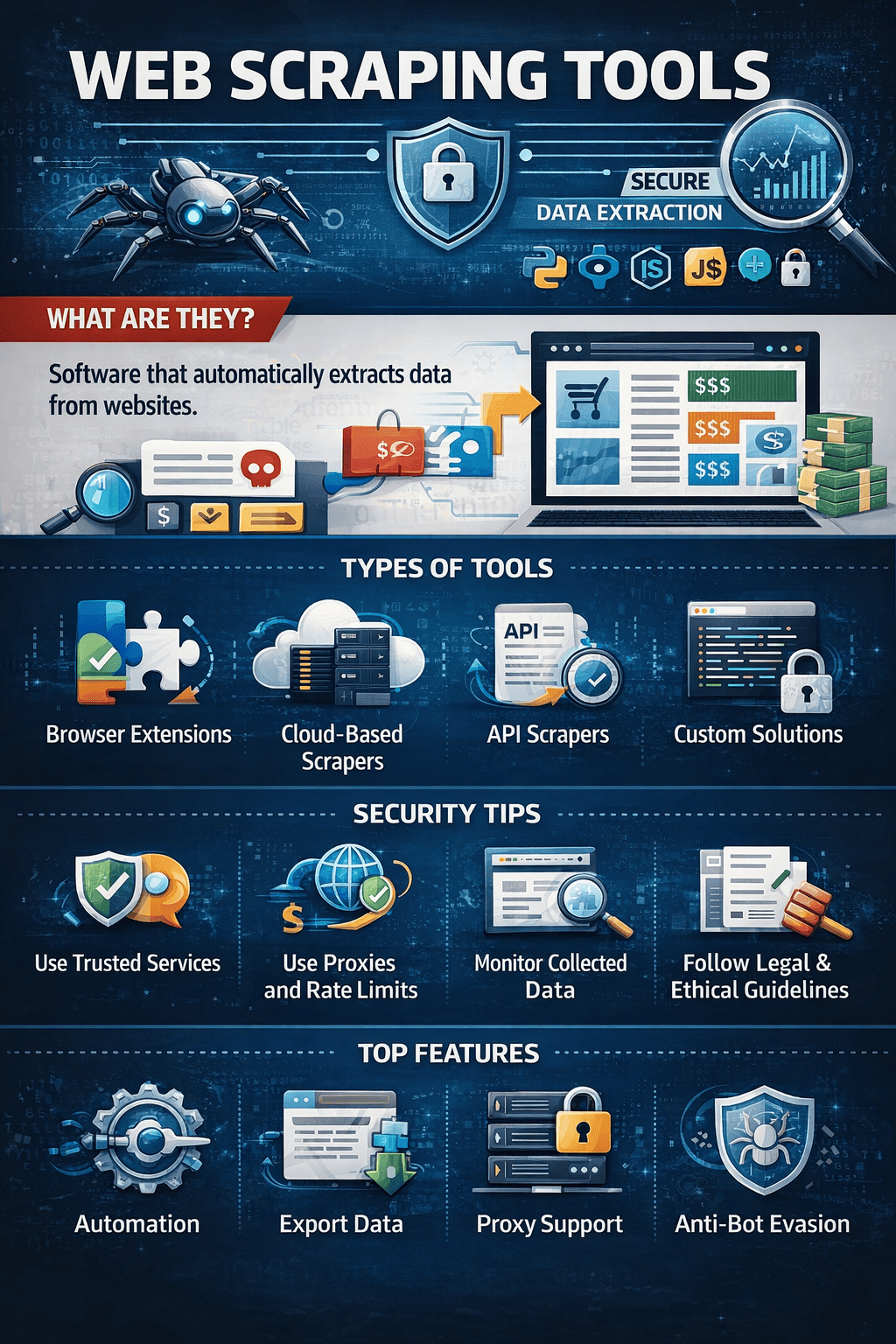
Web scraping tools are software solutions that automatically extract data from websites. Instead of manually copying information, these tools collect structured data quickly and efficiently.
Common Data Extracted:
- Product prices
- Customer reviews
- Contact information
- Market trends
- Threat intelligence data
For cybersecurity teams, web scraping tools are also used to monitor:
- Dark web activity
- Phishing sites
- Malware indicators
How Web Scraping Tools Work
Most web scraping tools follow a simple process:
- Send a request to a website
- Download the HTML content
- Parse the data using predefined rules
- Extract and store information in structured format
Some advanced tools use:
- APIs
- Headless browsers
- AI-based data extraction
Types of Web Scraping Tools
Not all web scraping tools are created equal. Here are the main categories:
1. Browser-Based Tools
- Easy to use
- No coding required
- Best for small-scale scraping
2. Cloud-Based Scrapers
- Scalable and fast
- Handle large datasets
- Ideal for enterprises
3. API-Based Tools
- Structured data extraction
- Reliable and efficient
- Limited to API availability
4. Custom-Built Scrapers
- Highly flexible
- Requires development expertise
- Best for complex use cases
Best Web Scraping Tools in 2026
Here are some of the most widely used web scraping tools:
1. Scrapy
- Open-source framework
- Highly customizable
- Ideal for developers
2. Octoparse
- No-code interface
- Great for beginners
- Cloud-based automation
3. ParseHub
- Visual data extraction
- Supports dynamic websites
- Easy to scale
4. Bright Data
- Enterprise-grade solution
- Large proxy network
- High reliability
5. Zyte (formerly Scrapinghub)
- Smart proxy management
- AI-driven extraction
- Strong compliance features
Security Risks of Web Scraping Tools
While powerful, web scraping tools come with risks—especially for enterprises.
Key Risks:
- Data leaks
- Exposure to malicious scripts
- Legal compliance issues
- IP blocking and bans
Cybersecurity teams must ensure:
- Secure connections
- Data encryption
- Threat monitoring
Best Practices for Secure Web Scraping
To safely use web scraping tools, follow these best practices:
1. Use Trusted Tools
Avoid unknown or unverified scraping platforms.
2. Implement Rate Limiting
Prevent detection and blocking.
3. Use Proxy Networks
Protect your IP address and maintain anonymity.
4. Monitor for Threats
Scan scraped data for malware or suspicious content.
5. Ensure Legal Compliance
Follow website terms and data regulations (GDPR, etc.).
Web Scraping Tools vs Manual Data Collection
| Feature | Web Scraping Tools | Manual Collection |
|---|---|---|
| Speed | Fast | Slow |
| Accuracy | High | Error-prone |
| Scalability | Excellent | Limited |
| Cost | Efficient long-term | Labor-intensive |
Use Cases Across Industries
Business & Market Intelligence
- Competitor analysis
- Price monitoring
Cybersecurity
- Threat intelligence
- Dark web monitoring
E-commerce
- Product tracking
- Customer sentiment analysis
Finance
- Market trend analysis
- Risk assessment
How to Choose the Right Web Scraping Tools
When selecting web scraping tools, consider:
- Ease of use
- Scalability
- Security features
- Compliance support
- Integration capabilities
👉 Enterprises should prioritize security-first solutions.
Future Trends in Web Scraping Tools
The future of web scraping tools is evolving rapidly:
- AI-powered data extraction
- Real-time scraping
- Enhanced anti-bot detection bypass
- Stronger compliance frameworks
Organizations that adopt advanced tools early gain a competitive edge.
Key Takeaways
- Web scraping tools automate data extraction efficiently
- Security and compliance are critical for enterprise use
- Choosing the right tool depends on scale and use case
- Advanced tools offer better protection and insights
FAQ Section
1. What are web scraping tools used for?
Web scraping tools are used to collect data from websites automatically for analysis, research, and monitoring purposes.
2. Are web scraping tools legal?
Yes, but legality depends on how the data is collected and used. Always follow website policies and data regulations.
3. Can web scraping tools be used for cybersecurity?
Yes, they are widely used for threat intelligence, phishing detection, and monitoring malicious activity online.
4. Do web scraping tools require coding?
Some tools require coding, while others offer no-code interfaces for beginners.
5. What is the best web scraping tool?
The best tool depends on your needs. Enterprises often prefer scalable and secure solutions like Bright Data or Zyte.
Conclusion
In a world driven by data, web scraping tools are no longer optional—they are essential. But with great power comes responsibility. Businesses must balance efficiency with security to avoid risks and maximize value.
If you’re serious about protecting your organization while leveraging data intelligence, it’s time to adopt a secure, enterprise-grade approach.
👉 Get started with advanced security and threat protection today:
https://openedr.platform.xcitium.com/register/

 Loading...