Updated on November 22, 2025, by OpenEDR
Did you know that more than 60% of identity theft cases start with exposure of a Social Security Number (SSN)? The social security format, though simple in appearance, plays a massive role in identity verification, credit processing, employment checks, and financial security. Unfortunately, it is also one of the most frequently targeted identifiers in cybercrime.
In today’s digital-first world—where cyberattacks are more sophisticated than ever—understanding the structure, purpose, and vulnerabilities of the social security format is critical for any business handling sensitive customer or employee data.
This guide breaks down everything cybersecurity teams, IT managers, online security professionals, and executives need to know to ensure proper SSN protection in 2025 and beyond.
What Is the Social Security Format? A Quick Overview
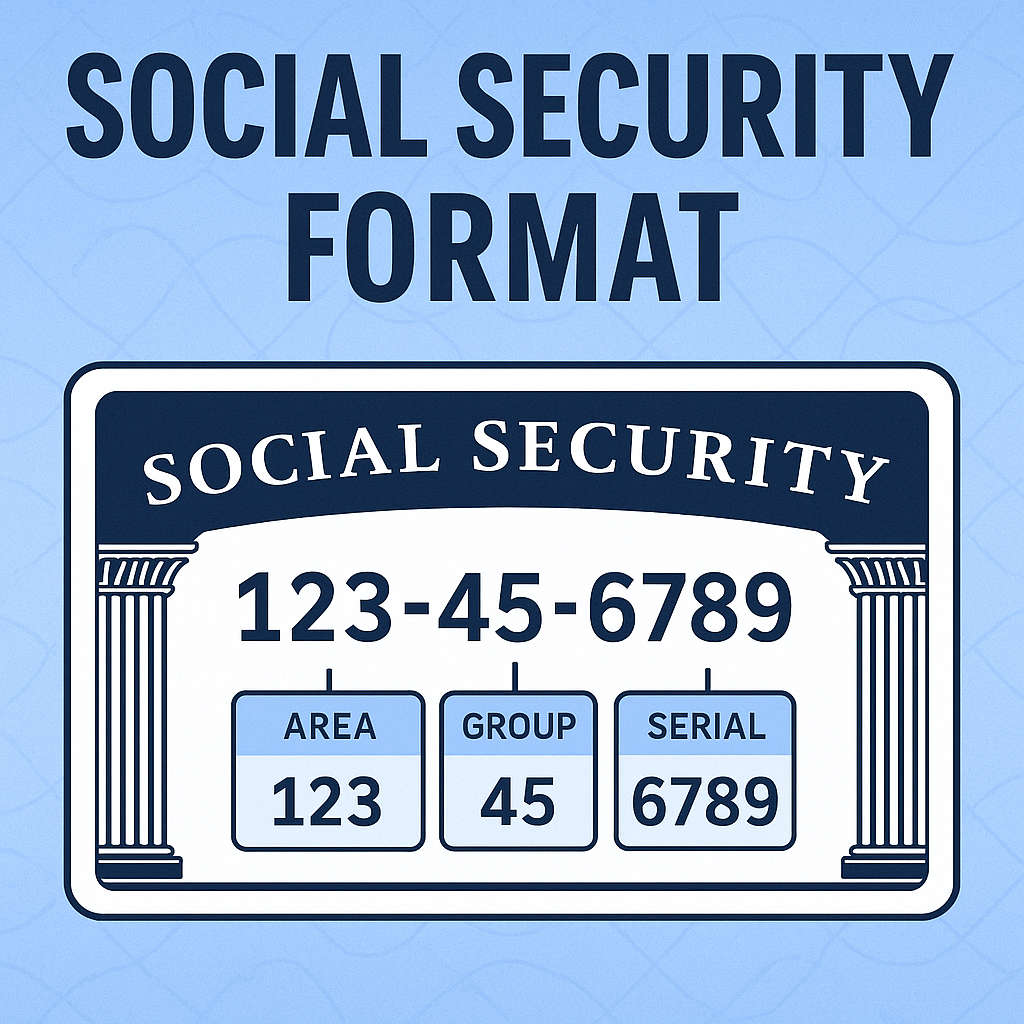
The social security format refers to the standard structure of the nine-digit U.S. Social Security Number:
AAA-GG-SSSS
Each segment has a specific meaning:
AAA – Area Number
GG – Group Number
SSSS – Serial Number
Even though the SSA no longer uses geographic location identifiers (post-2011 randomization), the original structure remains in place.
Understanding the makeup of the SSN is essential for cybersecurity processes such as identity management, fraud detection, and compliance monitoring.
Why the Social Security Format Still Matters in 2026
Despite decades of cybersecurity evolution, the SSN remains the primary identifier for:
Tax filings
Credit applications
Banking and loans
Employment background checks
Healthcare identification
Government benefits
Because of this heavy reliance, cybercriminals target SSNs aggressively.
A compromised SSN allows attackers to conduct:
Synthetic identity fraud
Account takeovers
Medical identity theft
Employment-based fraud
Loan application fraud
That’s why understanding the social security format is more than informational—it’s crucial for reducing organizational risk.
Breaking Down the Social Security Format (AAA-GG-SSSS)
1. Area Number (AAA)
Originally tied to geographic regions, this part indicated where the number was issued.
After 2011, randomization eliminated predictable geographic patterns, making it harder for criminals to guess valid SSNs.
Security Impact
Reduces automated SSN generation attacks
Makes synthetic identity creation slightly more difficult
2. Group Number (GG)
This number historically tracked issuance batches.
Even with randomization, it still forms the central part of the social security format.
Security Impact
Adds another layer of uniqueness
Helps distinguish between similar area numbers
3. Serial Number (SSSS)
The last four digits are the most commonly exposed part of the SSN due to poor privacy practices.
Security Impact
Most valuable to attackers
Commonly used as authentication data (bad practice)
Common Misconceptions About the Social Security Format
Myth #1: The SSN reveals personal information.
Not anymore. Post-2011 randomization ensures no data (location, group) can be inferred.
Myth #2: The last four digits are safe to share.
In modern cybercrime, even partial SSNs are highly valuable.
Myth #3: SSNs are still issued sequentially.
False—randomization stopped sequential patterns.
Why Hackers Target the Social Security Format
Because a single SSN can unlock:
Bank accounts
Tax refunds
Credit lines
Employment records
Government benefits
Unlike passwords, SSNs:
Cannot be changed easily
Are tied to a person for life
Are used across dozens of essential systems
This makes the social security format one of the highest-value targets in cybercrime.
Security Risks Associated With SSN Exposure
1. Synthetic Identity Fraud
Criminals combine real SSNs with fabricated personal details.
2. Tax Refund Fraud
Attackers file fraudulent returns before the real taxpayer does.
3. Employment Fraud
Stolen SSNs are used for unauthorized work to avoid background checks.
4. Medical Identity Theft
Leads to false medical records and fraudulent claims.
5. Credit Fraud
Using SSNs for loans, credit lines, and purchases.
How Cybersecurity Teams Should Handle Social Security Numbers
1. Never Store SSNs in Plain Text
Use encryption at rest and in transit.
2. Use Tokenization for Sensitive Records
Replace SSNs with secure tokens where possible.
3. Minimize Data Retention
If your business doesn’t need SSNs, delete them.
4. Implement Zero-Trust Access Controls
No employee should have unlimited access to SSNs.
5. Enable Real-Time Threat Detection
Unknown malware and fileless attacks often target sensitive identifiers.
Compliance Requirements for SSN Handling
Industries that store SSNs must meet strict compliance guidelines:
• HIPAA (Healthcare)
Requires strict protection of patient identifiers.
• GLBA (Financial Services)
Requires protection of consumer financial data.
• FISMA (Federal Contractors)
Mandates secure handling of identity data.
• GDPR/CCPA
Regulates exposure of personal data (including SSNs of citizens).
Failure to follow compliance may result in:
Heavy fines
Legal liabilities
Reputational damage
Customer trust loss
Best Practices for IT & Cybersecurity Teams (2026)
1. Use Strong Encryption Algorithms
AES-256 or higher.
2. Deploy Zero-Trust Architecture
Every access request must be authenticated and continuously evaluated.
3. Replace SSN-Based Authentication
Stop using SSNs for:
Verification
Password recovery
Identity confirmation
4. Enable Endpoint Threat Protection
Prevent malware that targets stored identifiers.
5. Use AI-Driven Threat Monitoring
Detect unusual access patterns automatically.
How to Verify a Social Security Format Safely
Without exposing real SSNs, teams can validate the format by checking:
Length: 9 digits
Format: AAA-GG-SSSS
No banned patterns (e.g., 000, 666, 900-999 area numbers)
Never use live SSNs for testing.
Use SSA-issued test SSNs instead.
Why Organizations Need Stronger SSN Protection in 2026
Cybercriminals aren’t just guessing numbers—they’re using:
AI-driven brute force systems
Large-scale credential dumps
Dark web databases
SSN pattern prediction models
As threats evolve, organizations must shift from reactive to proactive protection.
Actionable Cybersecurity Tips to Protect SSNs
1. Implement Endpoint Containment Technology
Instantly isolates suspicious activities.
2. Use Behavioral Detection Instead of Signature-Based Tools
Stops malware even before signatures exist.
3. Regular Security Audits
Identify and eliminate unauthorized SSN storage.
4. Mask SSNs Wherever Possible
Show only the last two digits internally.
5. Train Employees Frequently
SSN handling errors are a top cause of breaches.
Future of the Social Security Format
Experts predict that SSNs may eventually be replaced or supplemented by:
Digital identity wallets
Biometric verification
Cryptographic identifiers
Hardware-backed identity systems
But until then, the social security format remains the core of U.S. identity infrastructure.
Frequently Asked Questions (FAQ)
1. What is the current social security format?
It is a nine-digit number structured as AAA-GG-SSSS.
2. Can two people have the same SSN?
No, each number is unique.
3. Is the SSN based on geographic location?
No. Since 2011, SSNs are randomized.
4. Why do hackers target SSNs?
They are the most powerful form of identity data in the U.S.
5. How can businesses protect stored SSNs?
Use encryption, zero-trust architecture, endpoint security, and strong access controls.
Final Thoughts: Protecting SSNs Starts with Understanding the Format
As cyber threats rise, understanding the social security format is essential for strengthening your organization’s identity protection, compliance posture, and data security strategy. Your cybersecurity risk decreases significantly when you combine knowledge with proactive defense tools.
🚀 Take Your Endpoint Security to the Next Level
Protect your business from identity-based cyber threats with Xcitium’s Zero-Trust endpoint security.
👉 Register here: https://openedr.platform.xcitium.com/register/

 Loading...