Updated on February 27, 2026, by OpenEDR
Cybersecurity teams are overwhelmed. Alerts flood dashboards every day, yet skilled analysts remain in short supply. That is where SOAR security makes a difference. Security Orchestration, Automation, and Response (SOAR) platforms help organizations streamline incident handling, reduce response times, and improve operational efficiency.
If you are an IT manager, cybersecurity professional, CEO, or founder, understanding SOAR security is essential. Traditional security tools generate alerts, but they often rely on manual processes to investigate and respond. SOAR security bridges this gap by automating workflows and integrating multiple security systems into one coordinated defense strategy.
In this comprehensive guide, we will explore how SOAR security works, its key benefits, how it integrates with SIEM and SOC operations, and how to implement it effectively in modern enterprises.
What Is SOAR Security?
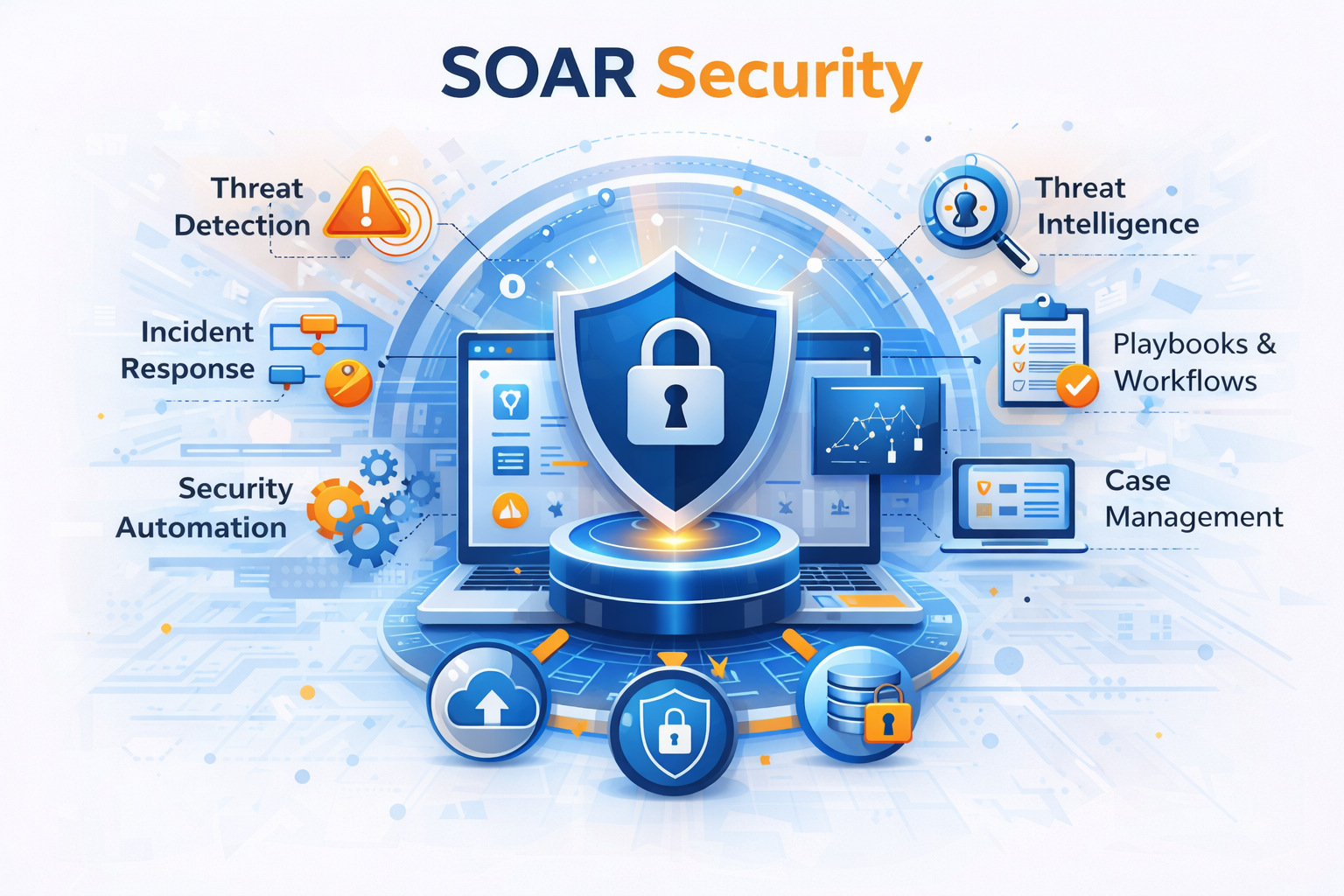
SOAR security stands for Security Orchestration, Automation, and Response. It is a cybersecurity platform that combines automation, threat intelligence, and incident management to improve how organizations handle security events.
Unlike standalone detection tools, SOAR security focuses on response and coordination.
A SOAR platform typically:
Collects alerts from multiple security tools
Automates investigation processes
Executes predefined response actions
Tracks incidents through resolution
By reducing manual tasks, SOAR security increases speed and accuracy.
Why Organizations Need SOAR Security
Modern security environments are complex. Companies deploy:
SIEM systems
Endpoint detection and response (EDR) tools
Firewalls
Cloud security platforms
Identity management solutions
Each tool generates alerts. Without coordination, security teams face alert fatigue and delayed responses.
SOAR security addresses these challenges by automating workflows and connecting tools into a unified system.
Core Components of SOAR Security
To understand SOAR security fully, break it into three components.
1. Security Orchestration
Orchestration connects multiple security tools.
It allows systems to share data and execute coordinated actions.
For example:
SIEM detects suspicious login activity
SOAR automatically checks endpoint logs
Firewall rules update if risk is confirmed
This integration improves visibility.
2. Security Automation
Automation eliminates repetitive manual tasks.
Common automated actions include:
Enriching threat intelligence data
Blocking malicious IP addresses
Isolating infected endpoints
Resetting compromised credentials
Automation speeds response time significantly.
3. Incident Response Management
SOAR security provides structured incident workflows.
It supports:
Ticket creation
Case management
Evidence tracking
Reporting
This ensures consistent response procedures.
SOAR Security vs. SIEM: What’s the Difference?
Many organizations confuse SOAR security with SIEM.
SIEM
Collects and analyzes logs
Detects suspicious events
Generates alerts
SOAR Security
Automates investigation
Executes response actions
Manages incident workflows
SIEM detects. SOAR security responds.
Together, they create a strong security operations ecosystem.
Benefits of Implementing SOAR Security
Reduced Alert Fatigue
Automation filters low-risk alerts, allowing analysts to focus on critical threats.
Faster Incident Response
Predefined playbooks accelerate detection-to-response cycles.
Improved Operational Efficiency
Teams spend less time on repetitive tasks.
Standardized Workflows
SOAR security enforces consistent response procedures across teams.
Enhanced Compliance Reporting
Automated documentation simplifies regulatory reporting.
How SOAR Security Supports SOC Teams
Security Operations Centers (SOCs) rely on visibility and rapid response.
SOAR security strengthens SOC performance by:
Automating triage processes
Integrating threat intelligence feeds
Reducing mean time to detect (MTTD)
Lowering mean time to respond (MTTR)
Automation allows analysts to focus on complex investigations.
SOAR Security in Cloud and Hybrid Environments
Modern businesses operate across:
On-prem networks
Multi-cloud platforms
Remote endpoints
SOAR security platforms must support cloud-native integrations.
This includes:
Monitoring API activity
Automating cloud misconfiguration responses
Managing identity-based threats
Cloud integration is essential for complete coverage.
Best Practices for Deploying SOAR Security
1. Define Clear Objectives
Identify whether the focus is:
Incident response automation
Compliance reporting
Threat intelligence integration
Workflow optimization
2. Start with High-Impact Use Cases
Begin automation with:
Phishing response
Malware containment
Privileged account monitoring
These deliver quick wins.
3. Build Effective Playbooks
Playbooks define automated workflows.
Each playbook should include:
Trigger conditions
Investigation steps
Response actions
Escalation criteria
Well-designed playbooks ensure reliability.
4. Train Security Teams
Automation complements—not replaces—human expertise.
Teams must understand how to manage and adjust automated processes.
Challenges of SOAR Security Implementation
Integration Complexity
Connecting multiple tools requires planning.
Over-Automation Risks
Automating without oversight can create unintended consequences.
Resource Investment
Initial setup may require configuration time and expertise.
Proper governance mitigates these challenges.
Industry Applications of SOAR Security
Financial Services
Automate fraud detection and suspicious transaction investigation.
Healthcare
Respond quickly to patient data access anomalies.
Retail and E-Commerce
Automate phishing and account takeover response.
Technology Companies
Secure DevOps pipelines and cloud workloads.
The Future of SOAR Security
SOAR security continues evolving.
Emerging trends include:
AI-powered decision support
Predictive threat analytics
Deeper integration with Zero Trust frameworks
Automated compliance validation
Automation will become central to cybersecurity strategy.
Frequently Asked Questions
1. What is SOAR security?
SOAR security is a platform that automates and orchestrates security incident response workflows.
2. How does SOAR security differ from SIEM?
SIEM detects threats, while SOAR automates investigation and response.
3. Is SOAR security suitable for small businesses?
Yes, especially for organizations seeking efficiency with limited staff.
4. Does SOAR replace security analysts?
No. It enhances productivity by automating repetitive tasks.
5. How does SOAR improve compliance?
It automates documentation, reporting, and standardized workflows.
Final Thoughts
Cyber threats are increasing in speed and sophistication. Manual processes alone cannot keep up. SOAR security empowers organizations to automate responses, reduce alert fatigue, and improve incident management.
For IT leaders and executives, adopting SOAR security means strengthening resilience while optimizing operational efficiency. It transforms reactive security into proactive defense.
If you’re ready to elevate your cybersecurity strategy and automate your response capabilities, take the next step today.
👉 Register now and enhance your cybersecurity expertise:
https://openedr.platform.xcitium.com/register/
Automate smarter. Respond faster. Secure your organization with confidence.

 Loading...