Updated on December 15, 2025, by OpenEDR
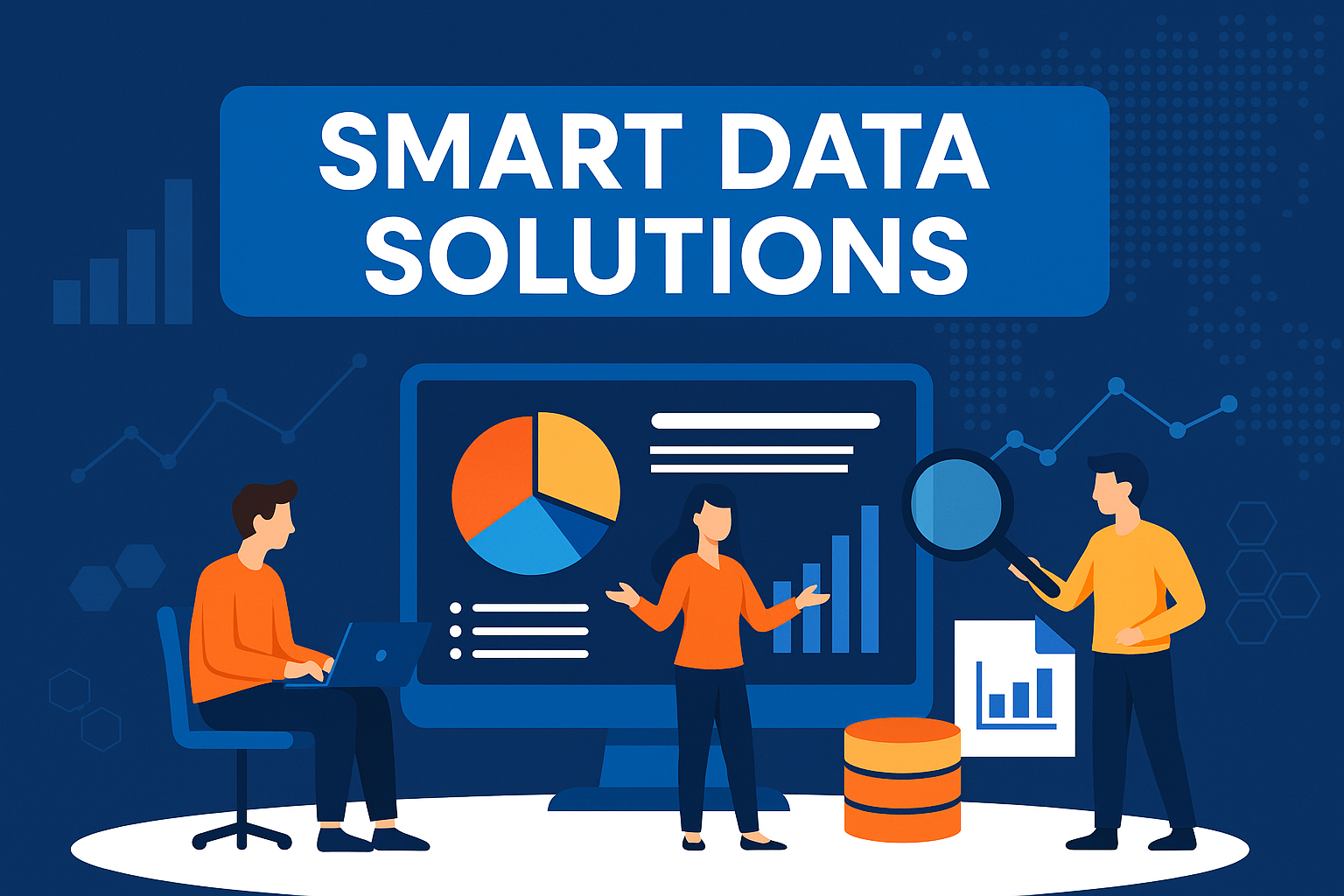
Data is everywhere—but value is not. Organizations collect massive volumes of data every day, yet many struggle to turn it into meaningful insights. This is where smart data solutions come into play. Instead of focusing on raw data accumulation, smart data solutions help businesses transform information into actionable, secure, and strategic intelligence.
For IT managers, cybersecurity professionals, and business leaders, smart data solutions are no longer optional. They are essential for improving decision-making, strengthening security, optimizing operations, and staying competitive in an increasingly data-driven world.
In this guide, we’ll explore what smart data solutions are, how they work, their benefits, key use cases, security considerations, and best practices for implementation.
What Are Smart Data Solutions?
Smart data solutions refer to technologies, platforms, and processes that transform raw data into useful, contextual, and actionable insights. Unlike traditional data systems that simply store or report information, smart data solutions apply intelligence—such as analytics, automation, and machine learning—to make data meaningful.
Smart data solutions focus on:
Data quality and relevance
Real-time or near-real-time insights
Context-aware analysis
Secure and compliant data usage
In short, they turn “too much data” into “the right data at the right time.”
Why Smart Data Solutions Matter More Than Ever
Understanding the value of smart data solutions starts with recognizing today’s challenges.
1. Data Volume Is Exploding
Organizations generate data from:
Endpoints and networks
Cloud applications
IoT and connected devices
Security tools and logs
Without smart processing, this data becomes noise.
2. Faster Decisions Are Required
Business and security decisions must be made in minutes—not weeks.
3. Cyber Threats Are Data-Driven
Attackers move quickly and quietly. Security teams need intelligent insights, not raw logs.
4. Compliance Demands Accuracy
Regulations require clear visibility into how data is handled and protected.
5. Competitive Advantage Depends on Insight
Organizations that extract value from data outperform those that don’t.
How Smart Data Solutions Work
To understand smart data solutions, it helps to break down their core components.
1. Data Collection
Smart data solutions ingest data from multiple sources, including:
Business applications
Endpoints and networks
Cloud services
Security platforms
2. Data Normalization and Cleansing
Raw data is cleaned, standardized, and enriched to ensure accuracy and consistency.
3. Intelligent Processing
Advanced analytics, AI, and machine learning identify patterns, anomalies, and trends.
4. Contextual Analysis
Data is analyzed in context—user behavior, device activity, business processes, or threat intelligence.
5. Actionable Output
Insights are delivered via:
Dashboards
Alerts
Automated workflows
Reports
This is what makes the data “smart.”
Key Benefits of Smart Data Solutions
Organizations adopt smart data solutions to unlock measurable benefits.
1. Better Decision-Making
Leaders gain clarity and confidence based on accurate, timely insights.
2. Improved Operational Efficiency
Automation reduces manual analysis and repetitive tasks.
3. Enhanced Cybersecurity
Smart data helps detect:
Suspicious behavior
Emerging threats
Hidden attack patterns
4. Cost Optimization
Organizations eliminate wasted effort and focus resources where they matter most.
5. Scalability
Smart data solutions grow with the business without overwhelming teams.
Smart Data Solutions in Cybersecurity
Cybersecurity is one of the most critical applications of smart data solutions.
Why Traditional Security Data Falls Short
Security teams face:
Alert fatigue
Disconnected tools
Massive log volumes
Raw data alone doesn’t stop attacks.
How Smart Data Improves Security
Smart data solutions:
Correlate events across systems
Identify abnormal behavior
Prioritize real threats
Reduce false positives
This allows faster detection and response.
Common Use Cases for Smart Data Solutions
Smart data solutions are used across industries and functions.
1. Threat Detection and Incident Response
Security teams use smart data to identify and contain threats in real time.
2. Business Intelligence and Reporting
Executives gain insights into performance, trends, and opportunities.
3. Compliance and Risk Management
Organizations track data access, usage, and security controls.
4. Customer Experience Optimization
Smart data reveals customer behavior and preferences.
5. IT Operations and Monitoring
IT teams proactively identify performance issues and failures.
Smart Data vs Big Data: What’s the Difference?
These terms are often confused.
Big Data
Focuses on volume, velocity, and variety
Emphasizes storage and processing
Smart Data
Focuses on relevance and usability
Emphasizes insight and action
Big data becomes valuable only when transformed into smart data.
Challenges in Implementing Smart Data Solutions
Despite their benefits, smart data solutions come with challenges.
1. Data Silos
Disconnected systems limit visibility and context.
2. Data Quality Issues
Poor data leads to poor decisions.
3. Skill Gaps
Advanced analytics and AI require specialized expertise.
4. Security and Privacy Risks
Sensitive data must be protected at every stage.
5. Tool Sprawl
Too many tools can create complexity instead of clarity.
Security Considerations for Smart Data Solutions
Security must be built into smart data initiatives from the start.
1. Data Encryption
Protect data both at rest and in transit.
2. Access Controls
Only authorized users and systems should access sensitive data.
3. Continuous Monitoring
Detect misuse, breaches, and anomalies early.
4. Compliance Alignment
Ensure solutions meet regulatory requirements.
5. Endpoint Visibility
Endpoints are major data sources—and major risk points.
Advanced endpoint platforms like Xcitium OpenEDR® provide smart, contextual data that helps security teams detect and contain threats without relying on signatures or assumptions of trust.
Best Practices for Adopting Smart Data Solutions
To succeed with smart data solutions, organizations should follow proven best practices.
1. Define Clear Objectives
Know what problems you’re solving before selecting tools.
2. Prioritize Data Quality
Accurate input leads to meaningful output.
3. Integrate Across Systems
Smart data thrives on visibility across environments.
4. Automate Where Possible
Reduce manual effort and human error.
5. Secure the Entire Data Lifecycle
From collection to analysis to storage.
6. Start Small and Scale
Pilot solutions before expanding across the organization.
Role of Zero Trust in Smart Data Solutions
Zero Trust and smart data work hand in hand.
Zero Trust principles include:
Never trust by default
Continuously verify
Assume breach
Smart data solutions provide the intelligence needed to enforce Zero Trust by:
Monitoring behavior
Validating identity and device posture
Containing threats automatically
Industry Applications of Smart Data Solutions
Healthcare
Improve patient outcomes while protecting sensitive data.
Finance
Detect fraud, manage risk, and ensure compliance.
Retail
Optimize inventory, pricing, and customer experience.
Manufacturing
Enhance predictive maintenance and operational efficiency.
Technology and SaaS
Secure cloud environments and improve product performance.
Future Trends in Smart Data Solutions
Smart data continues to evolve rapidly.
Emerging trends include:
AI-driven analytics
Real-time data processing
Predictive and prescriptive insights
Greater focus on data security and privacy
Integration with autonomous response systems
Organizations that invest early gain a lasting advantage.
Frequently Asked Questions (FAQ)
1. What are smart data solutions?
They are technologies and processes that transform raw data into actionable, contextual insights.
2. How are smart data solutions different from traditional analytics?
Smart data focuses on relevance, automation, and real-time intelligence rather than static reporting.
3. Are smart data solutions only for large enterprises?
No. Organizations of all sizes can benefit when solutions are properly scaled.
4. How do smart data solutions improve cybersecurity?
They correlate and analyze security data to detect threats faster and reduce false alerts.
5. Do smart data solutions require AI?
AI enhances smart data solutions, but they can also leverage rules, analytics, and automation.
Final Thoughts
Smart data solutions are no longer just about collecting information—they’re about creating clarity, speed, and confidence in decision-making. Whether improving cybersecurity, optimizing operations, or driving business growth, smart data transforms complexity into competitive advantage.
When paired with strong endpoint visibility and Zero Trust containment, smart data becomes a powerful defense against modern threats—without slowing down the business.
👉 Want to see how intelligent endpoint data can stop threats in real time?
Get started with Xcitium OpenEDR® today:
https://openedr.platform.xcitium.com/register/

 Loading...