Updated on November 13, 2025, by OpenEDR
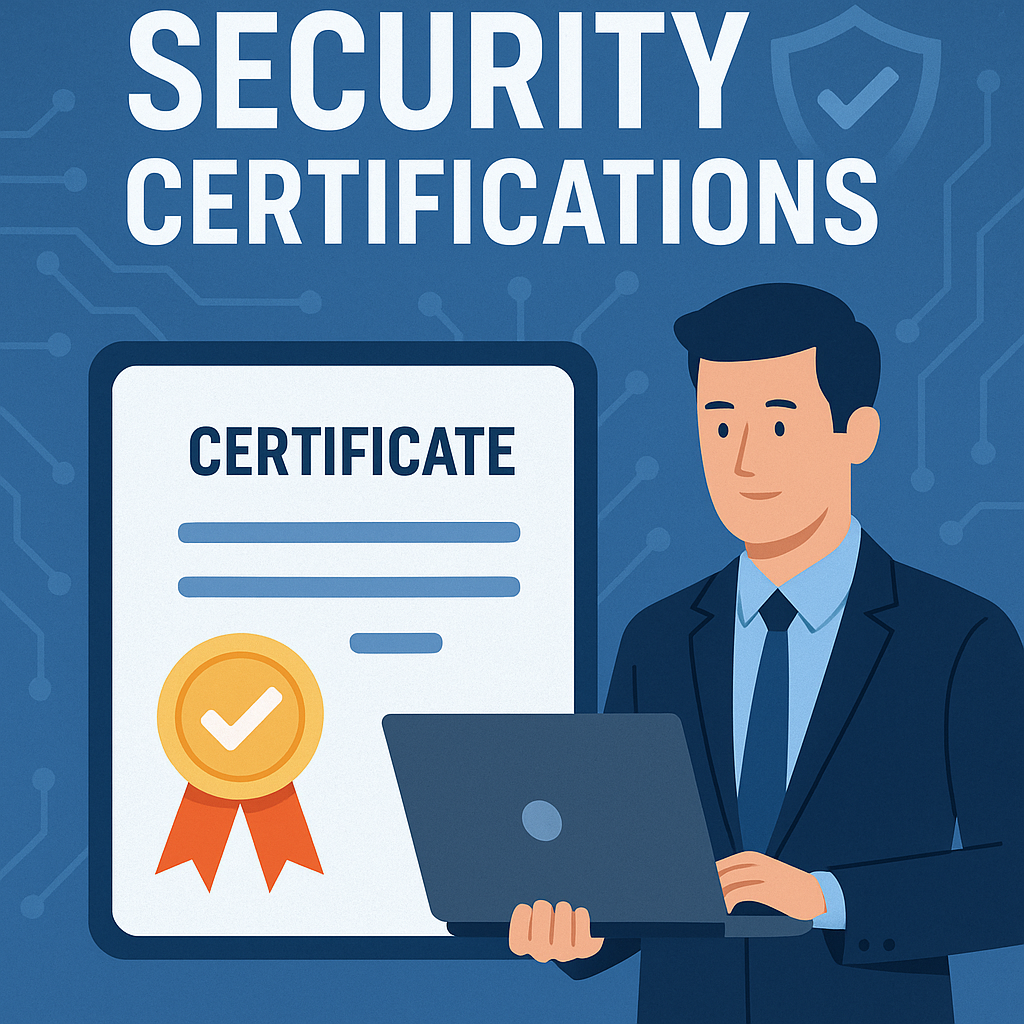
When cyberattacks are rising every single year, it’s no surprise that organizations rely heavily on professionals who hold security certifications. If you’ve ever wondered why these certifications are so valuable—or which ones matter most—you’re not alone. Many IT managers, cybersecurity leaders, and executives ask: Which security certifications actually improve security readiness and career growth?
In this guide, we’ll break down what security certifications really are, why they matter, the most respected ones in 2025, and how they help both individuals and organizations stay safer in a threat-filled world.
What Are Security Certifications? (And Why Do They Matter?)
Security certifications are credentials awarded to professionals who demonstrate verified knowledge in cybersecurity, IT governance, network security, risk management, incident response, and related fields.
These certifications ensure that a professional has the technical, analytical, and hands-on skills required to secure systems and protect organizations from modern cyber threats.
They matter because:
Cyberattacks are increasing every year.
Skilled professionals are in short supply (over 3.5 million unfilled cybersecurity jobs).
Companies require verifiable expertise when hiring or promoting.
Certifications validate updated and global best practices.
Many regulations now mandate certified personnel.
In short, security certifications help professionals grow—and help companies reduce cyber risk.
Why Security Certifications Are Critical in Today’s Cyber Landscape
Cybersecurity is no longer optional; it’s a fundamental business operation. Between ransomware, phishing, nation-state attacks, insider threats, and zero-day vulnerabilities, organizations need security leaders who are trained and tested.
The top reasons security certifications matter:
✔ 1. They Validate Expertise in a Complex Field
Cybersecurity requires deep knowledge, from threat detection to cryptography. Certifications prove you understand technical concepts and can apply them in real-world situations.
✔ 2. They Support Organizational Compliance
Industries like finance, healthcare, and government require certified professionals to meet compliance standards such as:
HIPAA
PCI-DSS
GDPR
ISO 27001
FedRAMP
✔ 3. They Boost Career Advancement and Salary
Certified cybersecurity professionals earn 15%–40% more than uncertified peers.
✔ 4. They Strengthen Trust With Employers and Clients
A certification is a signal that someone is committed, trained, and up-to-date—essential in a rapidly evolving threat landscape.
Top Security Certifications for Cybersecurity Professionals (2025 Edition)
Below are the most recognized and respected security certifications, ranked by career level and impact.
1. CompTIA Security+ (Beginner to Intermediate)
Best for:
New IT professionals, help desk analysts, SOC Tier 1 analysts.
Why it’s valuable:
Security+ is often the first certification cybersecurity professionals pursue. It validates essential security skills, including:
Basic threat detection
Network security
Access control
Cryptography
Security operations
Career boost:
A gateway certification that opens the door to SOC teams, security analyst roles, and entry-level cybersecurity jobs.
2. CEH (Certified Ethical Hacker)
Best for:
Ethical hackers, penetration testers, vulnerability analysts.
What it covers:
CEH teaches the tools and techniques attackers use, allowing security teams to understand offensive strategies. Topics include:
Exploiting vulnerabilities
Reconnaissance
Malware techniques
Social engineering
Penetration testing frameworks
Why it’s respected:
It builds real-world hacker methodology and improves defensive strategy.
3. CISSP (Certified Information Systems Security Professional)
Best for:
Senior cybersecurity professionals, security managers, CISOs.
Why it’s considered the gold standard:
CISSP is one of the most globally respected certifications. It demonstrates mastery across eight major security domains:
Security & Risk Management
Asset Security
Security Architecture
Communications & Network Security
Identity & Access Management (IAM)
Security Assessment
Security Operations
Software Development Security
Career Impact:
Required for many leadership roles; often leads to six-figure salaries.
4. CISM (Certified Information Security Manager)
Best for:
Cybersecurity managers, program leaders, risk management specialists.
Focus areas:
Governance
Incident response
Information risk management
Security program development
Why organizations value it:
CISM is management-focused, making it ideal for professionals moving from technical to leadership roles.
5. CCSP (Certified Cloud Security Professional)
Cloud security is now a core component of enterprise defense. CCSP validates your ability to secure:
Hybrid cloud
SaaS apps
Cloud infrastructure
Identity & Access
Cloud compliance frameworks
As organizations migrate data to AWS, Azure, and Google Cloud, CCSP is one of the fastest-growing certifications.
6. GIAC Certifications (Advanced)
GIAC offers specialized certifications for:
Digital forensics
Incident response
Industrial control systems (ICS)
Threat hunting
Malware analysis
GIAC credentials are deeply technical and recognized by government, military, and elite cybersecurity teams.
Security Certifications by Career Path
To help you choose the right certification, here’s a breakdown based on common cybersecurity career roles.
For Cybersecurity Analysts
Security+
CySA+
CEH
SSCP
For Penetration Testers / Ethical Hackers
CEH
OSCP
GIAC Penetration Tester (GPEN)
LPT Master
For Cloud Security Professionals
CCSP
AWS Security Specialty
Google Professional Cloud Security Engineer
For Security Engineers
Cisco CCNA/CCNP Security
CompTIA CASP+
ISC2 CC
For Cybersecurity Managers & Directors
CISM
CISSP
CRISC
How Security Certifications Help Organizations Reduce Cyber Risk
Certified professionals aren’t just beneficial for career development—they directly strengthen business security.
1. Reduced Human Error
Most breaches start with mistakes. Well-trained professionals reduce the risk.
2. Stronger Incident Response
Validated skills help teams respond faster to ransomware, phishing incidents, and APT attacks.
3. Better Security Architecture
Certifications teach structured frameworks that reduce vulnerabilities before they’re exploited.
4. Better Decision-Making for Leadership
Executives with CISM or CISSP make smarter budget, tool, and staffing decisions.
5. Compliance Confidence
Certifications help companies pass audits with ease and avoid costly penalties.
How to Choose the Right Security Certification
If you’re unsure which certification to pursue, consider these factors:
✔ Your current career level
Beginner? Start with Security+.
Mid-level? CEH or CySA+.
Senior? CISSP or CISM.
✔ Your long-term goals
Leadership or management → CISM, CISSP
Technical or offensive security → OSCP, CEH
Cloud security → CCSP, AWS Security Specialty
✔ Your industry
Finance, healthcare, and government often require:
CISSP
CISM
GIAC
✔ Your learning style
Hands-on → OSCP, CEH
Theory + frameworks → CISSP, CCSP
FAQs About Security Certifications
1. Are security certifications worth it in 2025?
Yes. With cyberattacks increasing, certifications help validate skills, improve career opportunities, and make professionals more competitive.
2. Do companies prefer experience or certifications?
Both matter. Experience shows practical ability, while certifications prove validated expertise. Together, they are extremely powerful.
3. What certification should beginners start with?
Most beginners start with CompTIA Security+ before moving to specialized paths.
4. Is CISSP difficult to pass?
Yes—CISSP is one of the most challenging certifications due to its depth and breadth. However, with proper preparation, it’s absolutely achievable.
5. Do security certifications expire?
Yes. Most require renewal every 2–3 years through continuing education credits or retesting.
Final Thoughts: Security Certifications Are More Important Than Ever
With cyber threats evolving daily, the need for skilled, certified security professionals continues to grow. Whether you’re strengthening your resume, advancing into leadership, or helping your organization stay compliant, pursuing security certifications is one of the best decisions you can make.
Ready to Strengthen Your Cybersecurity Skills and Protect Your Organization?
Take the next step with powerful, modern cybersecurity tools trusted globally.
👉 Get your free Xcitium OpenEDR demo today:
https://openedr.platform.xcitium.com/register/

 Loading...