Updated on March 19, 2026, by OpenEDR
What if your organization could access enterprise-grade cybersecurity without managing complex tools or hiring large security teams? That’s exactly what security as a service offers.
With cyber threats growing in scale and sophistication, businesses struggle to keep up with evolving risks. Traditional security models often require significant investment in infrastructure, tools, and skilled personnel. However, security as a service provides a flexible, cloud-based approach that delivers advanced protection without heavy upfront costs.
For IT managers, cybersecurity professionals, CEOs, and founders, adopting security as a service can simplify security operations while improving threat detection and response. In this guide, we’ll explore what security as a service is, how it works, its benefits, and best practices for implementation.
What is Security as a Service?
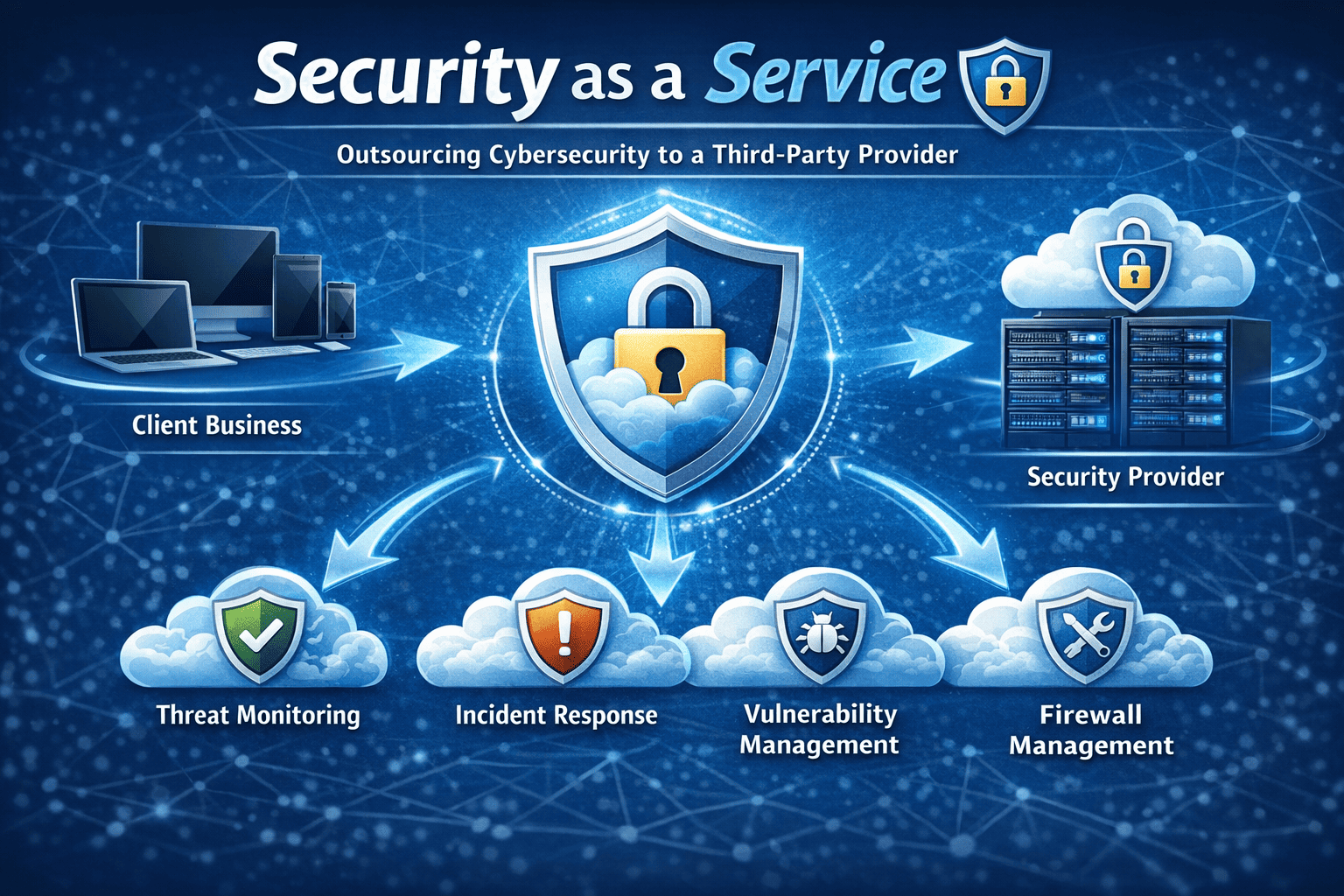
Security as a service (SECaaS) is a cloud-based model where cybersecurity services are delivered by third-party providers. Instead of deploying and managing security tools internally, organizations subscribe to security solutions hosted and maintained by experts.
This model allows businesses to outsource critical security functions while maintaining strong protection.
Key Components of Security as a Service
Security as a service typically includes:
Threat detection and monitoring
Endpoint protection
Identity and access management
Data protection
Network security
Incident response
By using security as a service, organizations can access advanced tools without managing infrastructure.
Why Security as a Service is Important
The cybersecurity landscape is constantly evolving, and organizations face increasing challenges.
Common Security Challenges
Businesses often struggle with:
Limited cybersecurity expertise
High infrastructure costs
Increasing attack complexity
Difficulty managing multiple security tools
Lack of real-time visibility
Security as a service addresses these challenges by providing scalable and managed solutions.
Growing Need for Cloud-Based Security
As businesses move to cloud environments, traditional security approaches become less effective.
Security as a service enables:
Remote protection for distributed teams
Centralized security management
Scalable protection for growing organizations
How Security as a Service Works
Security as a service providers deliver security through cloud platforms.
Step-by-Step Process
Organization subscribes to a security service
Provider deploys security tools in the cloud
Systems and endpoints are integrated
Continuous monitoring begins
Threats are detected and mitigated
This model allows organizations to focus on business operations while experts handle security.
Types of Security as a Service Solutions
Security as a service includes a wide range of offerings.
Managed Detection and Response (MDR)
MDR services provide:
Continuous monitoring
Threat detection
Incident response
These services help organizations detect and respond to threats quickly.
Endpoint Security as a Service
Protects devices such as:
Laptops
Desktops
Mobile devices
This ensures endpoint security without complex deployment.
Identity and Access Management (IAM)
IAM services manage user access and authentication.
Features include:
Multi-factor authentication
Single sign-on
Role-based access control
Email Security as a Service
Protects against phishing and email-based threats.
Cloud Security as a Service
Secures cloud environments and applications.
Key Benefits of Security as a Service
Adopting security as a service provides several advantages.
Cost Efficiency
Organizations avoid large upfront investments in hardware and software.
Scalability
Security solutions can scale as the business grows.
Access to Expertise
Providers offer experienced security professionals and advanced tools.
Real-Time Threat Detection
Continuous monitoring helps detect threats quickly.
Simplified Security Management
Centralized dashboards make it easier to manage security operations.
Security as a Service vs Traditional Security
Understanding the difference helps organizations choose the right approach.
Traditional Security
On-premises infrastructure
High upfront costs
Requires in-house expertise
Limited scalability
Security as a Service
Cloud-based solutions
Subscription model
Managed by experts
Highly scalable
Security as a service offers flexibility and efficiency compared to traditional models.
Best Practices for Implementing Security as a Service
Organizations should follow best practices to maximize effectiveness.
1. Assess Security Needs
Identify risks and determine which services are required.
2. Choose the Right Provider
Evaluate providers based on:
Experience
Service offerings
Compliance support
Customer reviews
3. Integrate with Existing Systems
Ensure compatibility with current infrastructure.
4. Monitor Performance
Regularly review service performance and security metrics.
5. Train Employees
Employees should understand how to work securely within the system.
Challenges of Security as a Service
Despite its benefits, there are challenges.
Data Privacy Concerns
Organizations must ensure data is protected and compliant with regulations.
Dependency on Providers
Reliance on third-party providers requires trust and strong agreements.
Integration Complexity
Integrating services with existing systems can be challenging.
Security as a Service for Different Industries
Different industries have unique security requirements.
Healthcare
Requires protection of patient data and compliance with regulations.
Finance
Needs strong fraud detection and transaction security.
Retail
Focuses on protecting customer data and payment systems.
Technology
Protects intellectual property and cloud infrastructure.
Security as a service adapts to these industry-specific needs.
Future of Security as a Service
The future of cybersecurity is increasingly cloud-driven.
Trends include:
AI-powered threat detection
Zero trust security models
Automated incident response
Integration with cloud platforms
Security as a service will continue to evolve as threats become more sophisticated.
Frequently Asked Questions (FAQ)
What is security as a service?
Security as a service is a cloud-based model where cybersecurity services are delivered by third-party providers.
Why is security as a service important?
It helps organizations protect against cyber threats without managing complex security infrastructure.
What are examples of security as a service?
Examples include MDR, endpoint security, IAM, email security, and cloud security services.
Is security as a service suitable for small businesses?
Yes. It provides cost-effective and scalable security solutions for businesses of all sizes.
How does security as a service improve cybersecurity?
It offers real-time monitoring, expert management, and advanced tools to detect and respond to threats.
Strengthen Your Cybersecurity Strategy Today
Cyber threats are becoming more advanced, and traditional security approaches are no longer enough. Security as a service provides a flexible, scalable, and effective way to protect your organization from modern threats.
By leveraging cloud-based security solutions, businesses can improve protection, reduce costs, and stay ahead of cybercriminals.
👉 Register for cybersecurity training today:
https://openedr.platform.xcitium.com/register/
Learn how to implement advanced security strategies, detect threats faster, and build a stronger cybersecurity framework for your organization.

 Loading...