Updated on March 23, 2026, by OpenEDR
Is your traditional network security model struggling to keep up with remote work, cloud apps, and mobile users? If so, it’s time to understand SASE security—a modern approach designed for today’s distributed environments.
As organizations move away from centralized data centers, traditional perimeter-based security is no longer effective. Users now access applications from anywhere, using multiple devices. This shift demands a new model, and that’s where SASE security (Secure Access Service Edge) comes in.
For IT managers, cybersecurity professionals, and business leaders, adopting SASE security can simplify infrastructure, improve protection, and enable secure remote access. In this guide, we’ll break down what SASE security is, how it works, its benefits, and how to implement it effectively.
What is SASE Security?
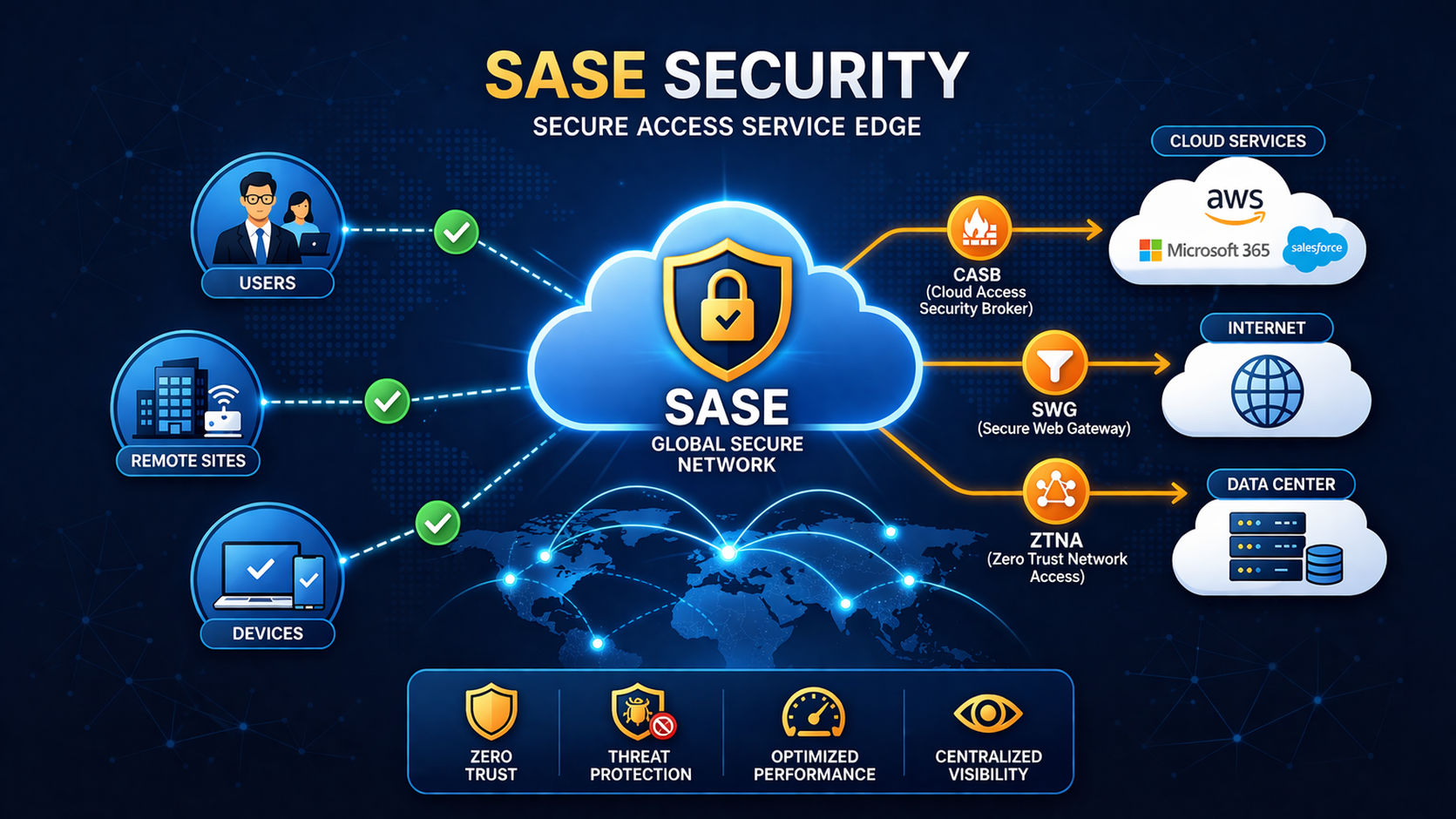
SASE security (Secure Access Service Edge) is a cloud-based framework that combines networking and security services into a unified platform.
Instead of relying on traditional hardware-based security, SASE delivers security through the cloud.
Core Concept
SASE security integrates:
- Network connectivity
- Security enforcement
- Identity-based access
All delivered from a centralized cloud platform.
Why SASE Security is Important
The way organizations operate has changed significantly.
Key Challenges Driving SASE Adoption
- Remote and hybrid work environments
- Increased cloud application usage
- Growing number of connected devices
- Complex and fragmented security tools
Traditional security models cannot handle these challenges effectively.
Limitations of Traditional Security
- Perimeter-based approach
- Limited scalability
- High infrastructure costs
- Poor support for remote users
SASE security addresses these limitations by providing flexible, cloud-based protection.
How SASE Security Works
SASE security delivers services through cloud infrastructure.
Key Principles
- Identity-Based Access
Access decisions are based on user identity, not location - Cloud-Native Architecture
Security services are delivered via the cloud - Integrated Security and Networking
Combines multiple tools into one platform
Step-by-Step Process
- User connects to the network
- Identity is verified
- Traffic is routed through SASE platform
- Security policies are applied
- Access is granted or denied
Key Components of SASE Security
SASE is built on several technologies.
1. Secure Web Gateway (SWG)
Protects users from malicious websites.
2. Cloud Access Security Broker (CASB)
Secures cloud application usage.
3. Zero Trust Network Access (ZTNA)
Provides secure access based on identity and context.
4. Firewall as a Service (FWaaS)
Delivers firewall protection from the cloud.
5. Software-Defined Wide Area Network (SD-WAN)
Optimizes network performance and connectivity.
These components work together to form a comprehensive SASE security framework.
Benefits of SASE Security
Organizations adopting SASE security gain several advantages.
Simplified Security Architecture
Combines multiple tools into a single platform.
Enhanced Security
Provides consistent protection across all users and devices.
Improved Performance
Optimizes network traffic and reduces latency.
Scalability
Easily adapts to business growth.
Better User Experience
Enables secure access without compromising speed.
SASE Security vs Traditional Security
Understanding the difference helps organizations transition effectively.
Traditional Security
- Hardware-based
- Perimeter-focused
- Complex infrastructure
- Limited remote support
SASE Security
- Cloud-based
- Identity-driven
- Integrated platform
- Supports remote work
SASE represents a shift toward modern, flexible security.
Use Cases of SASE Security
SASE is suitable for various scenarios.
Remote Workforce Security
Ensures secure access for remote employees.
Cloud Application Protection
Secures SaaS and cloud platforms.
Branch Office Connectivity
Simplifies network management for multiple locations.
Mobile Device Security
Protects devices accessing corporate resources.
Best Practices for Implementing SASE Security
Organizations should follow best practices for successful deployment.
1. Assess Current Infrastructure
Evaluate existing security and networking systems.
2. Define Security Policies
Establish clear access and security policies.
3. Adopt Zero Trust Principles
Verify every user and device continuously.
4. Choose the Right Vendor
Select providers with strong capabilities and support.
5. Train Employees
Ensure users understand new security processes.
6. Monitor and Optimize
Continuously monitor performance and improve policies.
Challenges in SASE Security Adoption
Despite its benefits, organizations may face challenges.
Integration Complexity
Combining existing systems with SASE can be difficult.
Vendor Selection
Choosing the right provider requires careful evaluation.
Skill Gaps
Teams may need training to manage new systems.
Data Privacy Concerns
Organizations must ensure compliance with regulations.
SASE Security for Different Industries
Different industries benefit from SASE in unique ways.
Healthcare
Protects patient data and supports remote access.
Finance
Secures transactions and sensitive financial data.
Retail
Protects customer data and payment systems.
Technology
Supports cloud-based operations and scalability.
The Future of SASE Security
SASE continues to evolve with emerging technologies.
Future Trends
- AI-driven threat detection
- Integration with identity security
- Automated policy enforcement
- Enhanced cloud security
SASE will play a key role in modern cybersecurity strategies.
Frequently Asked Questions (FAQ)
What is SASE security?
SASE security is a cloud-based framework that combines networking and security services into a unified platform.
Why is SASE important?
It helps organizations secure remote users, cloud applications, and distributed networks.
What are the main components of SASE?
Key components include SWG, CASB, ZTNA, FWaaS, and SD-WAN.
How does SASE improve security?
It provides consistent, identity-based protection across all users and devices.
Is SASE suitable for small businesses?
Yes. SASE offers scalable and cost-effective solutions for businesses of all sizes.
Transform Your Security with SASE Today
The modern workplace demands a new approach to cybersecurity. SASE security provides the flexibility, scalability, and protection needed to secure today’s distributed environments.
By adopting SASE, organizations can simplify operations, improve performance, and stay ahead of evolving threats.
👉 Register for cybersecurity training today:
https://openedr.platform.xcitium.com/register/
Learn how to implement modern security strategies, protect your network, and build a future-ready cybersecurity framework.

 Loading...