Updated on January 5, 2026, by OpenEDR
Modern networks depend on speed, reliability, and security. Whether you’re managing a small office, a large enterprise, or a cloud-based environment, routing plays a critical role in keeping data flowing safely. This leads many professionals to ask an important question: what is a routers tool, and why does it matter for network and cybersecurity operations?
A routers tool is more than just a device or utility—it’s a core networking component that directs traffic, enforces policies, and helps secure digital infrastructure. In this guide, we’ll explain what a routers tool is, how it works, its features, security implications, and best practices for businesses and IT teams.
What Is a Routers Tool?
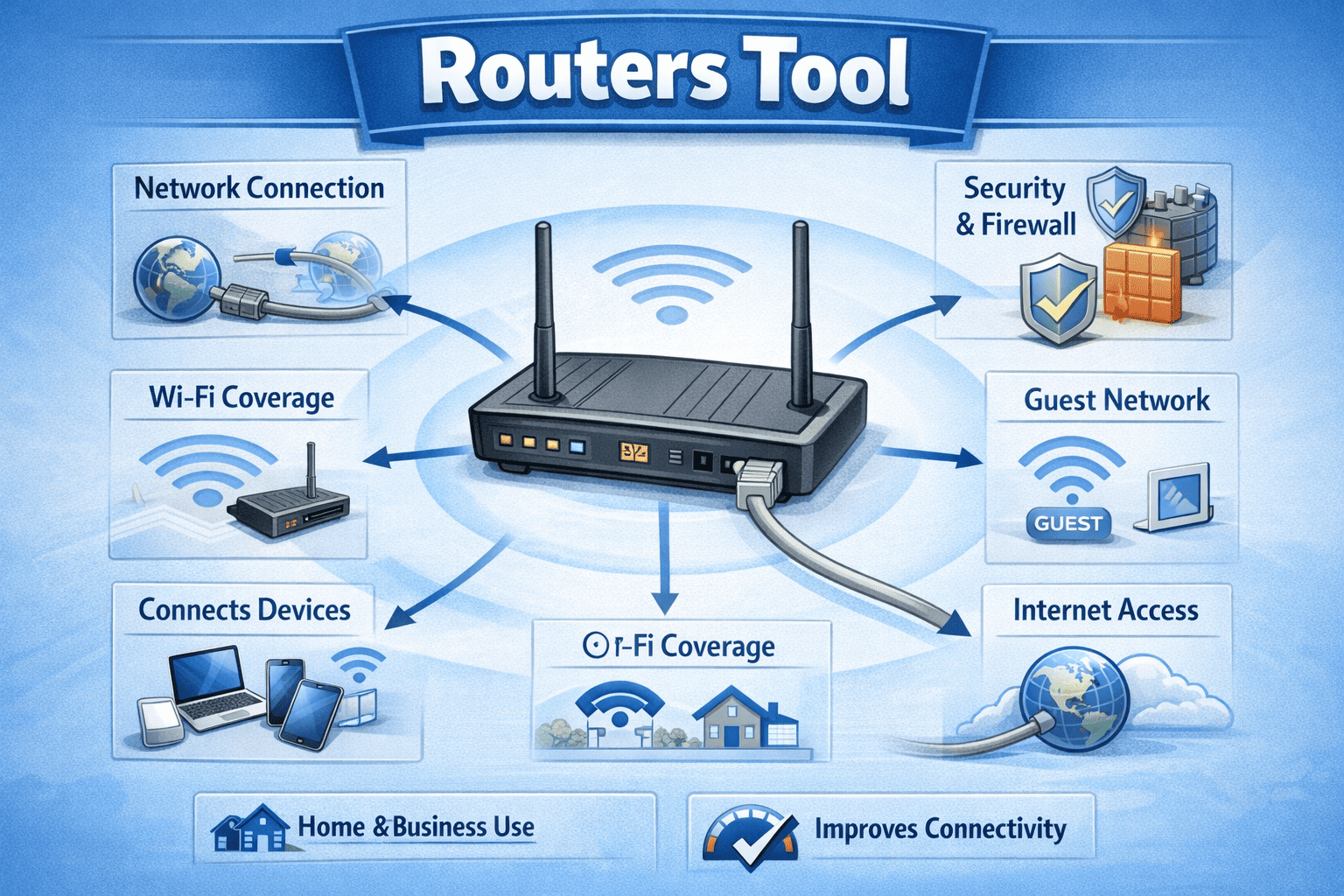
A routers tool refers to a router or router-based software utility used to manage, configure, monitor, and secure network traffic between different networks. At its core, a router tool determines the best path for data packets and ensures they reach their destination efficiently and securely.
In simple terms, a routers tool acts as a traffic controller for data, directing information between internal networks and external destinations such as the internet, cloud platforms, or branch offices.
Understanding the routers tool concept is essential for building scalable and secure networks.
Why Routers Tools Are Essential in Modern Networks
As organizations grow more connected, networks become more complex.
Routers tools are essential because they:
Direct data between networks
Enable internet connectivity
Support segmentation and access control
Improve performance and reliability
Serve as a first line of defense against threats
For IT managers and executives, routers tools are foundational to uptime, productivity, and cybersecurity.
How a Routers Tool Works
To understand the value of a routers tool, it helps to know how routing works.
Basic Routing Process
A device sends data to a destination
The router tool examines the destination IP address
It consults its routing table
The router forwards the data along the best path
The process repeats until the data reaches its destination
This happens in milliseconds and continuously across the network.
Key Components of a Routers Tool
A modern routers tool includes both hardware and software elements.
Core Components
Routing engine
Routing table
Network interfaces
Management interface
Security controls
Together, these components ensure efficient and secure traffic flow.
Types of Routers Tools
Understanding routers tools means knowing the different types available.
1. Hardware Router Tools
Physical router devices commonly used in homes, offices, and data centers.
Use cases include:
Office internet gateways
Branch connectivity
Data center routing
Hardware routers provide high performance and reliability.
2. Software-Based Routers Tools
Virtual or software-defined routers that run on servers or cloud platforms.
Advantages include:
Scalability
Cloud integration
Lower hardware costs
Automation support
These are common in modern cloud and hybrid environments.
3. Enterprise Routers Tools
Designed for large-scale networks with advanced capabilities.
Features include:
High throughput
Redundancy and failover
Advanced security
Centralized management
Enterprise routers are critical for mission-critical networks.
4. Consumer Routers Tools
Used in home and small office environments.
While simpler, they still play a role in basic network security and connectivity.
Core Features of a Routers Tool
A well-designed routers tool offers more than basic routing.
Essential Features
Dynamic and static routing
Network Address Translation (NAT)
Quality of Service (QoS)
Firewall capabilities
VPN support
Traffic monitoring
These features allow organizations to optimize performance and security.
Routers Tool vs Switch: What’s the Difference?
A common confusion involves routers and switches.
| Feature | Routers Tool | Switch |
|---|---|---|
| OSI Layer | Layer 3 | Layer 2 |
| Function | Routes between networks | Connects devices |
| Internet Access | Yes | No |
| Security Controls | Advanced | Limited |
Routers tools manage network boundaries, while switches manage internal connections.
Routers Tool and Network Security
From a cybersecurity standpoint, routers tools play a vital role.
Security Functions of Routers Tools
Traffic filtering
Access control lists (ACLs)
NAT and IP masking
VPN termination
Intrusion prevention (on advanced models)
A properly configured routers tool reduces exposure to external threats.
Common Security Risks in Routers Tools
Despite their importance, routers tools can introduce risks if mismanaged.
Common Risks
Weak credentials
Outdated firmware
Misconfigured firewall rules
Open management interfaces
Default settings left unchanged
Attackers often target routers tools to gain network-wide access.
Best Practices for Securing Routers Tools
To protect your network, follow these best practices.
Routers Tool Security Best Practices
Change default usernames and passwords
Keep firmware updated
Disable unused services
Restrict management access
Enable logging and monitoring
Use strong encryption
Security starts at the network edge.
Routers Tool in Enterprise Environments
In enterprises, routers tools are part of a larger security and networking ecosystem.
Enterprise Use Cases
Internet gateways
WAN connectivity
Cloud access
Branch office routing
Segmentation and isolation
Routers tools help enterprises scale while maintaining control.
Routers Tool and Cloud Networking
Cloud adoption has transformed routing.
Cloud Routing Use Cases
Virtual private clouds (VPCs)
Hybrid connectivity
Multi-cloud routing
Secure cloud access
Software-based routers tools are especially important in cloud environments.
Routers Tool and Zero Trust Security
Zero Trust security models assume no implicit trust.
Routers tools support Zero Trust by:
Enforcing network segmentation
Limiting lateral movement
Integrating with identity systems
Monitoring traffic behavior
Routers tools form the foundation of Zero Trust network access.
Performance Optimization Using Routers Tools
Routers tools help optimize network performance.
Performance Capabilities
Load balancing
Traffic prioritization
Bandwidth management
Path optimization
These features ensure critical applications remain responsive.
Monitoring and Managing Routers Tools
Visibility is critical for reliable networks.
What to Monitor
Traffic volume
Latency
Error rates
Security events
Configuration changes
Centralized management improves operational efficiency.
Routers Tool vs Firewall: Are They the Same?
While routers tools may include firewall features, they are not the same.
| Routers Tool | Firewall |
|---|---|
| Routes traffic | Inspects traffic |
| Focus on connectivity | Focus on security |
| Basic filtering | Deep packet inspection |
Modern networks often combine both for layered security.
Challenges of Managing Routers Tools
Even experienced teams face challenges.
Common Challenges
Configuration complexity
Scaling across locations
Keeping firmware current
Monitoring large environments
Balancing performance and security
Automation and standardized policies help address these challenges.
Routers Tools in Cybersecurity Incidents
During security incidents, routers tools play a key role.
Incident Response Uses
Blocking malicious IPs
Isolating compromised networks
Monitoring suspicious traffic
Supporting forensic analysis
Quick router-level actions can limit damage.
Choosing the Right Routers Tool
Selecting the right routers tool depends on your needs.
Key Selection Criteria
Network size
Performance requirements
Security features
Cloud compatibility
Management capabilities
Vendor support
Choosing wisely ensures long-term scalability and protection.
The Future of Routers Tools
Routers tools continue to evolve with technology.
Emerging Trends
Software-defined networking (SDN)
AI-driven traffic optimization
Cloud-managed routers
Deeper security integration
Automation and orchestration
Routers tools will remain essential as networks grow more complex.
Frequently Asked Questions (FAQs)
1. What is a routers tool used for?
A routers tool directs network traffic between different networks and enforces connectivity and security policies.
2. Is a routers tool the same as a router?
A routers tool may refer to a physical router or software used to manage routing functions.
3. Are routers tools important for cybersecurity?
Yes. They help control traffic flow, limit exposure, and support security enforcement.
4. Can routers tools block cyberattacks?
They can block known threats, but should be combined with advanced security tools.
5. Do cloud environments use routers tools?
Yes. Cloud networks rely heavily on software-based routers tools.
Final Thoughts: Why Routers Tools Matter More Than Ever
As networks expand across offices, clouds, and remote users, routers tools remain at the heart of connectivity and security. Understanding the routers tool concept empowers organizations to design resilient networks, reduce risk, and support digital growth.
For IT managers, cybersecurity teams, and business leaders, routers tools are not optional—they are mission-critical infrastructure.
Strengthen Network Security Beyond Routing
Routers tools manage traffic—but modern threats require deeper visibility and proactive defense. To protect endpoints, networks, and workloads with Zero Trust security:
👉 Get started with Xcitium OpenEDR today
Register Now

 Loading...