Updated on July 8, 2026, by OpenEDR
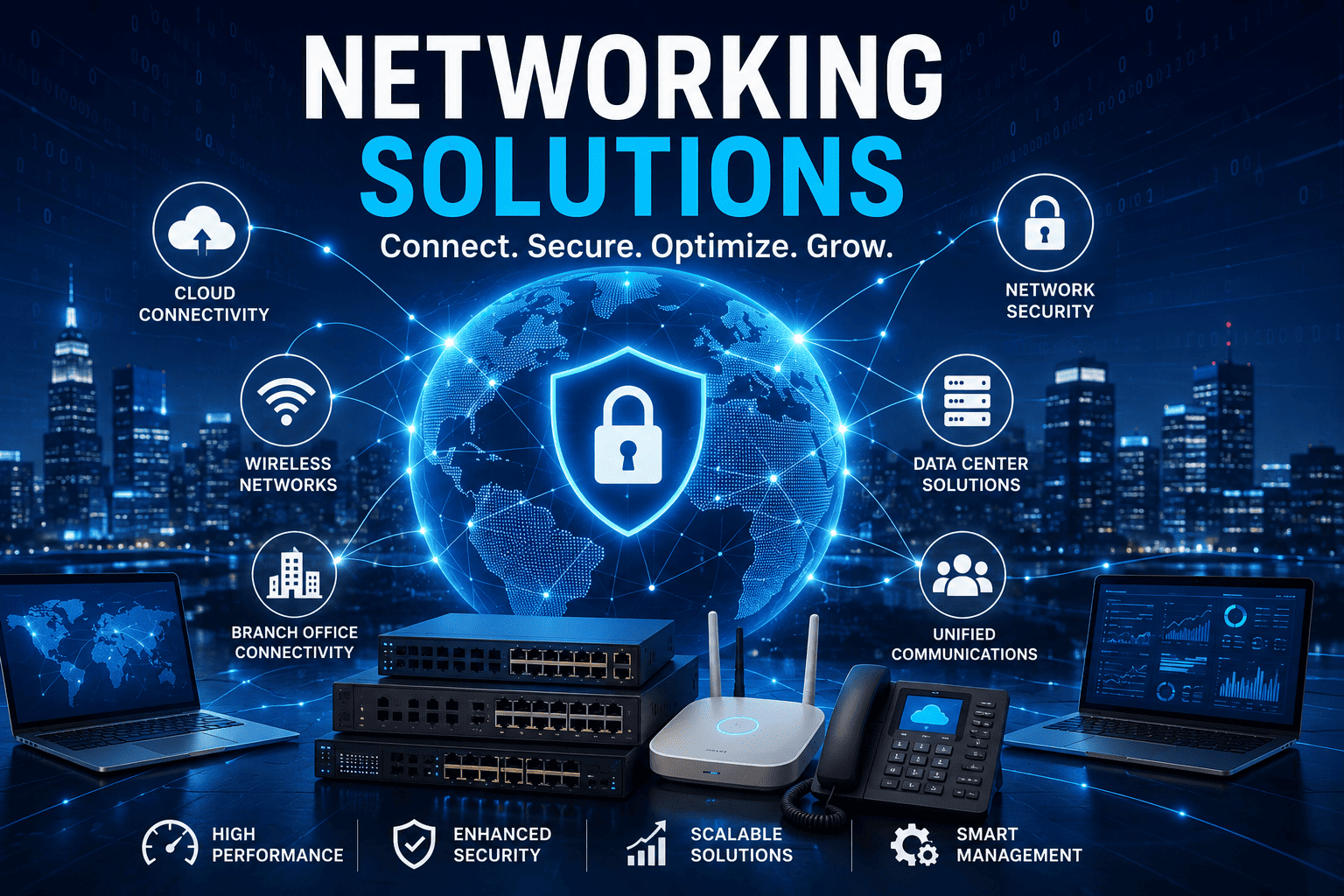
In today’s digital-first world, networking solutions are the backbone of every successful business. Whether employees work from the office, remotely, or across multiple locations, organizations depend on secure, reliable, and high-performing networks to keep operations running smoothly. However, growing cyber threats, cloud adoption, and hybrid work environments have made network management more complex than ever.
Modern networking solutions go beyond connecting devices. They integrate advanced cybersecurity, cloud connectivity, Zero Trust principles, and intelligent network management to protect business data while improving productivity. Whether you’re an IT manager, cybersecurity professional, CEO, or business owner, understanding networking solutions is essential for building a resilient and future-ready IT infrastructure.
In this guide, you’ll learn what networking solutions are, why they matter, their key components, deployment models, benefits, security best practices, and how to choose the right solution for your organization.
What Are Networking Solutions?
Networking solutions are technologies, hardware, software, and managed services that enable secure communication between users, devices, applications, and cloud resources. They help businesses create reliable networks that support collaboration, data sharing, internet access, and secure remote connectivity.
A comprehensive networking solution combines networking infrastructure with cybersecurity technologies to ensure business continuity and protect against cyber threats.
Typical networking solutions include:
- Local Area Networks (LAN)
- Wide Area Networks (WAN)
- Software-Defined WAN (SD-WAN)
- Wireless networking
- Virtual Private Networks (VPNs)
- Cloud networking
- Network security solutions
- Network monitoring and management
Together, these technologies create a secure, scalable, and high-performing business network.
Why Networking Solutions Matter
Businesses rely on constant connectivity. Downtime, slow performance, or security breaches can disrupt operations, reduce productivity, and increase costs.
Modern networking solutions help organizations:
- Improve communication between teams
- Support hybrid and remote work
- Secure business-critical applications
- Increase network reliability
- Reduce downtime
- Enhance user experience
- Simplify IT management
- Support business growth
As organizations expand, scalable networking solutions ensure that infrastructure can grow without sacrificing performance or security.
Types of Networking Solutions
Different organizations require different networking strategies. Choosing the right solution depends on business size, security requirements, and operational goals.
Local Area Network (LAN)
A LAN connects devices within a limited area such as an office, campus, or building.
Benefits include:
- High-speed communication
- Centralized resource sharing
- Simplified device management
- Cost-effective deployment
LANs are ideal for offices that require fast internal communication and secure access to shared resources.
Wide Area Network (WAN)
A WAN connects multiple offices across cities, countries, or continents.
Advantages include:
- Centralized business operations
- Secure branch connectivity
- Improved collaboration
- Consistent network performance
WAN technology enables organizations to operate efficiently across distributed locations.
Software-Defined WAN (SD-WAN)
SD-WAN modernizes traditional WAN architecture by using software to intelligently manage network traffic.
Key benefits include:
- Improved application performance
- Reduced network costs
- Better cloud connectivity
- Automated traffic routing
- Simplified management
Many organizations adopt SD-WAN to support cloud applications and hybrid workforces.
Wireless Networking
Wireless networking provides secure connectivity without physical cables.
Organizations benefit from:
- Flexible workplace layouts
- Mobility for employees
- Easy device connectivity
- Simplified expansion
Modern Wi-Fi technologies also support IoT devices, smart offices, and mobile work environments.
Cloud Networking
Cloud networking enables secure communication between cloud services, users, and on-premises environments.
Benefits include:
- Faster cloud adoption
- Simplified scalability
- Centralized management
- Secure remote access
- Improved disaster recovery
Cloud networking plays a vital role in digital transformation initiatives.
Core Components of Modern Networking Solutions
Successful networking solutions combine multiple technologies to ensure performance, reliability, and security.
Network Switches
Switches connect devices within a local network and direct data efficiently between endpoints.
They help improve:
- Network speed
- Traffic management
- Device communication
- Scalability
Routers
Routers connect internal networks to external networks such as the internet.
Modern routers provide:
- Intelligent traffic routing
- Security features
- VPN support
- Quality of Service (QoS)
Firewalls
Firewalls monitor and control incoming and outgoing network traffic based on security policies.
Benefits include:
- Blocking unauthorized access
- Preventing malware communication
- Protecting sensitive business systems
- Monitoring suspicious traffic
Next-generation firewalls add deep packet inspection, application awareness, and threat intelligence.
Virtual Private Networks (VPNs)
VPNs create encrypted connections between users and business networks.
They are commonly used for:
- Remote work
- Secure internet access
- Protecting sensitive communications
- Connecting branch offices
VPNs remain an important part of secure remote connectivity.
Network Monitoring Tools
Continuous monitoring allows IT teams to detect issues before they become major problems.
Monitoring solutions provide visibility into:
- Network performance
- Bandwidth usage
- Device health
- Security events
- Availability
Real-time monitoring reduces downtime and improves operational efficiency.
Benefits of Networking Solutions
Investing in modern networking solutions delivers measurable business value.
Improved Performance
Optimized networks reduce latency, improve application speed, and enhance user experience.
Enhanced Security
Integrated security controls help protect against malware, ransomware, phishing attacks, and unauthorized access.
Greater Scalability
Businesses can expand their networks as they grow without major infrastructure changes.
Simplified Management
Centralized dashboards and automation reduce administrative effort and improve visibility across the network.
Zero Trust Networking: The Future of Secure Connectivity
Traditional network security assumes that users and devices inside the network can be trusted. Today’s cyber threats prove otherwise. Zero Trust networking changes this approach by requiring every user, device, and application to verify its identity before gaining access.
How Zero Trust Improves Networking Solutions
Zero Trust networking provides several important advantages:
- Verifies every access request
- Limits lateral movement across the network
- Protects hybrid and remote workforces
- Reduces insider threats
- Secures cloud applications
- Improves compliance with security standards
By adopting Zero Trust principles, organizations significantly reduce the risk of unauthorized access and data breaches.
Cybersecurity Best Practices for Networking Solutions
Strong networking solutions combine reliable infrastructure with proactive cybersecurity practices.
Deploy Advanced Network Security
Modern organizations should implement:
- Next-generation firewalls
- Intrusion Detection and Prevention Systems (IDS/IPS)
- Secure Web Gateways
- DNS filtering
- Endpoint Detection and Response (EDR)
- Extended Detection and Response (XDR)
Layered security provides better protection against sophisticated cyberattacks.
Secure Remote Access
As hybrid work becomes the norm, secure remote connectivity is essential.
Best practices include:
- Multi-Factor Authentication (MFA)
- Encrypted VPN connections
- Zero Trust Network Access (ZTNA)
- Device compliance checks
- Role-based access control
These measures ensure that only authorized users and trusted devices access business resources.
Monitor Network Activity
Continuous monitoring helps identify unusual behavior before it becomes a major security incident.
Monitor:
- Login activity
- Bandwidth usage
- Device health
- Network traffic
- Failed authentication attempts
- Security alerts
Real-time visibility allows IT teams to respond quickly to potential threats.
Keep Systems Updated
Outdated software often contains vulnerabilities that attackers can exploit.
Organizations should:
- Apply operating system updates promptly
- Update networking hardware firmware
- Patch applications regularly
- Remove unsupported software
Routine updates help eliminate known security weaknesses.
How to Choose the Right Networking Solutions
Selecting the right networking solution requires careful planning.
Evaluate Business Requirements
Consider:
- Number of users
- Number of locations
- Remote workforce needs
- Cloud adoption
- Regulatory requirements
- Future growth
A scalable solution prevents expensive upgrades later.
Prioritize Security
Choose networking solutions that include:
- Zero Trust capabilities
- Integrated firewall protection
- Endpoint security integration
- Network segmentation
- Threat intelligence
- Continuous monitoring
Security should be built into the network—not added later.
Consider Cloud Integration
Modern businesses rely on cloud services every day.
Look for networking solutions that support:
- Hybrid cloud
- Multi-cloud
- SaaS applications
- Secure cloud connectivity
- Cloud workload protection
Cloud-ready networking improves flexibility and performance.
Simplify Management
Centralized management platforms reduce operational complexity by allowing administrators to:
- Configure devices
- Monitor performance
- Apply security policies
- Generate reports
- Automate routine tasks
Automation helps IT teams focus on higher-value work.
Industry Use Cases
Healthcare
Healthcare organizations use networking solutions to connect medical devices, electronic health records, and telehealth platforms while protecting patient information.
Financial Services
Banks and financial institutions rely on secure networking to support digital banking, payment processing, fraud detection, and regulatory compliance.
Manufacturing
Manufacturers connect production systems, IoT devices, and operational technology (OT) networks to improve efficiency while minimizing cyber risks.
Retail
Retailers use networking solutions to secure point-of-sale systems, inventory management, customer Wi-Fi, and e-commerce platforms.
Education
Educational institutions depend on secure networking to support online learning, research collaboration, and student information systems.
Future Trends in Networking Solutions
Networking technology continues to evolve rapidly.
Emerging trends include:
- AI-powered network management
- Software-Defined Networking (SDN)
- Secure Access Service Edge (SASE)
- Zero Trust Network Access (ZTNA)
- Cloud-native networking
- Network automation
- Edge computing
- Internet of Things (IoT) security
- Predictive analytics
- Self-healing networks
Organizations adopting these innovations will improve performance, reduce operational costs, and strengthen cybersecurity.
Networking Solutions Checklist
Before implementing a networking solution, ensure you:
✔ Assess current network infrastructure
✔ Identify business requirements
✔ Implement Zero Trust principles
✔ Enable Multi-Factor Authentication
✔ Deploy next-generation firewalls
✔ Secure remote access
✔ Monitor network activity continuously
✔ Keep systems and firmware updated
✔ Perform regular vulnerability assessments
✔ Train employees on cybersecurity best practices
This checklist provides a strong foundation for building a resilient network.
Benefits of Modern Networking Solutions
Organizations investing in networking solutions can expect:
- Faster communication
- Improved collaboration
- Enhanced cybersecurity
- Greater scalability
- Better cloud connectivity
- Reduced downtime
- Simplified IT management
- Increased business continuity
- Improved compliance
- Higher productivity
These benefits help businesses remain competitive in an increasingly digital environment.
Conclusion
Modern networking solutions do much more than connect devices. They provide the secure, scalable foundation organizations need to support cloud computing, hybrid work, digital transformation, and evolving cybersecurity requirements.
By combining advanced networking technologies with Zero Trust security, endpoint protection, continuous monitoring, and intelligent automation, businesses can improve performance while reducing cyber risk.
Whether you’re upgrading an existing infrastructure or building a new network, choosing the right networking solution will help your organization remain secure, connected, and ready for future growth.
Ready to Build a More Secure Network?
Protect your business with advanced networking and cybersecurity solutions designed to defend against ransomware, malware, phishing, and emerging cyber threats.
Start today:
https://openedr.platform.xcitium.com/register/
Frequently Asked Questions
1. What are networking solutions?
Networking solutions are technologies and services that enable secure communication between devices, users, applications, and cloud resources while improving network performance, reliability, and security.
2. Why are networking solutions important?
They help organizations improve connectivity, protect sensitive data, support remote work, reduce downtime, and strengthen cybersecurity.
3. What is the difference between LAN and WAN?
A LAN connects devices within a limited area, such as an office or campus. A WAN connects multiple locations across larger geographic regions, enabling communication between branch offices and remote sites.
4. How does Zero Trust improve networking solutions?
Zero Trust continuously verifies every user, device, and application before granting access. This reduces unauthorized access, limits lateral movement, and strengthens overall network security.
5. How can businesses secure their networks?
Businesses can secure their networks by implementing next-generation firewalls, Multi-Factor Authentication (MFA), Zero Trust security, endpoint protection, network monitoring, regular software updates, and employee cybersecurity training.

 Loading...