Updated on February 5, 2026, by OpenEDR
Is your organization truly protected against today’s cyber threats—or are you relying on outdated defenses that attackers already know how to bypass?
With cyberattacks growing more frequent and complex, many organizations are discovering that traditional, in-house security models are no longer enough. This is where managed network security services play a critical role. By outsourcing network security to dedicated experts, businesses gain round-the-clock protection, advanced threat detection, and peace of mind.
In this guide, we’ll explore what managed network security services are, why they matter, how they work, and how to choose the right provider for your organization.
What Are Managed Network Security Services?
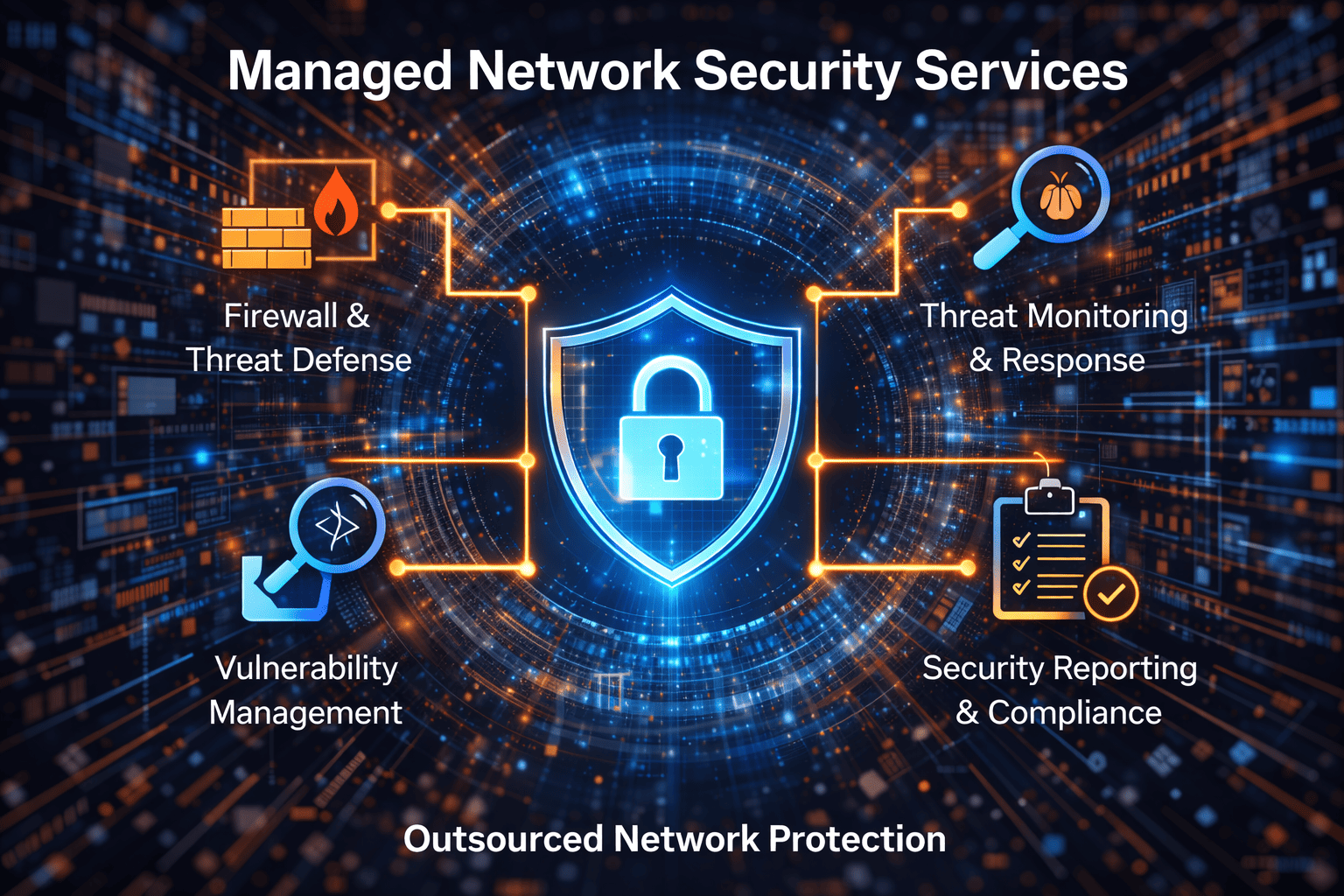
Managed network security services refer to the outsourcing of network security operations to a specialized third-party provider. These services are designed to monitor, manage, and protect an organization’s network infrastructure against cyber threats.
Instead of relying solely on internal IT teams, businesses partner with managed security experts who deliver continuous monitoring, threat detection, incident response, and security maintenance.
Typical components include:
Firewall and intrusion prevention management
Threat monitoring and response
Network traffic analysis
Vulnerability management
Security policy enforcement
For organizations with limited resources or growing attack surfaces, managed network security services provide enterprise-grade protection without enterprise-level complexity.
Why Managed Network Security Services Are Essential Today
The cybersecurity landscape has changed dramatically. Attackers are faster, more automated, and more organized than ever before.
Key challenges businesses face:
Shortage of skilled cybersecurity professionals
Expanding networks due to cloud and remote work
Increasing regulatory and compliance requirements
Sophisticated threats like ransomware and zero-day attacks
Managed network security services help organizations stay ahead by delivering expertise, tools, and continuous coverage that internal teams often struggle to maintain.
How Managed Network Security Services Work
Managed network security services operate as an extension of your IT and security teams. Providers use advanced tools, skilled analysts, and proven processes to secure your network at every level.
Core operational areas include:
1. Continuous Network Monitoring
Your network is monitored 24/7 for suspicious activity, anomalies, and known attack patterns.
2. Threat Detection and Response
Advanced analytics and threat intelligence identify attacks early, allowing rapid containment and remediation.
3. Firewall and Perimeter Security
Firewalls, IDS, and IPS systems are configured, monitored, and optimized by security experts.
4. Vulnerability Management
Regular scans identify weaknesses before attackers can exploit them.
5. Reporting and Compliance Support
Detailed security reports help meet industry regulations and executive oversight requirements.
This proactive approach ensures threats are addressed before they cause damage.
Key Benefits of Managed Network Security Services
Implementing managed network security services delivers measurable advantages for organizations of all sizes.
Security Benefits
Reduced attack surface
Faster threat detection and response
Protection against advanced persistent threats
Improved network visibility
Business Benefits
Lower operational costs
Predictable security spending
Reduced downtime and breach impact
Stronger customer and partner trust
For leadership teams, managed network security services align cybersecurity with broader business goals.
Managed Network Security Services vs In-House Security
Many organizations struggle to decide whether to build internal security teams or outsource protection.
| Area | In-House Security | Managed Network Security Services |
|---|---|---|
| 24/7 Monitoring | Limited | Continuous |
| Expertise Depth | Varies | Specialized |
| Scalability | Slow | Flexible |
| Cost Predictability | High overhead | Subscription-based |
| Threat Intelligence | Limited | Global and real-time |
For most organizations, managed network security services offer greater coverage with fewer resource constraints.
Key Features to Look for in Managed Network Security Services
Not all providers offer the same level of protection. When evaluating managed network security services, look for these essential features:
Must-Have Capabilities
Real-time network monitoring
Advanced threat intelligence integration
Incident response and containment
Secure firewall and IDS/IPS management
Regular security reporting
Advanced Capabilities
AI-driven threat detection
Cloud and hybrid network support
Zero Trust network segmentation
Integration with SIEM and SOC platforms
Compliance mapping and audits
The right provider should adapt to your network—not force you to adapt to them.
Managed Network Security Services Across Industries
Different industries face unique security challenges, but the value of managed network security services remains consistent.
Healthcare
Protect patient data, meet HIPAA requirements, and defend against ransomware.
Financial Services
Secure transactions, reduce fraud risk, and maintain regulatory compliance.
Manufacturing
Protect OT networks and intellectual property from cyber sabotage.
Retail and E-commerce
Safeguard customer data and payment systems from breaches.
Technology and SaaS
Secure cloud environments, APIs, and distributed networks.
Industry-specific expertise is a major advantage of managed network security services.
Cloud, Hybrid, and Remote Work Security
As organizations adopt cloud platforms and remote work models, network boundaries have blurred. Traditional perimeter security is no longer sufficient.
Managed network security services provide:
Secure cloud traffic monitoring
VPN and remote access protection
Cloud firewall and policy enforcement
Unified visibility across hybrid environments
This ensures consistent security regardless of where users or assets are located.
Best Practices for Implementing Managed Network Security Services
To get maximum value from managed network security services, follow these best practices:
Assess your current network risks
Define security goals and compliance needs
Choose a provider with industry experience
Ensure clear SLAs and response times
Integrate security reporting into leadership reviews
Continuously review and optimize security policies
Security is not static—ongoing collaboration with your provider is essential.
Common Challenges and How to Overcome Them
Loss of Control Concerns
Choose providers that offer transparency, dashboards, and regular reporting.
Integration Complexity
Select managed network security services that integrate smoothly with existing infrastructure.
Budget Constraints
Focus on risk reduction and ROI rather than upfront costs alone.
The right provider becomes a strategic partner, not just a vendor.
The Future of Managed Network Security Services
Managed network security services are evolving to meet modern threats. Key trends include:
AI-powered threat detection
Zero Trust network architectures
Automation-driven incident response
Unified security platforms
As cyber risks increase, outsourcing network security will continue to be a strategic advantage for forward-thinking organizations.
FAQs About Managed Network Security Services
1. What are managed network security services?
Managed network security services involve outsourcing network protection, monitoring, and threat response to specialized cybersecurity providers.
2. Are managed network security services suitable for small businesses?
Yes. Small and mid-sized businesses often benefit the most due to limited internal security resources.
3. How do managed network security services improve compliance?
They provide monitoring, logging, and reporting needed to meet standards like ISO 27001, SOC 2, PCI DSS, and HIPAA.
4. Can managed network security services support cloud environments?
Absolutely. Modern services are designed for on-prem, cloud, and hybrid networks.
5. How quickly can managed network security services be deployed?
Many providers can onboard and begin protection within days or weeks, depending on network complexity.
Final Thoughts: Why Managed Network Security Services Matter
Cyber threats are no longer a question of “if” but “when.” Organizations that rely solely on internal defenses often struggle to keep up with evolving risks.
Managed network security services provide:
Continuous protection
Expert-driven defense
Faster response to threats
Stronger business resilience
For IT leaders and executives alike, they represent a smarter, more sustainable approach to cybersecurity.
Take the Next Step Toward Stronger Network Security
Ready to strengthen your organization’s defenses with modern, managed protection?
👉 Get started today:
https://openedr.platform.xcitium.com/register/
Secure your network. Reduce risk. Stay ahead of threats.

 Loading...