Updated on January 5, 2026, by OpenEDR
What would happen if a single malicious file brought your entire business to a halt? Every day, organizations of all sizes face cyberattacks that exploit system vulnerabilities, human error, and outdated defenses. That’s why malware virus protection is no longer optional—it’s a core requirement for modern digital operations.
From ransomware locking critical files to spyware stealing sensitive data, malware threats continue to evolve. This guide explains what malware virus protection is, why it matters, and how to choose the right solution for long-term security.
What Is Malware Virus Protection?
Malware virus protection is a cybersecurity approach designed to detect, block, and eliminate malicious software before it causes harm. Malware includes viruses, ransomware, trojans, spyware, worms, and fileless attacks that operate silently in the background.
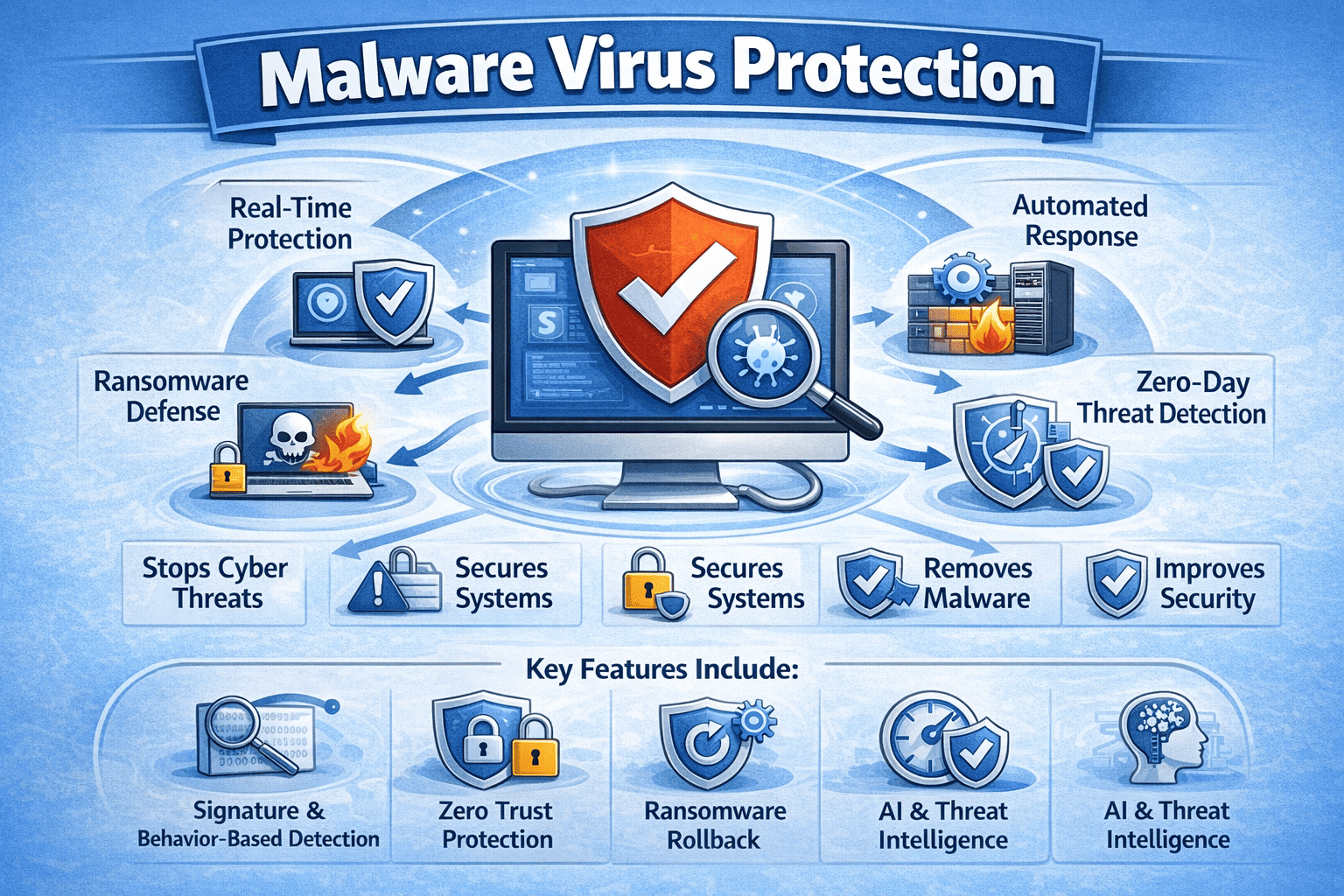
Modern malware virus protection goes far beyond traditional antivirus software. It combines real-time monitoring, behavior analysis, and automated response to stop known and unknown threats.
Common Types of Malware:
Viruses that spread through files and programs
Ransomware that encrypts data for payment
Spyware that tracks user activity
Trojans disguised as legitimate software
Fileless malware that lives in system memory
The goal of effective malware virus protection is prevention first, not cleanup after damage occurs.
Why Malware Virus Protection Is Critical for Businesses
Cybercriminals are no longer just targeting large enterprises. Small and mid-sized organizations are frequent victims because they often lack advanced security controls. A single malware infection can lead to data breaches, operational downtime, and reputational damage.
Strong malware virus protection helps organizations:
Prevent data loss and theft
Reduce downtime and recovery costs
Protect customer and employee information
Maintain compliance with security regulations
Safeguard brand reputation
For IT managers and executives, malware defense is a business risk issue, not just an IT concern.
How Malware Virus Protection Works
Modern malware virus protection relies on multiple security layers working together. This layered approach ensures that even if one control fails, others can stop the attack.
Core Protection Methods Include:
Signature-based detection for known malware
Behavior-based analysis to stop unknown threats
Real-time monitoring of system activity
Sandboxing to analyze suspicious files safely
Automatic containment and remediation
Advanced malware virus protection platforms can isolate infected devices, block malicious processes, and roll back changes automatically.
Malware Virus Protection vs Traditional Antivirus
Many organizations still rely on basic antivirus tools. However, traditional antivirus software is no longer enough to stop modern threats.
| Feature | Traditional Antivirus | Malware Virus Protection |
|---|---|---|
| Detection Method | Signature-based | Behavior & AI-driven |
| Zero-Day Protection | Weak | Strong |
| Ransomware Defense | Limited | Advanced |
| Real-Time Response | Basic | Automated |
| Business Scalability | Low | High |
The best malware virus protection platforms provide proactive defense rather than reactive cleanup.
Key Features to Look for in Malware Virus Protection
Not all security tools offer the same level of protection. When evaluating malware virus protection solutions, prioritize these essential features:
1. Real-Time Threat Prevention
The software should actively monitor activity and block threats before execution.
2. Ransomware Protection
Look for behavior-based ransomware defense with rollback capabilities.
3. Zero-Day Threat Detection
Advanced malware virus protection identifies threats that have never been seen before.
4. Centralized Management
A single dashboard helps IT teams manage endpoints efficiently.
5. Automated Response
Automatic isolation and remediation reduce response time and damage.
Malware Virus Protection for IT Managers
IT managers are responsible for protecting diverse environments that include endpoints, servers, cloud platforms, and remote users. Manual security management is no longer scalable.
Malware virus protection helps IT teams by:
Reducing alert fatigue
Automating threat response
Improving visibility across systems
Simplifying compliance reporting
Lowering overall security workload
With automation and centralized control, IT teams can focus on strategic initiatives instead of constant firefighting.
Malware Virus Protection for CEOs and Founders
Executives often underestimate the financial and reputational impact of malware attacks. Ransomware alone can cost organizations millions in downtime, recovery, and lost trust.
For business leaders, malware virus protection:
Reduces financial risk
Protects intellectual property
Ensures business continuity
Builds customer confidence
Supports long-term growth
Cybersecurity is no longer a cost center—it’s a competitive advantage.
Common Malware Threats Malware Virus Protection Stops
Effective malware virus protection defends against:
Ransomware attacks
Phishing-based malware delivery
Drive-by downloads
Fileless attacks
Insider threats
Advanced persistent threats (APTs)
Credential-stealing malware
By addressing multiple attack vectors, organizations significantly reduce their exposure to cyber risks.
Best Practices to Strengthen Malware Virus Protection
Technology alone isn’t enough. Strong security requires a combination of tools, policies, and awareness.
Actionable Security Tips:
Keep operating systems and software updated
Use multi-factor authentication (MFA)
Restrict admin privileges
Educate employees about phishing
Monitor network activity continuously
Adopt a zero-trust security model
When combined with advanced malware virus protection, these practices create a resilient defense strategy.
Cloud and Remote Work: New Malware Challenges
Remote work has expanded the attack surface dramatically. Devices now connect from home networks, public Wi-Fi, and personal devices.
Modern malware virus protection must:
Secure remote endpoints
Protect cloud workloads
Monitor off-network activity
Enforce security policies anywhere
Cloud-native and endpoint-focused solutions are essential for today’s distributed workforce.
The Future of Malware Virus Protection
Cyber threats are evolving rapidly, and so is defense technology. The future of malware virus protection includes:
AI-driven threat hunting
Predictive analytics
Automated remediation
Zero Trust enforcement
Cloud-native security architectures
Organizations that adopt advanced protection today are better prepared for tomorrow’s threats.
Frequently Asked Questions (FAQs)
1. What is malware virus protection?
Malware virus protection is a cybersecurity solution that detects, blocks, and removes malicious software such as viruses, ransomware, and spyware.
2. Is malware virus protection better than antivirus?
Yes. Malware virus protection offers advanced threat detection, real-time monitoring, and automated response beyond basic antivirus capabilities.
3. Can small businesses benefit from malware virus protection?
Absolutely. Small businesses are frequent targets and benefit significantly from enterprise-grade malware defense.
4. How often should malware protection be updated?
Updates should occur automatically and continuously to protect against new and emerging threats.
5. Does malware virus protection affect system performance?
Modern solutions are optimized to deliver strong protection without slowing down systems.
Final Thoughts: Secure Your Business Before It’s Too Late
Cyber threats don’t wait, and neither should your defense strategy. Whether you’re managing IT infrastructure, leading a growing business, or protecting sensitive data, malware virus protection is essential for long-term success.
Don’t wait for a breach to expose vulnerabilities.
👉 Take control of your cybersecurity today:
Register now: https://openedr.platform.xcitium.com/register/

 Loading...