Updated on March 19, 2026, by OpenEDR
What would happen if a hospital lost access to patient records during an emergency? Unfortunately, this is not a hypothetical scenario. Cyberattacks on healthcare systems are rising rapidly, making healthcare cybersecurity a critical priority for organizations worldwide.
Healthcare organizations store vast amounts of sensitive data, including medical records, insurance details, and personal information. This makes them prime targets for cybercriminals. Without strong healthcare cybersecurity, even a single breach can disrupt patient care, cause financial loss, and damage trust.
For IT managers, cybersecurity professionals, CEOs, and healthcare leaders, investing in robust cybersecurity strategies is essential. In this guide, we’ll explore healthcare cybersecurity, key threats, best practices, compliance requirements, and how organizations can protect their systems and patients.
What is Healthcare Cybersecurity?
Healthcare cybersecurity refers to the technologies, processes, and practices used to protect healthcare systems, networks, and patient data from cyber threats.
It focuses on securing:
Electronic Health Records (EHRs)
Medical devices
Hospital networks
Patient portals
Cloud-based healthcare systems
The goal of healthcare cybersecurity is to ensure data confidentiality, integrity, and availability.
Why Healthcare Cybersecurity is Important
Healthcare organizations are high-value targets for cybercriminals.
Key Reasons for Increased Risk
Sensitive patient data has high black-market value
Many systems rely on legacy infrastructure
Medical devices often lack strong security
Healthcare operations cannot tolerate downtime
These factors make healthcare cybersecurity essential for protecting both data and patient safety.
Impact of Cyberattacks on Healthcare
A cyberattack can have severe consequences.
Common Impacts
Disruption of medical services
Delayed patient care
Data breaches
Financial losses
Regulatory penalties
Strong healthcare cybersecurity helps prevent these outcomes.
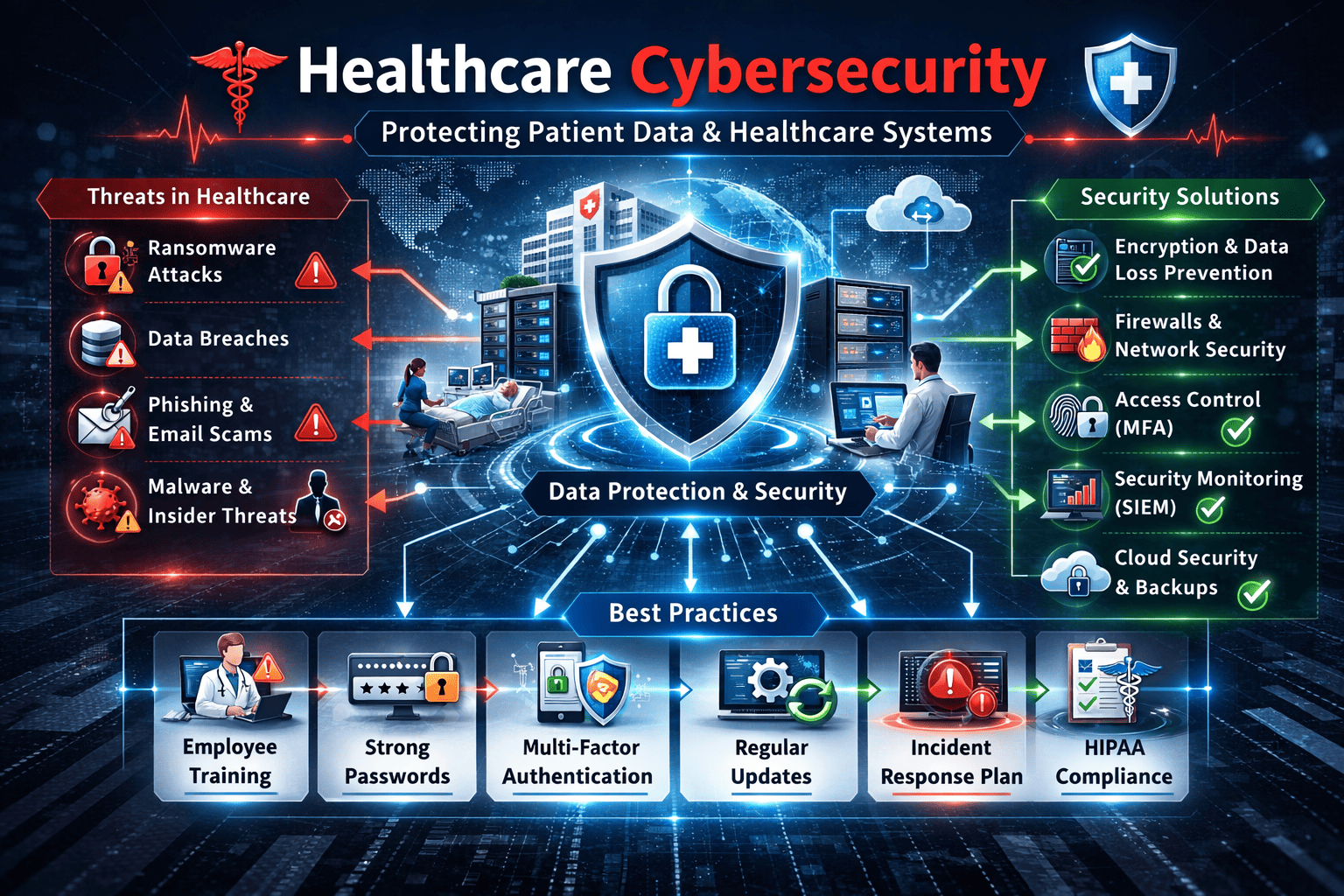
Common Cyber Threats in Healthcare
Healthcare organizations face a wide range of cyber threats.
Ransomware Attacks
Ransomware is one of the most dangerous threats.
Attackers encrypt systems and demand payment to restore access.
Phishing Attacks
Phishing emails trick employees into revealing credentials or downloading malware.
Insider Threats
Employees or contractors may accidentally or intentionally expose sensitive data.
IoT and Medical Device Vulnerabilities
Connected medical devices can be exploited if not properly secured.
Data Breaches
Unauthorized access to patient records can lead to identity theft and compliance violations.
Key Components of Healthcare Cybersecurity
A strong healthcare cybersecurity strategy includes multiple layers of protection.
1. Network Security
Securing healthcare networks is essential.
Best Practices
Use firewalls and intrusion detection systems
Segment networks to limit access
Monitor network traffic continuously
2. Endpoint Security
Healthcare organizations use many devices, including laptops and medical equipment.
Endpoint Protection Measures
Install antivirus and EDR solutions
Encrypt devices
Apply regular updates
3. Data Protection and Encryption
Protecting patient data is a top priority.
Data Security Practices
Encrypt data at rest and in transit
Use secure access controls
Monitor data usage
4. Identity and Access Management (IAM)
Controlling access reduces risk.
IAM Best Practices
Implement multi-factor authentication (MFA)
Use role-based access control (RBAC)
Regularly review permissions
5. Security Monitoring and Incident Response
Early detection is critical.
Monitoring Strategies
Use SIEM tools
Monitor system logs
Respond to threats quickly
Healthcare Cybersecurity Compliance and Regulations
Healthcare organizations must comply with strict regulations.
HIPAA (Health Insurance Portability and Accountability Act)
HIPAA requires organizations to protect patient data and ensure privacy.
GDPR (General Data Protection Regulation)
Applies to organizations handling data of EU citizens.
Other Compliance Standards
HITECH Act
ISO 27001
NIST guidelines
Compliance is a key aspect of healthcare cybersecurity.
Best Practices for Healthcare Cybersecurity
Organizations should follow proven strategies to improve security.
1. Conduct Regular Risk Assessments
Identify vulnerabilities and address them proactively.
2. Train Healthcare Staff
Employees should understand cybersecurity risks.
Training Topics
Phishing awareness
Password security
Safe data handling
3. Implement Zero Trust Security
Verify every access request, regardless of location.
4. Secure Medical Devices
Ensure all connected devices are updated and monitored.
5. Backup Data Regularly
Maintain secure backups to recover from ransomware attacks.
Challenges in Healthcare Cybersecurity
Healthcare organizations face unique challenges.
Legacy Systems
Older systems may not support modern security measures.
Budget Constraints
Limited resources can impact security investments.
Complexity of IT Environments
Healthcare systems are highly interconnected.
Balancing Security and Accessibility
Systems must remain accessible for patient care.
The Role of Emerging Technologies
Technology is shaping the future of healthcare cybersecurity.
Artificial Intelligence (AI)
AI helps detect threats and analyze large datasets.
Cloud Security
Cloud platforms provide scalable and secure infrastructure.
Zero Trust Architecture
Ensures continuous verification of users and devices.
Automation
Automated tools improve threat detection and response times.
Healthcare Cybersecurity for Different Stakeholders
Different roles within healthcare require tailored approaches.
IT Managers
Focus on infrastructure, monitoring, and compliance.
Executives and CEOs
Prioritize risk management and strategic investments.
Healthcare Providers
Ensure secure handling of patient data.
A unified approach strengthens overall healthcare cybersecurity.
Frequently Asked Questions (FAQ)
What is healthcare cybersecurity?
Healthcare cybersecurity involves protecting healthcare systems, data, and devices from cyber threats.
Why is healthcare a target for cyberattacks?
Healthcare organizations store valuable patient data and often use legacy systems, making them attractive targets.
What are the biggest threats in healthcare cybersecurity?
Common threats include ransomware, phishing, insider threats, and data breaches.
How can healthcare organizations improve cybersecurity?
They can implement strong access controls, train staff, secure devices, and monitor systems continuously.
What regulations apply to healthcare cybersecurity?
Key regulations include HIPAA, GDPR, and other data protection standards.
Strengthen Your Healthcare Cybersecurity Today
Cyber threats in healthcare are growing, and the stakes are higher than ever. Protecting patient data and ensuring uninterrupted care requires a strong and proactive cybersecurity strategy.
By investing in healthcare cybersecurity, organizations can reduce risks, improve compliance, and build trust with patients.
👉 Register for cybersecurity training today:
https://openedr.platform.xcitium.com/register/
Learn how to strengthen your cybersecurity strategy, protect sensitive data, and stay ahead of evolving threats in the healthcare industry.

 Loading...