Updated on December 30, 2025, by OpenEDR
Cyber threats are no longer rare or random—they are constant, targeted, and increasingly sophisticated. From ransomware to data breaches, attackers exploit weak network defenses every day. This is why firewall security remains one of the most critical components of any cybersecurity strategy.
Firewall security acts as the first line of defense between your internal network and external threats. Whether you’re protecting a small business or a global enterprise, firewalls help control traffic, block malicious activity, and enforce security policies. In this guide, we’ll explore what firewall security is, how it works, why it matters, and how organizations can implement it effectively.
What Is Firewall Security?
Firewall security refers to the use of hardware, software, or cloud-based firewalls to monitor and control incoming and outgoing network traffic based on predefined security rules.
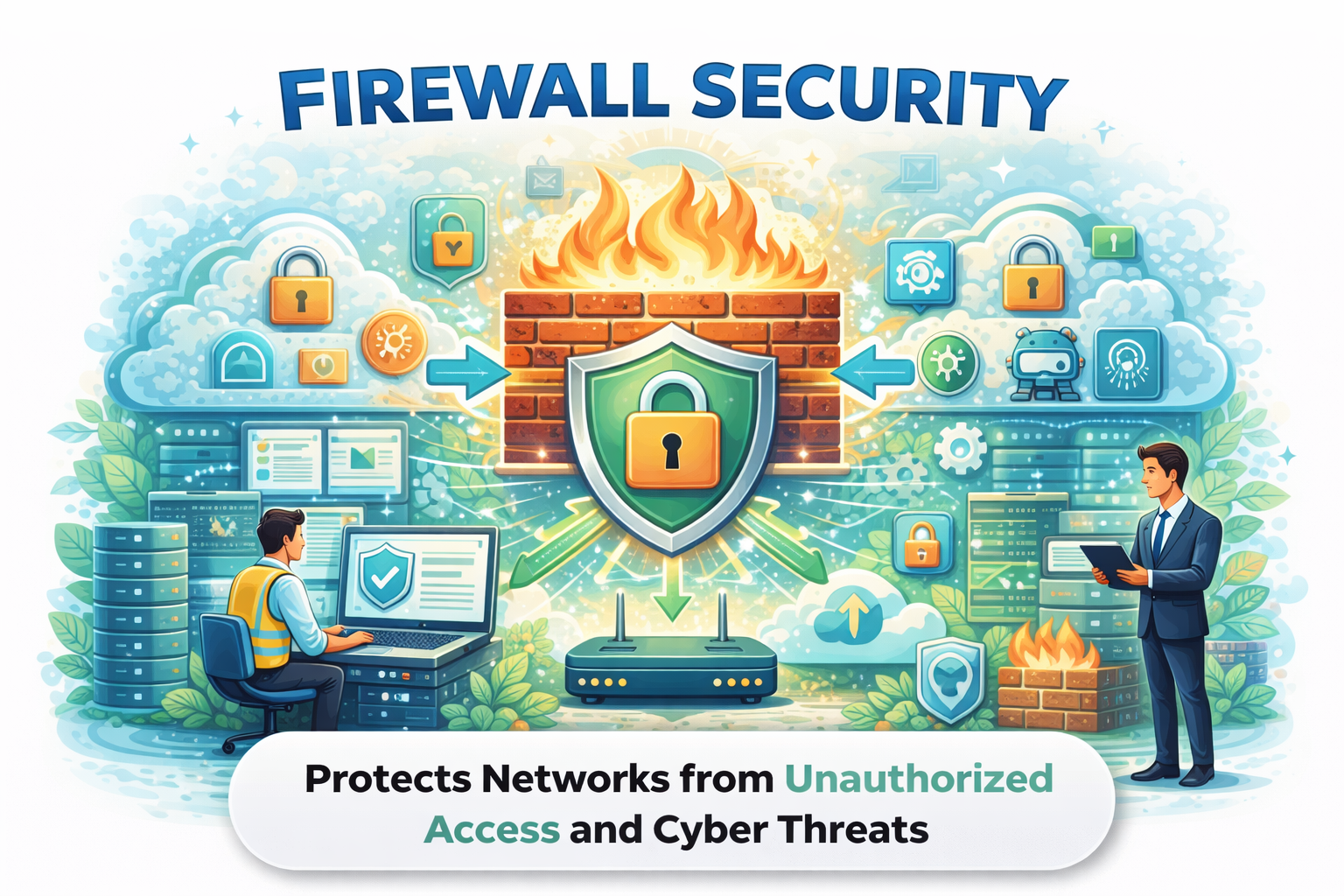
At its core, a firewall acts as a barrier between trusted internal networks and untrusted external networks, such as the internet. It inspects traffic and decides whether to allow or block data packets based on policies designed to prevent unauthorized access.
Modern firewall security goes beyond simple traffic filtering—it includes deep inspection, threat detection, and behavioral analysis to stop advanced attacks.
Why Firewall Security Is Still Essential Today
Some organizations mistakenly believe firewalls are outdated. In reality, firewall security is more important than ever.
Firewalls matter because they:
Block unauthorized access attempts
Prevent malware from spreading
Enforce network segmentation
Support compliance requirements
Reduce the attack surface
While endpoint and cloud security are critical, firewall security remains the backbone that protects networks at scale.
How Firewall Security Works
To understand firewall security, it helps to know how firewalls evaluate traffic.
Basic Firewall Functions
Inspect packets entering or leaving the network
Compare traffic against security rules
Allow, deny, or log traffic
Alert administrators to suspicious activity
Firewalls operate at different layers of the OSI model, depending on their type and sophistication.
Types of Firewalls and Their Role in Firewall Security
Not all firewalls are the same. Modern firewall security often combines multiple firewall types.
1. Packet-Filtering Firewalls
These firewalls inspect basic packet information, such as IP addresses and ports.
Pros:
Fast and lightweight
Simple to configure
Cons:
Limited visibility
No deep inspection
2. Stateful Inspection Firewalls
Stateful firewalls track active connections and understand traffic context.
Benefits:
Better security than packet filtering
Understand session state
This approach forms the foundation of many traditional enterprise firewalls.
3. Application Layer Firewalls
Also known as proxy firewalls, these inspect traffic at the application level.
Advantages:
Deep inspection
Blocks application-specific attacks
These firewalls improve firewall security by understanding how applications behave.
4. Next-Generation Firewalls (NGFWs)
Modern firewall security relies heavily on NGFWs.
NGFW capabilities include:
Deep packet inspection
Intrusion prevention (IPS)
Application awareness
Threat intelligence integration
SSL/TLS inspection
NGFWs provide advanced protection against modern threats.
5. Cloud-Based Firewalls (FWaaS)
As organizations move to the cloud, firewall security follows.
Cloud firewall benefits:
Scalable and flexible
Centralized management
Ideal for remote and hybrid workforces
Firewall-as-a-Service (FWaaS) plays a critical role in modern architectures.
Key Benefits of Firewall Security for Organizations
Firewall security delivers both technical and business benefits.
Major Advantages
Protects sensitive data
Reduces malware infections
Improves network visibility
Supports compliance (SOC 2, PCI DSS, HIPAA)
Prevents unauthorized access
For executives, firewall security helps protect revenue, reputation, and customer trust.
Firewall Security and Network Segmentation
Network segmentation is one of the most powerful firewall security strategies.
By dividing networks into smaller zones, firewalls:
Limit lateral movement
Contain breaches
Protect critical systems
Segmentation ensures attackers cannot freely move once inside the network.
Firewall Security Best Practices
Even the best firewall can fail if misconfigured. Following firewall security best practices is essential.
Essential Firewall Security Best Practices
Apply least-privilege rules
Regularly review firewall policies
Block unused ports and services
Enable logging and monitoring
Update firewall firmware and signatures
Firewall security is not a “set it and forget it” solution—it requires continuous management.
Firewall Security in Cloud and Hybrid Environments
Traditional perimeter firewalls alone are no longer sufficient.
Modern Challenges
Remote workers
Cloud-native applications
Encrypted traffic
Dynamic workloads
To address this, firewall security must integrate with:
Cloud security platforms
Zero Trust architectures
Endpoint protection tools
Hybrid firewall strategies are now the norm.
Firewall Security vs Endpoint Security
Firewall security and endpoint security work best together—not separately.
| Feature | Firewall Security | Endpoint Security |
|---|---|---|
| Protects | Network traffic | Individual devices |
| Scope | Network-wide | Device-level |
| Stops | External threats | Malware & exploits |
| Best Use | Perimeter defense | Last line of defense |
A layered security approach provides the strongest protection.
Common Firewall Security Mistakes to Avoid
Organizations often weaken firewall security without realizing it.
Common Errors
Overly permissive rules
Unmonitored firewall logs
Ignoring encrypted traffic
Poor rule documentation
Lack of regular audits
Avoiding these mistakes significantly improves firewall effectiveness.
Firewall Security and Zero Trust
Zero Trust security assumes no user or device is trusted by default.
Firewall security supports Zero Trust by:
Enforcing strict access controls
Segmenting networks
Inspecting all traffic
Continuously verifying connections
Modern firewalls are critical enablers of Zero Trust strategies.
Is Firewall Security Enough on Its Own?
While firewall security is essential, it is not sufficient by itself.
Firewalls should be combined with:
Endpoint detection and response (EDR)
Identity and access management (IAM)
Continuous monitoring
Threat intelligence
Defense-in-depth remains the gold standard in cybersecurity.
The Future of Firewall Security
Firewall security continues to evolve alongside threats.
Emerging Trends
AI-driven threat detection
Automated policy management
Cloud-native firewall platforms
Integrated security ecosystems
Firewalls are becoming smarter, more adaptive, and more automated.
Frequently Asked Questions (FAQs)
1. What is firewall security?
Firewall security is the practice of using firewalls to monitor, control, and secure network traffic from cyber threats.
2. Are firewalls still necessary?
Yes. Firewalls remain a critical layer of defense, especially when combined with modern security tools.
3. What is the difference between a firewall and antivirus?
Firewalls control network traffic, while antivirus software detects and removes malicious files on devices.
4. Can firewall security prevent ransomware?
Firewalls can block malicious traffic and command-and-control connections, reducing ransomware risk.
5. Do cloud environments need firewalls?
Absolutely. Cloud-based firewall security is essential for protecting cloud workloads and remote users.
Final Thoughts: Why Firewall Security Still Matters
Cyber threats are evolving—but so is firewall security. Far from being obsolete, firewalls are more intelligent and powerful than ever. They remain a foundational layer that protects networks, enforces policy, and supports modern security architectures.
For IT managers and business leaders alike, firewall security is not just a technical necessity—it’s a strategic investment in resilience and trust.
Strengthen Your Firewall Security Today
Visibility and control are essential to stopping modern threats. If you want to enhance firewall security with real-time threat prevention and zero-trust protection:
👉 Start protecting your environment with Xcitium’s OpenEDR
Register Now

 Loading...