Updated on April 28, 2026, by OpenEDR
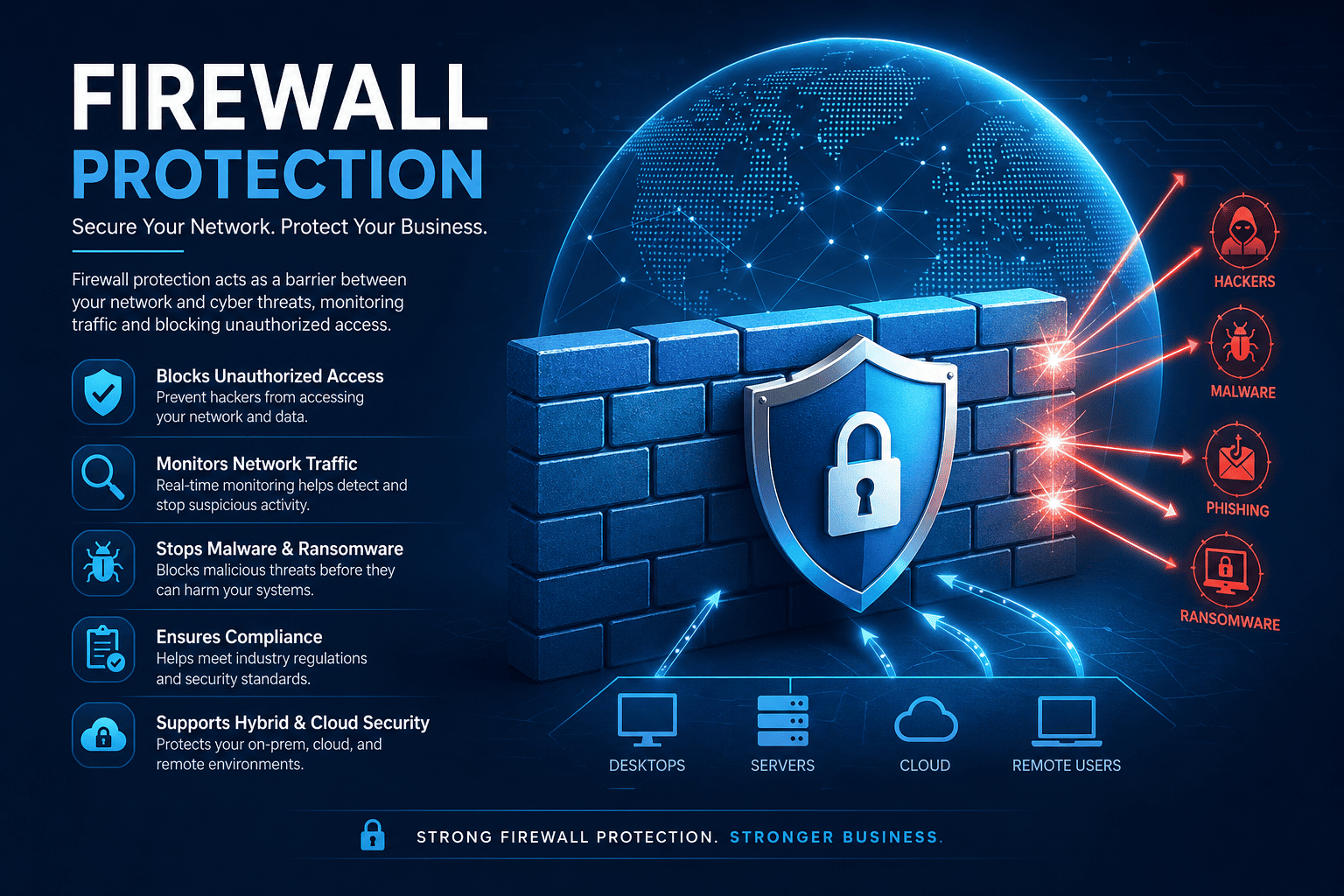
Cyber threats are evolving faster than ever. Every day, businesses face attacks targeting their networks, data, and systems. This is where firewall protection becomes essential. It acts as a barrier between your internal network and external threats, helping you control and monitor incoming and outgoing traffic.
If you’re an IT manager, cybersecurity professional, or business leader, understanding firewall protection is critical. In this guide, we’ll break down how it works, why it matters, and how to implement it effectively.
What is Firewall Protection?
Firewall protection is a cybersecurity system that monitors and controls network traffic based on predefined security rules. It prevents unauthorized access while allowing legitimate communication.
Unlike basic security tools, modern firewall protection includes:
- Real-time traffic monitoring
- Threat filtering
- Intrusion prevention
- Application control
This ensures your network stays protected from malicious activities.
Why Firewall Protection is Important
Every network connected to the internet is a target. Without proper firewall protection, your organization is vulnerable to attacks.
Key Reasons:
- Blocks unauthorized access to your systems
- Prevents malware and ransomware attacks
- Protects sensitive business data
- Ensures regulatory compliance
- Secures remote and hybrid work environments
A strong firewall protection strategy is the foundation of network security.
How Firewall Protection Works
Modern firewall protection analyzes data packets and determines whether to allow or block them based on rules.
1. Packet Filtering
Examines data packets and allows or blocks them based on IP address, port, or protocol.
2. Stateful Inspection
Tracks active connections and makes decisions based on the state of traffic.
3. Proxy Filtering
Acts as an intermediary between users and the internet to filter requests.
4. Next-Generation Firewall (NGFW)
Uses advanced techniques like deep packet inspection and AI-based threat detection.
This layered approach makes firewall protection highly effective.
Types of Firewall Protection
Understanding different types helps you choose the right firewall protection for your business.
1. Network Firewalls
Protect entire networks from external threats.
2. Host-Based Firewalls
Installed on individual devices for endpoint-level protection.
3. Cloud Firewalls
Secure cloud-based infrastructure and applications.
4. Next-Generation Firewalls (NGFW)
Offer advanced features like intrusion prevention and application awareness.
Each type of firewall protection serves a specific purpose.
Key Features of Firewall Protection
When evaluating firewall protection, look for these features:
Real-Time Monitoring
Continuously analyzes network traffic for suspicious activity.
Intrusion Prevention System (IPS)
Detects and blocks known threats automatically.
Application Control
Restricts unauthorized applications.
Logging and Reporting
Provides insights into network activity.
Automatic Updates
Keeps protection up to date against new threats.
These features enhance the effectiveness of firewall protection.
Benefits of Firewall Protection
Implementing firewall protection offers several advantages:
- Improved network security
- Reduced risk of cyberattacks
- Better visibility into traffic
- Enhanced data protection
- Support for compliance requirements
Organizations with strong firewall protection are better equipped to handle cyber threats.
Firewall Protection vs Antivirus
Many people confuse firewall protection with antivirus software, but they serve different purposes.
| Feature | Firewall Protection | Antivirus Software |
|---|---|---|
| Purpose | Blocks unauthorized access | Detects and removes malware |
| Focus | Network traffic | Files and applications |
| Protection Type | Preventive | Reactive + preventive |
| Scope | Entire network | Individual devices |
➡ For complete security, businesses need both.
Best Practices for Firewall Protection
To maximize your firewall protection, follow these best practices:
✔ Configure Proper Rules
Only allow necessary traffic and block everything else.
✔ Regularly Update Firewall Software
Stay protected against new vulnerabilities.
✔ Monitor Logs and Alerts
Detect suspicious activity early.
✔ Use Multi-Layer Security
Combine firewall with endpoint protection and IDS/IPS.
✔ Limit User Access
Apply least-privilege principles.
These practices strengthen your firewall protection strategy.
Common Firewall Protection Challenges
Despite its importance, firewall protection comes with challenges:
- Complex configuration requirements
- False positives blocking legitimate traffic
- Managing large-scale networks
- Keeping up with evolving threats
Addressing these challenges ensures effective firewall deployment.
How to Choose the Right Firewall Protection
Selecting the right firewall protection solution is crucial.
Consider These Factors:
- Scalability: Can it grow with your business?
- Performance: Does it impact network speed?
- Ease of Management: Is it user-friendly?
- Security Features: Does it offer advanced protection?
- Vendor Reputation: Choose trusted providers
The right firewall protection ensures long-term security.
Future of Firewall Protection
The future of firewall protection includes:
- AI-driven threat detection
- Zero Trust architecture
- Cloud-native firewalls
- Integration with broader security platforms
Businesses must adapt to stay secure.
Conclusion
Cybersecurity threats are not slowing down. Investing in firewall protection is one of the smartest decisions any organization can make. It safeguards your network, protects sensitive data, and ensures business continuity.
By combining firewall protection with other security measures, you can build a strong defense against modern cyber threats.
Get Advanced Protection Today
Strengthen your security with powerful endpoint and network protection.
👉 Register now: https://openedr.platform.xcitium.com/register/
FAQs About Firewall Protection
1. What does firewall protection do?
Firewall protection monitors and controls network traffic to prevent unauthorized access and cyber threats.
2. Is firewall protection enough for security?
No, it should be combined with antivirus, endpoint protection, and other security tools.
3. What is the difference between hardware and software firewalls?
Hardware firewalls protect entire networks, while software firewalls protect individual devices.
4. Do small businesses need firewall protection?
Yes, small businesses are common targets and need strong network security.
5. How often should firewall rules be updated?
Firewall rules should be reviewed and updated regularly to adapt to new threats.

 Loading...