Updated on November 12, 2025, by OpenEDR
Have you ever unlocked your smartphone just by looking at it? That’s the magic — and risk — of facial recognition software. As businesses and security systems embrace AI-driven identification tools, this technology is revolutionizing authentication methods across industries. Yet, it also raises critical questions about data privacy, cybersecurity, and digital ethics.
In this article, we’ll explore what facial recognition software is, how it works, its role in modern cybersecurity, and what organizations must consider to implement it responsibly.
What Is Facial Recognition Software?
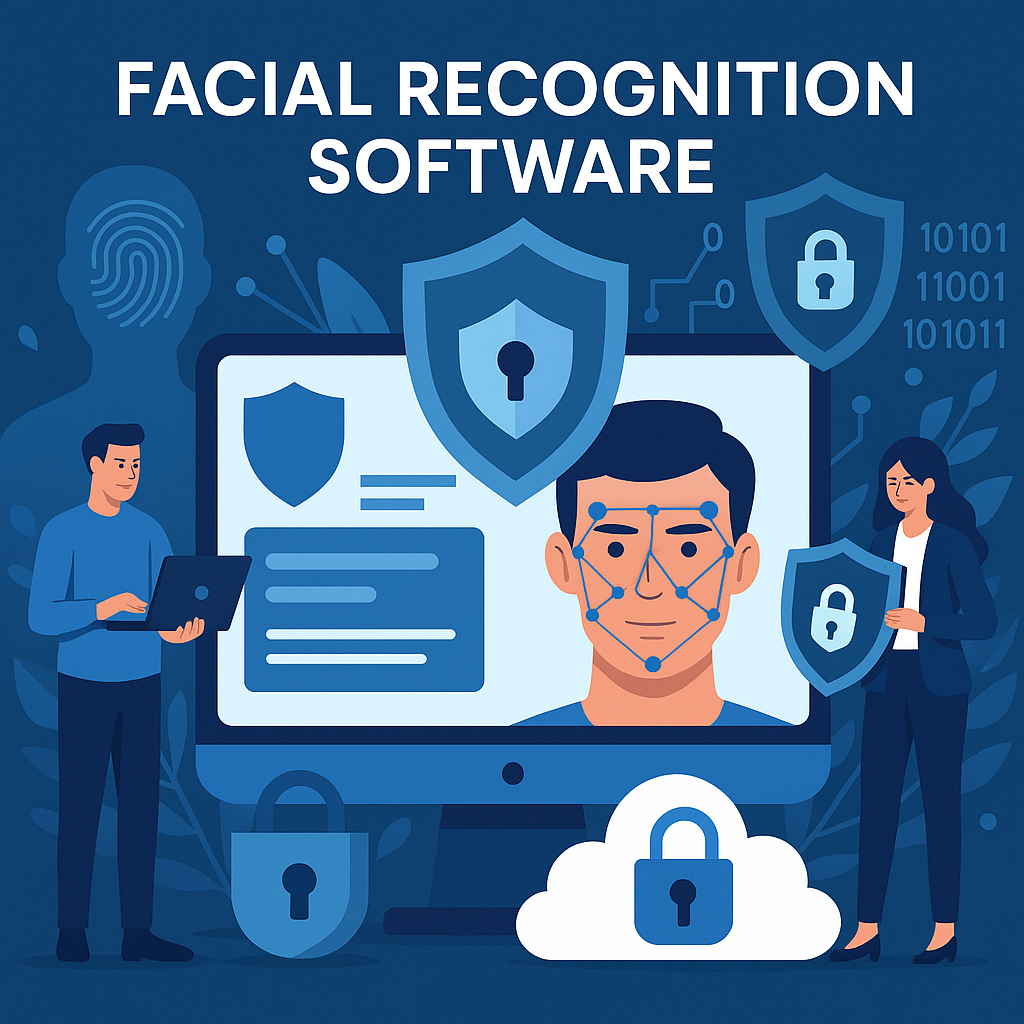
Facial recognition software is a biometric authentication technology that identifies or verifies a person’s identity using facial features. It maps a face’s geometry — the distance between the eyes, nose width, jawline, and other unique traits — and compares it with stored data.
Unlike traditional passwords or access cards, facial recognition leverages AI-powered algorithms and machine learning (ML) to analyze images or live video feeds.
Key functions include:
Detecting human faces in real-time.
Analyzing facial features using 2D or 3D modeling.
Matching faces with stored images in a secure database.
Today, this technology powers smartphone authentication, airport security systems, and enterprise access control solutions.
How Facial Recognition Software Works
Facial recognition follows a structured multi-step process that ensures accurate identification:
Face Detection: The system captures an image or frame and identifies a human face within it.
Face Analysis: It measures and maps key facial landmarks — eyes, cheekbones, chin, etc.
Feature Encoding: The software converts these measurements into a digital “faceprint.”
Comparison and Matching: The faceprint is compared against a database to find potential matches.
Authentication or Decision: If a match is confirmed, the user gains access or verification completes.
This workflow relies heavily on deep learning algorithms that continuously refine their accuracy as they process more data.
Applications of Facial Recognition in Cybersecurity
1. Advanced Biometric Authentication
Organizations are shifting from passwords to biometric security to reduce credential theft. Facial recognition provides frictionless yet strong access control — especially in multi-factor authentication setups.
2. Fraud Detection and Prevention
Financial institutions and e-commerce platforms deploy facial recognition to detect fraudulent identities and prevent account takeovers. AI models flag inconsistencies between live images and stored profiles, strengthening user trust.
3. Secure Remote Workforce Management
With the rise of hybrid work, facial recognition technology is used to verify employees logging into corporate systems remotely — adding a layer of zero-trust security.
4. Surveillance and Threat Detection
Governments and private firms use it for real-time monitoring to identify potential security threats, intruders, or blacklisted individuals.
Benefits of Facial Recognition Software
✅ Enhanced Security: Harder to forge or steal compared to passwords.
✅ Speed & Convenience: Instant identity verification saves time for users and organizations.
✅ Automation: Reduces manual ID checks in high-traffic or sensitive environments.
✅ Integration with IoT & Cloud: Easily works with smart devices and cloud-based systems.
However, these benefits come with serious privacy and ethical considerations.
Cybersecurity Risks and Privacy Challenges
1. Data Breaches and Misuse
Stored facial data is highly sensitive. If breached, it cannot be “reset” like a password. Attackers could use stolen biometric information for identity theft or surveillance.
2. Spoofing and Deepfake Attacks
Sophisticated AI deepfakes can replicate faces, tricking low-grade facial recognition systems. Hence, organizations must invest in anti-spoofing technology and liveness detection.
3. Privacy and Consent Violations
Collecting facial data without explicit consent can lead to legal liabilities under laws such as GDPR and CCPA.
4. Algorithmic Bias
Some facial recognition models show bias toward certain ethnicities or genders. Ethical AI design and diverse data training are essential to ensure fairness.
Facial Recognition in Business Security Operations
Enterprises are adopting AI-driven facial recognition solutions as part of their broader cybersecurity infrastructure.
Access Management: Replaces keycards or passwords for facility entry.
Endpoint Protection: Works with identity-based access control systems.
Incident Response: Helps identify unauthorized personnel during breaches.
These integrations enhance both physical and digital security — making it harder for attackers to exploit weak credentials.
How to Secure Facial Recognition Systems
To minimize risk and ensure compliance, organizations should implement the following:
Encrypt biometric data at rest and in transit.
Adopt anonymization techniques when storing facial templates.
Use on-device processing instead of cloud storage for added privacy.
Enable liveness detection to prevent photo or video spoofing.
Conduct regular penetration testing on biometric APIs and data pipelines.
Establish strict consent and data retention policies.
The Future of Facial Recognition in Cybersecurity
By 2030, facial recognition will be deeply integrated into Zero Trust Architecture and AI-driven security ecosystems. We’ll see:
Edge AI facial recognition that processes data locally.
Decentralized ID management reducing data exposure risks.
Regulatory frameworks enforcing privacy-by-design principles.
The challenge for businesses lies in achieving a balance — harnessing innovation without compromising user trust.
Conclusion: The Face of Secure Digital Transformation
Facial recognition software represents both a breakthrough and a challenge in modern cybersecurity. It simplifies authentication, deters fraud, and enhances digital trust — but only when implemented ethically and securely.
Organizations should combine biometric technology, encryption, and AI governance to protect sensitive data and maintain compliance.
Ready to protect your business with next-generation security intelligence?
👉 Register with Xcitium OpenEDR to experience proactive threat detection and real-time cyber defense.
FAQs About Facial Recognition Software
1. What is facial recognition software used for?
It’s used for verifying or identifying individuals based on their facial features — commonly applied in cybersecurity, law enforcement, and device authentication.
2. How accurate is facial recognition technology?
Modern AI-powered systems can achieve over 99% accuracy, though performance varies depending on image quality and lighting.
3. Is facial recognition secure?
Yes, when combined with encryption and anti-spoofing measures. However, breaches of biometric data pose long-term risks if not secured properly.
4. What industries benefit most from it?
Finance, healthcare, law enforcement, and IT sectors use it for access control, identity verification, and fraud prevention.
5. What are the biggest concerns about facial recognition?
Privacy violations, data misuse, algorithmic bias, and lack of consent remain major challenges.

 Loading...