Updated on March 13, 2026, by OpenEDR
Cyber threats are evolving rapidly, and organizations face increasing pressure to protect their digital assets, networks, and sensitive data. From ransomware attacks and phishing campaigns to insider threats and advanced persistent attacks, businesses must implement strong enterprise security strategies to defend their infrastructure.
According to global cybersecurity reports, large organizations are among the most targeted victims of cyberattacks because they manage vast amounts of sensitive information and complex IT environments. Without effective enterprise security, companies risk financial losses, regulatory penalties, and reputational damage.
Enterprise security refers to a comprehensive approach to protecting organizational systems, networks, and data across the entire IT ecosystem. For IT managers, cybersecurity teams, and business leaders, implementing strong enterprise security solutions is essential to maintain operational resilience and protect business-critical assets.
In this guide, we’ll explore what enterprise security is, why it matters, the key components of a strong security framework, and best practices organizations can follow to strengthen their defenses.
What Is Enterprise Security?
Enterprise security refers to the technologies, policies, and processes organizations use to protect their IT infrastructure, data, and digital resources from cyber threats.
Unlike traditional security models that focus on individual systems, enterprise security takes a holistic approach to safeguarding the entire organization.
Key Objectives of Enterprise Security
Enterprise security aims to:
Protect sensitive data from unauthorized access
Prevent cyberattacks and malware infections
Ensure system availability and reliability
Maintain compliance with regulatory standards
Detect and respond to security incidents quickly
A well-designed enterprise security strategy integrates multiple layers of protection across the organization’s technology environment.
Why Enterprise Security Is Critical for Modern Businesses
Digital transformation has dramatically expanded the attack surface for organizations. Companies now rely on cloud services, remote work, mobile devices, and interconnected systems.
Without strong enterprise security, these environments become vulnerable to cyber threats.
Increasing Cybercrime
Cybercriminals continuously develop sophisticated attack methods targeting corporate networks.
Protection of Sensitive Data
Organizations store valuable assets such as customer information, financial records, and intellectual property.
Regulatory Compliance
Industries must comply with data protection regulations such as:
GDPR
HIPAA
PCI DSS
ISO 27001
Business Continuity
Security breaches can disrupt operations, causing financial losses and productivity issues.
Implementing effective enterprise security helps organizations address these challenges.
Key Components of Enterprise Security
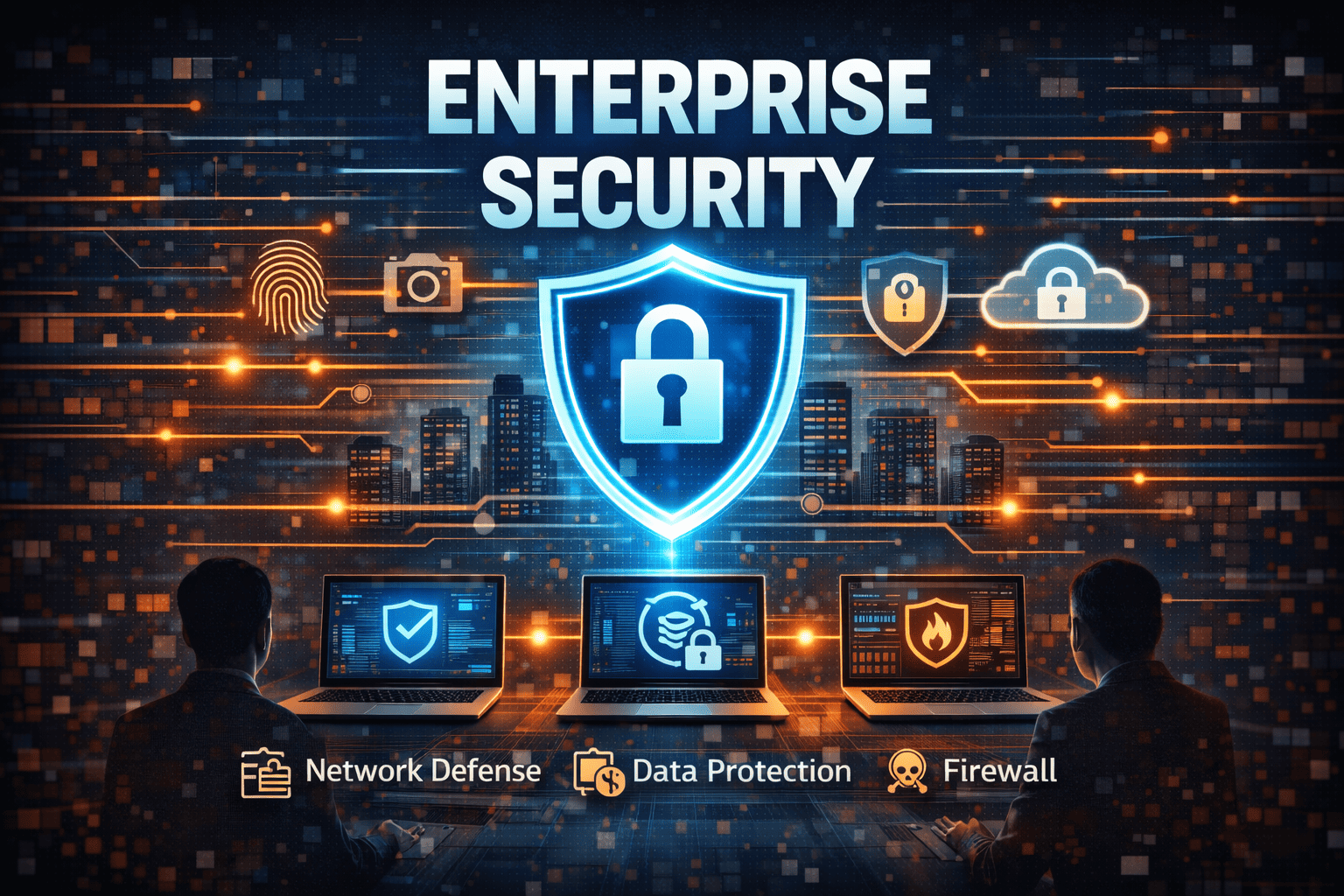
A strong enterprise security framework includes several critical layers that work together to protect organizational systems.
Network Security
Network security protects internal systems from unauthorized access and cyber threats.
Network Security Tools
Common network security technologies include:
Firewalls
Intrusion detection systems
Network monitoring tools
Secure gateways
These tools analyze traffic and block suspicious activity.
Endpoint Security
Endpoints such as laptops, servers, and mobile devices are common entry points for attackers.
Endpoint security solutions monitor device activity and prevent malware infections.
Examples of Endpoint Protection
Antivirus software
Endpoint detection and response (EDR)
Device monitoring tools
Strong endpoint security is essential for enterprise environments.
Identity and Access Management
Identity and access management (IAM) controls who can access organizational resources.
Key IAM Features
Multi-factor authentication
Role-based access control
Privileged account management
IAM systems help reduce unauthorized access risks.
Data Security
Data security ensures that sensitive information remains protected.
Data Protection Methods
Organizations often use:
Encryption
Data loss prevention tools
Secure backups
Protecting data is a critical component of enterprise security strategies.
Cloud Security
Many organizations now rely on cloud infrastructure for business operations.
Cloud security tools help protect applications, data, and services stored in cloud environments.
Common Enterprise Security Threats
Organizations implementing enterprise security must defend against multiple types of cyber threats.
Ransomware Attacks
Ransomware encrypts systems and demands payment for restoring access.
These attacks can disrupt business operations and lead to data loss.
Phishing Attacks
Phishing emails attempt to trick employees into revealing credentials or downloading malicious files.
Employee awareness is critical to preventing phishing attacks.
Insider Threats
Insider threats may come from employees, contractors, or partners with authorized access.
Security policies must monitor and limit access privileges.
Advanced Persistent Threats
Advanced persistent threats (APTs) involve long-term attacks designed to infiltrate networks and steal sensitive data.
These attacks require sophisticated detection tools.
Enterprise Security Best Practices
Organizations can strengthen their security posture by implementing proven enterprise security practices.
Conduct Regular Security Assessments
Security assessments identify vulnerabilities before attackers exploit them.
Regular assessments help organizations improve their defenses.
Implement a Zero Trust Architecture
Zero Trust security models require continuous verification of users and devices before granting access.
This approach reduces the risk of unauthorized access.
Use Multi-Factor Authentication
Multi-factor authentication adds an additional layer of protection to login systems.
It helps prevent attackers from accessing accounts with stolen credentials.
Monitor Network Activity Continuously
Security monitoring tools help detect suspicious behavior early.
Organizations should analyze logs and alerts regularly.
Train Employees on Cybersecurity
Human error remains one of the most common causes of security incidents.
Security awareness training helps employees recognize cyber threats.
Enterprise Security Technologies
Modern enterprise security strategies rely on advanced technologies to protect digital infrastructure.
Security Information and Event Management (SIEM)
SIEM platforms collect and analyze security logs across multiple systems.
They help detect suspicious activity and support incident investigations.
Endpoint Detection and Response (EDR)
EDR tools monitor endpoint devices and identify unusual behavior.
These tools provide detailed insights into system activity.
Extended Detection and Response (XDR)
XDR solutions integrate multiple security layers such as endpoint, network, and cloud monitoring.
This unified approach improves threat detection.
Threat Intelligence Platforms
Threat intelligence provides insights into emerging cyber threats.
Security teams use this information to improve detection and prevention strategies.
Emerging Trends in Enterprise Security
Enterprise security continues evolving as cyber threats become more sophisticated.
Artificial Intelligence in Cybersecurity
AI-powered tools analyze large volumes of security data and detect threats faster.
Cloud-Native Security Platforms
Cloud-based security solutions provide scalable protection for distributed environments.
Security Automation
Automation helps organizations respond to threats quickly without manual intervention.
How Organizations Can Improve Enterprise Security
Organizations can strengthen their enterprise security strategies by following these steps:
Identify critical assets and sensitive data
Implement layered security defenses
Deploy advanced monitoring tools
Conduct regular vulnerability assessments
Train employees on cybersecurity awareness
These steps help organizations build a resilient security infrastructure.
FAQ: Enterprise Security
What is enterprise security?
Enterprise security refers to the technologies and practices used to protect an organization’s networks, systems, and data from cyber threats.
Why is enterprise security important?
Enterprise security protects sensitive information, prevents cyberattacks, and ensures business continuity.
What tools are used for enterprise security?
Common tools include firewalls, endpoint protection systems, SIEM platforms, identity management solutions, and cloud security tools.
What is the biggest challenge in enterprise security?
One major challenge is managing complex IT environments with multiple devices, users, and applications.
How can organizations improve enterprise security?
Organizations can improve security by implementing layered defenses, monitoring systems continuously, and training employees.
Final Thoughts
Cyber threats are becoming more advanced, making strong protection essential for modern organizations. Implementing effective enterprise security strategies allows businesses to protect their infrastructure, safeguard sensitive data, and maintain operational stability.
Enterprise security is not a single tool or solution—it is a comprehensive framework that integrates technology, policies, and people. Organizations that adopt a proactive security approach can significantly reduce cyber risks and strengthen their resilience against attacks.
If you’re looking to strengthen your organization’s cybersecurity defenses and protect endpoints from modern threats, advanced security platforms can help.
👉 Get started with advanced endpoint protection today:
https://openedr.platform.xcitium.com/register/

 Loading...