Updated on May 26, 2026, by OpenEDR
Cyberattacks are no longer limited to large enterprises. Today, businesses of all sizes face ransomware, phishing attacks, insider threats, and zero-day exploits daily. As remote work, cloud applications, and connected devices continue to grow, organizations need stronger protection at every endpoint. That is where an endpoint security manager becomes essential.
An endpoint security manager helps organizations monitor, secure, and manage devices connected to the network. From laptops and servers to mobile devices and cloud workloads, these tools give IT teams centralized visibility and control over cybersecurity risks. For IT managers, cybersecurity teams, CEOs, and founders, investing in endpoint protection is no longer optional—it is critical for business continuity.
In this guide, we will explore what an endpoint security manager is, how it works, key features to look for, and why modern organizations rely on endpoint security solutions to reduce cyber risk.
What Is an Endpoint Security Manager?
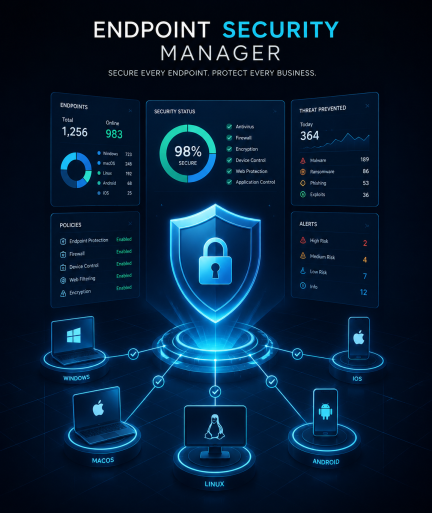
An endpoint security manager is a cybersecurity platform that protects endpoint devices from malware, ransomware, phishing attacks, unauthorized access, and advanced threats. It allows IT and security teams to monitor, detect, investigate, and respond to suspicious activity across all connected endpoints from a centralized dashboard.
Endpoints include:
- Laptops
- Desktop computers
- Servers
- Smartphones
- Tablets
- IoT devices
- Virtual machines
- Cloud workloads
Modern endpoint security managers combine multiple technologies into a single platform, including:
- Antivirus protection
- Endpoint Detection and Response (EDR)
- Behavioral analytics
- Threat intelligence
- Device management
- Automated remediation
As organizations expand their digital environments, endpoint security managers provide the visibility and control needed to stop attacks before they spread.
Why Endpoint Security Matters More Than Ever
Cybercriminals increasingly target endpoints because they are often the easiest entry point into a network. One compromised device can allow attackers to steal sensitive data, deploy ransomware, or move laterally across systems.
An effective endpoint security manager helps organizations:
- Detect threats in real time
- Prevent malware infections
- Reduce ransomware risk
- Secure remote employees
- Enforce security policies
- Improve compliance
- Automate incident response
According to cybersecurity industry reports, endpoints remain one of the most targeted attack surfaces for ransomware and credential theft attacks. Businesses without proper endpoint visibility often discover attacks too late.
For industries such as healthcare, finance, retail, manufacturing, and technology, endpoint protection is now a core requirement for operational resilience.
How an Endpoint Security Manager Works
An endpoint security manager continuously monitors devices and network activity for suspicious behavior. Unlike traditional antivirus software that relies mostly on signatures, modern platforms use AI-driven analytics and behavioral detection to identify unknown threats.
Here is how the process typically works:
1. Endpoint Monitoring
The platform collects telemetry from connected devices, including:
- Processes
- File activity
- Login attempts
- Application usage
- Network connections
- Registry changes
This data helps security teams identify unusual behavior.
2. Threat Detection
Modern endpoint security managers use:
- Machine learning
- Behavioral analysis
- Threat intelligence feeds
- Heuristic scanning
These technologies detect malware, ransomware, fileless attacks, and insider threats before major damage occurs.
3. Alerting and Investigation
When suspicious activity is identified, the system generates alerts for security teams. Analysts can investigate:
- Attack timelines
- Affected endpoints
- User activity
- Lateral movement
- Indicators of compromise
4. Automated Response
Many endpoint security managers automate containment actions, including:
- Isolating infected devices
- Blocking malicious files
- Killing suspicious processes
- Quarantining threats
- Rolling back ransomware changes
Automation significantly reduces response time during active attacks.
Key Features of a Modern Endpoint Security Manager
Not all endpoint protection solutions are equal. Businesses should evaluate features carefully before selecting a platform.
Real-Time Threat Detection
Continuous monitoring helps identify threats before they spread across systems.
Endpoint Detection and Response (EDR)
EDR capabilities provide deeper visibility into suspicious activities and support rapid incident response.
Ransomware Protection
Behavior-based ransomware detection can stop encryption attacks before files become inaccessible.
Centralized Management
An endpoint security manager should provide a unified dashboard for managing policies, devices, alerts, and investigations.
Threat Intelligence Integration
Access to global threat intelligence improves detection accuracy against emerging attack techniques.
Cloud-Native Security
Cloud-managed platforms allow organizations to secure remote employees and distributed environments more effectively.
Automated Remediation
Automation helps security teams contain attacks quickly while reducing manual workload.
Benefits of Using an Endpoint Security Manager
Organizations that deploy a modern endpoint security manager gain several advantages.
Improved Threat Visibility
Security teams can monitor all connected devices from a single platform, making it easier to identify suspicious activity.
Faster Incident Response
Automated alerts and response workflows reduce the time required to contain attacks.
Reduced Operational Risk
Strong endpoint protection minimizes downtime caused by ransomware and malware infections.
Better Remote Workforce Security
As hybrid work expands, businesses need visibility across remote endpoints and cloud-connected devices.
Simplified Compliance
Many regulations require organizations to secure endpoints and monitor sensitive data access.
Lower Security Costs
Centralized management and automation reduce the need for manual intervention and fragmented security tools.
Common Threats an Endpoint Security Manager Can Stop
Modern cyber threats are more sophisticated than ever. A strong endpoint security manager helps defend against:
- Ransomware
- Malware
- Phishing attacks
- Zero-day exploits
- Fileless malware
- Credential theft
- Insider threats
- Spyware
- Advanced persistent threats (APTs)
- Remote access Trojans
Attackers often combine multiple techniques during a breach. Behavioral analytics and AI-driven detection improve visibility into complex attacks.
Endpoint Security Manager vs Traditional Antivirus
Traditional antivirus software mainly relies on known malware signatures. While useful, it cannot fully protect organizations against modern attacks.
| Feature | Traditional Antivirus | Endpoint Security Manager |
|---|---|---|
| Signature-based detection | Yes | Yes |
| Behavioral analytics | Limited | Advanced |
| Ransomware protection | Basic | Multi-layered |
| Real-time monitoring | Minimal | Continuous |
| Automated response | Limited | Advanced |
| Threat hunting | No | Yes |
| Centralized visibility | Limited | Full visibility |
| EDR capabilities | No | Included |
Modern organizations need more than basic antivirus tools to defend against sophisticated cyber threats.
How Industries Use Endpoint Security Managers
Different industries face unique cybersecurity challenges. An endpoint security manager helps organizations strengthen protection across critical operations.
Healthcare
Healthcare providers use endpoint security managers to protect patient data, connected medical devices, and electronic health records from ransomware attacks.
Financial Services
Banks and financial institutions rely on endpoint detection to reduce fraud, secure transactions, and prevent credential theft.
Manufacturing
Manufacturers use endpoint protection to defend industrial systems and prevent downtime caused by cyberattacks.
Retail
Retail organizations secure payment systems, customer information, and distributed endpoints across multiple locations.
Technology Companies
Technology firms use advanced endpoint security to protect intellectual property and cloud infrastructure.
Best Practices for Managing Endpoint Security
Deploying an endpoint security manager is important, but organizations should also follow cybersecurity best practices.
Keep Software Updated
Unpatched systems remain a major attack vector for cybercriminals.
Enforce Multi-Factor Authentication (MFA)
MFA reduces the risk of credential-based attacks.
Train Employees
Security awareness training helps employees identify phishing and social engineering attempts.
Segment Networks
Network segmentation limits attacker movement if a device becomes compromised.
Monitor Endpoint Activity
Continuous visibility improves threat detection and response capabilities.
Regularly Review Security Policies
Organizations should update endpoint security policies to match evolving threats and business needs.
The Future of Endpoint Security Management
Endpoint security continues to evolve as cyber threats become more advanced. Modern endpoint security managers increasingly use:
- Artificial intelligence
- Machine learning
- Zero Trust security models
- Cloud-native detection
- Extended Detection and Response (XDR)
- Automated threat hunting
Organizations are moving toward unified platforms that combine prevention, detection, investigation, and response into a single ecosystem.
As remote work and cloud adoption continue to grow, endpoint security managers will play an even bigger role in protecting digital environments.
How to Choose the Right Endpoint Security Manager
Before selecting a platform, organizations should evaluate:
- Scalability
- Detection capabilities
- EDR functionality
- Ease of deployment
- Cloud integration
- Automation features
- Reporting and compliance support
- Threat intelligence integration
- Remote device management
The right solution should align with business size, industry requirements, and overall cybersecurity strategy.
FAQs About Endpoint Security Manager
What does an endpoint security manager do?
An endpoint security manager protects devices connected to a network by monitoring, detecting, and responding to cybersecurity threats such as malware, ransomware, and unauthorized access.
What is the difference between antivirus and endpoint security?
Traditional antivirus focuses mainly on malware detection, while endpoint security includes advanced monitoring, behavioral analytics, EDR, and automated threat response.
Why is endpoint security important for remote work?
Remote employees often connect from unsecured networks and personal devices. Endpoint security managers help organizations monitor and protect remote endpoints in real time.
Can endpoint security managers stop ransomware?
Yes. Modern endpoint security managers use behavioral detection and automated containment to identify and block ransomware activity before encryption spreads.
What industries need endpoint security management?
Healthcare, finance, retail, manufacturing, education, government, and technology organizations all rely on endpoint security to reduce cyber risk.
Final Thoughts
Cyber threats continue to evolve, and endpoints remain one of the most targeted attack surfaces in modern organizations. A powerful endpoint security manager helps businesses improve visibility, reduce response time, and protect critical systems from ransomware, malware, and advanced attacks.
Whether you are managing a small business or a global enterprise, modern endpoint security is essential for protecting users, devices, and sensitive data in today’s threat landscape.
Ready to strengthen your endpoint security strategy?
Start protecting your organization with advanced endpoint detection and response solutions today:
https://openedr.platform.xcitium.com/register/

 Loading...