Updated on May 22, 2026, by OpenEDR
Cyberattacks are evolving faster than ever, and businesses of all sizes are struggling to keep up. From ransomware attacks to fileless malware and phishing campaigns, modern threats target endpoints because they are often the weakest link in an organization’s security strategy. This is where endpoint protection solutions play a critical role.
Today’s businesses operate in hybrid environments with remote employees, cloud applications, and connected devices spread across multiple locations. Traditional antivirus software alone is no longer enough to stop advanced attacks. Organizations need intelligent endpoint protection solutions that can detect, contain, and respond to threats in real time.
For IT managers, cybersecurity teams, CEOs, and business leaders, protecting endpoints is no longer optional. A single compromised laptop or server can disrupt operations, expose sensitive data, and damage customer trust. In this guide, we’ll explore how endpoint protection solutions work, why they matter, and how businesses can choose the right solution for long-term security.
What Are Endpoint Protection Solutions?
Endpoint protection solutions are cybersecurity platforms designed to secure devices such as laptops, desktops, servers, smartphones, and other endpoints connected to a business network. These solutions protect organizations from malware, ransomware, phishing attacks, spyware, and unauthorized access attempts.
Unlike traditional antivirus tools, modern endpoint protection solutions combine multiple technologies, including:
- Behavioral analysis
- Artificial intelligence (AI)
- Real-time monitoring
- Threat intelligence
- Endpoint Detection and Response (EDR)
- Zero Trust security models
- Automated threat containment
The goal is not just to detect known malware signatures but also to stop unknown and emerging threats before they spread across the network.
As cybercriminals become more sophisticated, businesses need endpoint protection solutions that can adapt to evolving attack techniques and minimize security risks without slowing down operations.
Why Endpoint Security Is More Important Than Ever
The number of endpoints connected to corporate networks has increased dramatically over the past few years. Remote work, cloud adoption, and Bring Your Own Device (BYOD) policies have expanded the attack surface for businesses across every industry.
Cybercriminals know that endpoints are attractive targets because they often contain:
- Sensitive customer data
- Financial records
- Employee credentials
- Intellectual property
- Access to business applications
Without advanced endpoint protection solutions, organizations face serious risks such as:
Ransomware Attacks
Ransomware continues to be one of the biggest cybersecurity threats worldwide. Attackers encrypt business data and demand payment to restore access. Endpoint protection solutions help detect ransomware behavior early and isolate infected systems before the attack spreads.
Fileless Malware
Fileless malware operates in system memory instead of installing malicious files on disk. Traditional antivirus tools may struggle to detect these attacks. Advanced endpoint protection solutions use behavioral monitoring to identify suspicious activity in real time.
Phishing and Credential Theft
Employees remain common targets for phishing campaigns. Attackers use fake emails and websites to steal usernames, passwords, and sensitive information. Endpoint protection platforms can detect malicious links, block suspicious downloads, and reduce exposure to credential theft.
Insider Threats
Not all threats come from external hackers. Insider threats, whether intentional or accidental, can expose organizations to data breaches and compliance issues. Endpoint security tools help monitor suspicious behavior and enforce security policies.
Key Features of Modern Endpoint Protection Solutions
Not all cybersecurity platforms provide the same level of protection. Businesses should look for endpoint protection solutions that offer multiple layers of defense against modern cyber threats.
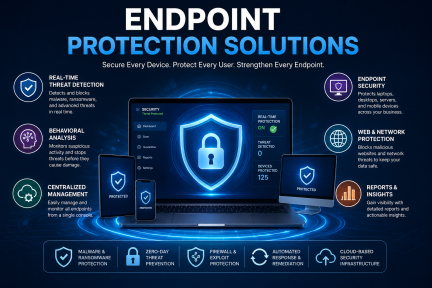
Real-Time Threat Detection
Real-time monitoring helps organizations identify suspicious activity as it happens. This reduces the time attackers have to move laterally across the network or steal sensitive information.
Behavioral Analysis
Behavioral analysis focuses on how applications and users behave rather than relying only on known malware signatures. This allows endpoint protection solutions to identify zero-day threats and unknown malware.
Endpoint Detection and Response (EDR)
EDR capabilities provide security teams with visibility into endpoint activity. These tools help investigate incidents, contain threats, and automate response actions to minimize damage.
Automated Containment
Advanced endpoint protection solutions can automatically isolate infected devices to prevent malware from spreading to other systems.
Cloud-Based Management
Cloud-managed security platforms allow IT teams to monitor and manage endpoint protection remotely across multiple locations and devices.
Threat Intelligence Integration
Threat intelligence feeds provide up-to-date information about emerging attack patterns, malicious IP addresses, and known indicators of compromise.
Benefits of Endpoint Protection Solutions for Businesses
Businesses across industries are investing in endpoint protection solutions because cyberattacks are becoming more expensive and disruptive. Strong endpoint security provides several important benefits.
Reduced Risk of Data Breaches
Cybercriminals often target endpoints to gain access to sensitive business information. Endpoint protection solutions help reduce the risk of unauthorized access and data theft.
Improved Compliance
Many industries must comply with regulations related to data protection and cybersecurity. Endpoint security tools help organizations meet compliance requirements by monitoring devices and enforcing security policies.
Better Visibility Across Devices
IT teams gain centralized visibility into endpoint activity, making it easier to identify vulnerabilities, suspicious behavior, and potential threats.
Faster Incident Response
Advanced endpoint protection solutions reduce response times by automating detection and containment processes.
Protection for Remote Workforces
Remote employees often work outside traditional corporate networks. Endpoint security ensures devices remain protected regardless of location.
Endpoint Protection vs Traditional Antivirus
Many businesses still rely heavily on legacy antivirus software, but the cybersecurity landscape has changed significantly.
| Feature | Traditional Antivirus | Endpoint Protection Solutions |
|---|---|---|
| Signature-Based Detection | Yes | Yes |
| Behavioral Analysis | Limited | Advanced |
| Real-Time Monitoring | Basic | Comprehensive |
| Fileless Malware Detection | Weak | Strong |
| EDR Capabilities | No | Yes |
| Threat Hunting | No | Yes |
| Automated Response | Minimal | Advanced |
| Cloud Management | Limited | Yes |
Traditional antivirus tools primarily focus on known threats, while modern endpoint protection solutions provide broader visibility and proactive threat prevention.
How Endpoint Protection Solutions Stop Modern Threats
Modern attacks often use sophisticated techniques designed to evade detection. Endpoint protection solutions use layered security approaches to stop threats before they cause serious damage.
AI-Powered Threat Detection
Artificial intelligence helps identify abnormal behavior patterns associated with malware, ransomware, and insider threats.
Zero Trust Security
Zero Trust models assume no user or device should be trusted automatically. Endpoint protection solutions enforce continuous verification and strict access controls.
Sandboxing Technology
Sandboxing isolates suspicious files in a secure environment where they can be analyzed safely without affecting production systems.
Continuous Monitoring
Continuous monitoring provides visibility into endpoint activity and helps security teams detect threats early.
Industries That Need Endpoint Protection Solutions
Every organization connected to the internet faces cybersecurity risks, but some industries are especially vulnerable.
Healthcare
Healthcare organizations store sensitive patient data and are frequent targets for ransomware attacks.
Financial Services
Banks and financial institutions face constant threats related to fraud, credential theft, and data breaches.
Manufacturing
Manufacturing companies increasingly rely on connected devices and industrial control systems, making endpoint security essential.
Retail and E-Commerce
Retail businesses process payment information and customer data that cybercriminals actively target.
Education
Schools and universities often manage large networks with thousands of connected devices and users.
Best Practices for Strengthening Endpoint Security
Implementing endpoint protection solutions is important, but organizations should also follow cybersecurity best practices.
Keep Systems Updated
Outdated software creates vulnerabilities attackers can exploit.
Train Employees Regularly
Security awareness training helps employees recognize phishing attacks and suspicious activity.
Use Multi-Factor Authentication (MFA)
MFA adds an extra layer of security beyond passwords alone.
Monitor Network Activity
Continuous monitoring helps detect unusual behavior that may indicate a compromise.
Backup Critical Data
Regular backups reduce the impact of ransomware and data loss incidents.
How to Choose the Right Endpoint Protection Solution
Choosing the right cybersecurity platform depends on business size, industry, risk level, and IT resources.
When evaluating endpoint protection solutions, organizations should consider:
- Ease of deployment
- Scalability
- Threat detection capabilities
- EDR functionality
- Cloud management
- Integration with existing tools
- Automation features
- Reporting and analytics
- Customer support
Businesses should also prioritize vendors that provide proactive threat intelligence and strong incident response capabilities.
The Future of Endpoint Protection Solutions
Cybersecurity threats will continue evolving as attackers adopt AI-driven attacks, social engineering, and advanced malware techniques.
Future endpoint protection solutions will rely more heavily on:
- Artificial intelligence
- Machine learning
- Predictive analytics
- Behavioral monitoring
- Automated remediation
- Extended Detection and Response (XDR)
Organizations that invest in modern endpoint security today will be better prepared to handle tomorrow’s cyber threats.
Conclusion
Cybersecurity threats are becoming more advanced, frequent, and costly for businesses across every industry. Traditional antivirus tools alone are no longer enough to stop ransomware, phishing, fileless malware, and sophisticated cyberattacks.
Modern endpoint protection solutions provide businesses with real-time monitoring, behavioral analysis, EDR capabilities, automated containment, and proactive threat detection. These platforms help organizations reduce risk, protect sensitive data, and maintain business continuity in an increasingly dangerous digital environment.
Whether you manage a small business or a large enterprise, investing in advanced endpoint security is essential for protecting endpoints, employees, and customers from modern cyber threats.
Strengthen Your Endpoint Security Today
Protect your organization with advanced endpoint protection solutions designed to stop modern threats before they spread.
👉 Get started now: https://openedr.platform.xcitium.com/register/
Frequently Asked Questions
What are endpoint protection solutions?
Endpoint protection solutions are cybersecurity platforms that protect devices such as computers, servers, and mobile devices from malware, ransomware, phishing attacks, and other cyber threats.
How are endpoint protection solutions different from antivirus software?
Traditional antivirus focuses mainly on known malware signatures, while endpoint protection solutions use behavioral analysis, real-time monitoring, EDR, and AI-powered threat detection to stop advanced attacks.
Why do businesses need endpoint protection solutions?
Businesses need endpoint protection solutions to reduce the risk of data breaches, ransomware attacks, credential theft, and unauthorized access across connected devices and networks.
Can endpoint protection solutions stop ransomware?
Yes. Modern endpoint protection solutions can detect ransomware behavior, isolate infected devices, and prevent malware from spreading across the network.
What industries benefit most from endpoint protection solutions?
Industries such as healthcare, finance, manufacturing, retail, education, and government benefit significantly because they manage sensitive data and face constant cyber threats.

 Loading...