Updated on April 24, 2026, by OpenEDR
Cyberattacks are no longer rare—they’re constant. From ransomware to phishing, businesses of all sizes face serious threats daily. This is where an endpoint protection service becomes critical. It acts as your first line of defense, securing every device connected to your network.
If your organization relies on laptops, mobile devices, or remote teams, ignoring endpoint security is risky. Let’s explore how an endpoint protection service works and why it’s essential for modern businesses.
What is an Endpoint Protection Service?
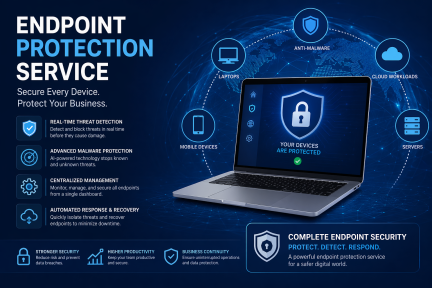
An endpoint protection service is a cybersecurity solution designed to secure endpoints such as laptops, desktops, servers, and mobile devices from cyber threats.
Unlike traditional antivirus tools, modern endpoint protection includes:
- Real-time threat detection
- Behavioral analysis
- AI-driven malware prevention
- Centralized management
These solutions help businesses detect, prevent, and respond to threats quickly.
Why Endpoint Protection is Essential for Businesses
Every device connected to your network is a potential entry point for attackers. Without a strong endpoint protection service, your organization is exposed.
Key Reasons You Need It:
- Remote work risks: Employees access company data from various locations
- Ransomware attacks: Increasingly targeting businesses
- Data breaches: Cost millions and damage reputation
- Compliance requirements: Regulations demand strong security controls
An effective endpoint protection service ensures your business stays protected and compliant.
How Endpoint Protection Service Works
A modern endpoint protection service uses multiple layers of security to defend against threats.
1. Threat Detection
It continuously monitors endpoints for suspicious activity using AI and machine learning.
2. Prevention
Blocks malicious files, links, and applications before they execute.
3. Response
Automatically isolates infected devices to stop the spread of threats.
4. Recovery
Helps restore systems and data after an attack.
This multi-layered approach makes an endpoint protection service far more effective than traditional tools.
Key Features of Endpoint Protection Service
When choosing an endpoint protection service, look for these essential features:
Real-Time Protection
Stops threats as they happen, reducing damage instantly.
AI-Based Detection
Identifies zero-day attacks and unknown malware.
Centralized Management
Manage all endpoints from a single dashboard.
Threat Intelligence
Provides insights into emerging threats and attack patterns.
Automatic Updates
Keeps systems protected against the latest vulnerabilities.
Types of Endpoint Protection Solutions
Not all endpoint protection tools are the same. Understanding the options helps you choose the right endpoint protection service.
1. Antivirus-Based Solutions
Basic protection against known threats.
2. Endpoint Detection and Response (EDR)
Advanced monitoring and threat response capabilities.
3. Extended Detection and Response (XDR)
Provides visibility across endpoints, networks, and cloud systems.
4. Managed Endpoint Protection
Outsourced security managed by experts.
Each type of endpoint protection service offers different levels of protection depending on your business needs.
Benefits of Using an Endpoint Protection Service
Implementing an endpoint protection service delivers significant advantages:
- Improved security posture
- Reduced risk of data breaches
- Faster threat detection and response
- Enhanced compliance with regulations
- Protection for remote and hybrid teams
Businesses that invest in endpoint security are better prepared for evolving cyber threats.
Best Practices for Endpoint Protection
To maximize the effectiveness of your endpoint protection service, follow these best practices:
Keep Software Updated
Regular updates patch vulnerabilities that attackers exploit.
Train Employees
Human error is a major cause of security breaches.
Use Strong Access Controls
Limit access based on roles and responsibilities.
Enable Multi-Factor Authentication (MFA)
Adds an extra layer of security.
Regularly Backup Data
Ensures recovery in case of ransomware attacks.
Combining these practices with a reliable endpoint protection service strengthens your defense.
Common Challenges in Endpoint Security
Even with a strong endpoint protection service, businesses face challenges:
- Managing multiple devices across locations
- Detecting advanced persistent threats (APTs)
- Balancing security with user productivity
- Keeping up with evolving threats
Choosing the right solution helps overcome these obstacles effectively.
How to Choose the Right Endpoint Protection Service
Selecting the right endpoint protection service can be overwhelming. Here’s what to consider:
Scalability
Can it grow with your business?
Performance
Does it slow down devices?
Ease of Use
Is the dashboard user-friendly?
Security Features
Does it offer advanced threat protection?
Vendor Reputation
Choose a trusted cybersecurity provider.
A well-chosen endpoint protection service ensures long-term security and efficiency.
Future of Endpoint Protection
Cyber threats are evolving rapidly. The future of endpoint protection service includes:
- AI-driven autonomous security
- Zero Trust architecture
- Cloud-native protection
- Integration with broader security systems
Businesses must stay ahead by adopting advanced solutions.
Conclusion
Cybersecurity is no longer optional—it’s essential. An endpoint protection service provides the tools needed to secure your devices, data, and operations.
From preventing ransomware to ensuring compliance, it plays a vital role in modern business security. Investing in the right solution today can save your organization from costly breaches tomorrow.
Get Started with Advanced Endpoint Protection
Protect your business with a powerful endpoint security solution today.
👉 Register now: https://openedr.platform.xcitium.com/register/
FAQs About Endpoint Protection Service
1. What does an endpoint protection service do?
An endpoint protection service secures devices by detecting, preventing, and responding to cyber threats in real time.
2. Is endpoint protection better than antivirus?
Yes, endpoint protection offers advanced features like behavioral analysis and threat response, making it more effective than traditional antivirus.
3. Do small businesses need endpoint protection?
Absolutely. Small businesses are often targeted by cybercriminals due to weaker security measures.
4. How does endpoint protection stop ransomware?
It detects suspicious behavior, blocks malicious files, and isolates infected devices to prevent spread.
5. Can endpoint protection work for remote teams?
Yes, modern endpoint protection services are designed to secure remote and hybrid work environments.

 Loading...