Updated on February 5, 2026, by OpenEDR
What if a single email could compromise your entire organization?
For many businesses, that scenario is no longer hypothetical. Email remains the most common entry point for cyberattacks, making email security services a critical component of any modern cybersecurity strategy.
Despite advances in endpoint and network security, attackers continue to exploit email because it’s trusted, widely used, and often underestimated. From phishing scams to ransomware delivery, email threats are growing more sophisticated every year. In this guide, we’ll explore what email security services are, why they matter, how they work, and how organizations can choose the right solution.
What Are Email Security Services?
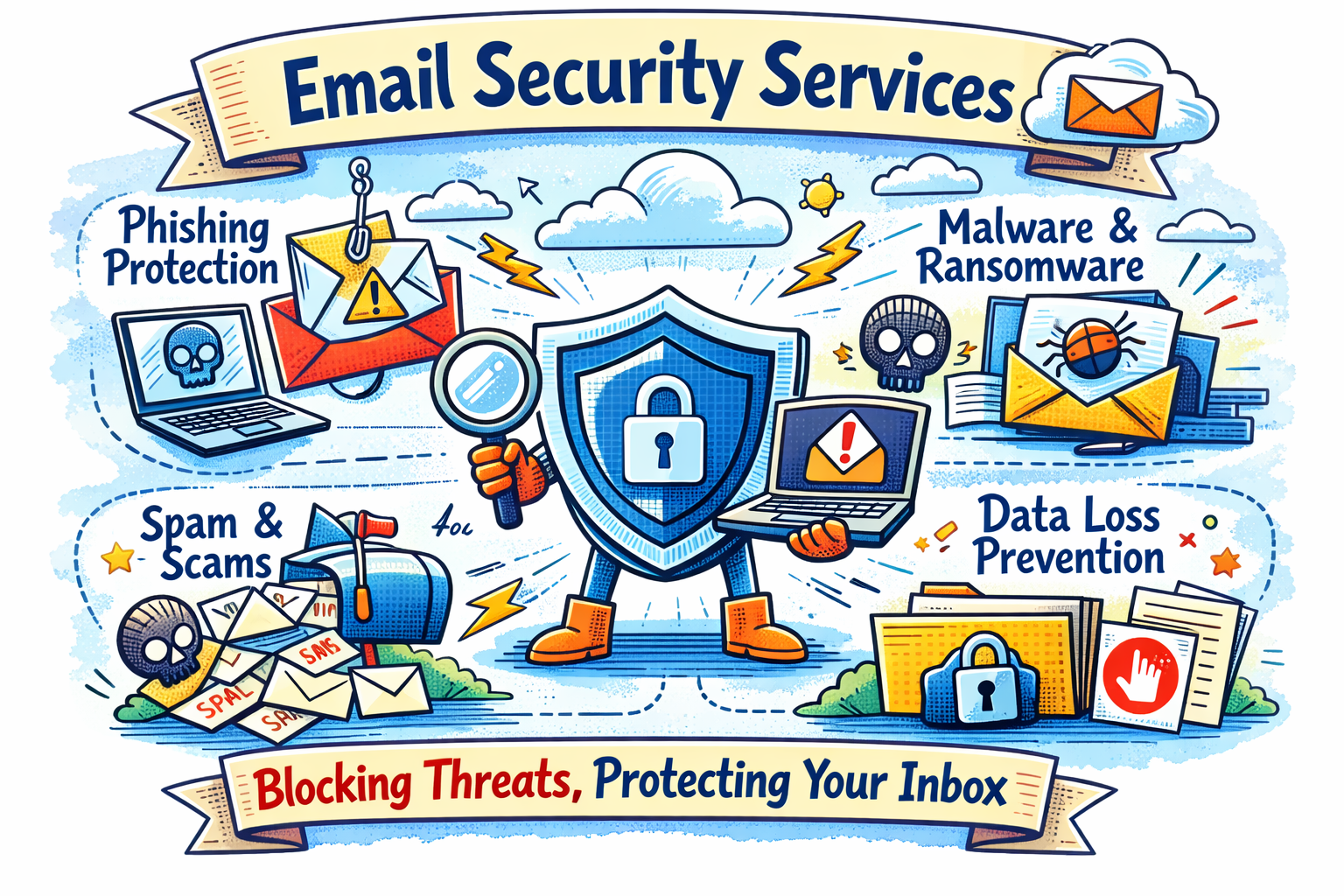
Email security services are solutions designed to protect organizations from email-based threats such as phishing, malware, ransomware, spam, and business email compromise (BEC). These services analyze incoming and outgoing emails to detect and block malicious content before it reaches users.
Unlike basic spam filters, modern email security services use advanced techniques such as machine learning, behavioral analysis, and threat intelligence to identify both known and emerging threats.
Core goals of email security services:
Prevent malicious emails from reaching inboxes
Protect sensitive data from leakage
Reduce human-error-based security incidents
Support compliance and governance requirements
For businesses of all sizes, email security services provide a crucial first line of defense.
Why Email Security Services Are More Important Than Ever
Email remains the top attack vector for cybercriminals. According to industry reports, more than 90% of successful cyberattacks begin with a phishing email.
Key reasons organizations need email security services:
Phishing attacks are becoming more targeted
Ransomware frequently enters via email attachments
Remote work has expanded attack surfaces
Employees remain the weakest security link
Without strong email security services, even the best-trained teams and advanced security tools can be bypassed.
How Email Security Services Work
Email security services operate by inspecting emails at multiple levels before delivery. This layered approach ensures threats are identified even when attackers attempt to evade traditional defenses.
Common detection methods include:
1. Content and Attachment Scanning
Emails are scanned for malware, malicious links, and suspicious attachments.
2. Sender Authentication
Technologies like SPF, DKIM, and DMARC verify sender legitimacy.
3. Behavioral Analysis
AI analyzes email behavior to identify anomalies and social engineering tactics.
4. URL Rewriting and Time-of-Click Protection
Links are checked at the moment users click, not just at delivery.
5. Outbound Email Protection
Prevents accidental or malicious data leakage through email.
This multi-layered approach makes email security services highly effective against modern threats.
Common Email Threats Email Security Services Stop
Understanding the threats helps highlight the value of email security services.
Phishing Attacks
Deceptive emails designed to steal credentials or sensitive information.
Business Email Compromise (BEC)
Attackers impersonate executives or vendors to request payments or data.
Malware and Ransomware
Malicious attachments or links that infect systems.
Spam and Scams
Unwanted emails that waste time and increase risk exposure.
Data Loss and Insider Threats
Accidental or intentional sharing of sensitive information.
Email security services are designed to address all of these threats proactively.
Key Features to Look for in Email Security Services
Not all email security services offer the same level of protection. When evaluating solutions, look for these essential capabilities:
Must-Have Features
Advanced phishing detection
Malware and ransomware protection
Sender authentication enforcement
URL and attachment sandboxing
Real-time threat intelligence
Advanced Capabilities
AI-driven threat detection
User awareness reporting
Automated incident response
Data loss prevention (DLP)
Integration with SIEM and SOC tools
The best email security services combine strong protection with ease of management.
Email Security Services vs Traditional Email Filtering
Many organizations still rely on basic email filters, but these are no longer sufficient.
| Feature | Traditional Filtering | Email Security Services |
|---|---|---|
| Spam Blocking | Basic | Advanced |
| Phishing Protection | Limited | AI-driven |
| Ransomware Defense | Weak | Strong |
| Zero-Day Threats | Poor | Effective |
| Reporting & Visibility | Minimal | Detailed |
Email security services go far beyond spam filtering, offering comprehensive threat prevention.
Benefits of Email Security Services for Businesses
Deploying email security services delivers both security and business value.
Security Benefits
Reduced risk of breaches
Protection against advanced phishing
Faster threat detection and response
Reduced reliance on user judgment
Business Benefits
Less downtime and financial loss
Improved compliance posture
Increased employee confidence
Stronger customer trust
For executives and IT leaders, email security services help align cybersecurity with business continuity.
Email Security Services Across Industries
Different industries face unique email threats, but the need for protection is universal.
Healthcare
Protect patient data and meet HIPAA requirements.
Financial Services
Prevent fraud and safeguard sensitive transactions.
Retail and E-commerce
Protect customer data and payment information.
Manufacturing
Defend against supply chain phishing attacks.
Technology and SaaS
Secure intellectual property and cloud access credentials.
Industry-specific expertise enhances the effectiveness of email security services.
Best Practices for Implementing Email Security Services
To maximize effectiveness, organizations should follow proven best practices.
Enable multi-factor authentication (MFA)
Enforce SPF, DKIM, and DMARC policies
Train employees to recognize phishing attempts
Monitor and review email security reports regularly
Continuously update security policies
Email security services work best when combined with strong processes and user awareness.
Common Challenges and How to Overcome Them
False Positives
Choose solutions with adaptive learning to reduce disruption.
User Resistance
Use clear communication and awareness training.
Integration Issues
Select email security services that integrate smoothly with existing email platforms.
The right provider simplifies protection rather than adding complexity.
The Future of Email Security Services
Email security services continue to evolve as attackers adapt.
Emerging trends include:
AI-powered behavioral detection
Zero Trust email security models
Automated remediation workflows
Deeper integration with identity security
As threats grow more advanced, email security services will remain a cornerstone of cybersecurity strategy.
FAQs About Email Security Services
1. What are email security services?
Email security services protect organizations from email-based threats like phishing, malware, and data loss.
2. Are email security services necessary if we already have antivirus?
Yes. Antivirus alone cannot detect advanced phishing, BEC, or social engineering attacks.
3. Do email security services work with cloud email platforms?
Absolutely. Modern services integrate with platforms like Microsoft 365 and Google Workspace.
4. Can small businesses benefit from email security services?
Yes. Small businesses are frequent targets and benefit greatly from managed protection.
5. How quickly can email security services be deployed?
Many solutions can be deployed within hours or days, depending on complexity.
Final Thoughts: Why Email Security Services Are Non-Negotiable
Email is still the most exploited attack vector in cybersecurity. Without strong defenses, organizations remain exposed to costly breaches and operational disruptions.
Email security services provide:
Proactive threat prevention
Reduced human-error risk
Improved compliance
Stronger business resilience
For modern organizations, they are no longer optional—they are essential.
Take the Next Step Toward Stronger Email Security
Ready to protect your organization from email-based attacks with modern, intelligent defenses?
👉 Get started today:
https://openedr.platform.xcitium.com/register/
Secure your inbox. Protect your business. Stay ahead of threats.

 Loading...