Updated on December 17, 2025, by OpenEDR
Email remains the backbone of business communication—but it’s also the most exploited attack vector. From phishing and ransomware to business email compromise (BEC), cybercriminals continue to use email as their primary entry point. That’s why understanding what an email security gateway is and how it protects organizations has never been more important.
An email security gateway acts as a frontline defense, filtering malicious emails before they ever reach inboxes. In this guide, we’ll break down how email security gateways work, the threats they stop, essential features, and how modern organizations can strengthen their email security strategy.
What Is an Email Security Gateway?
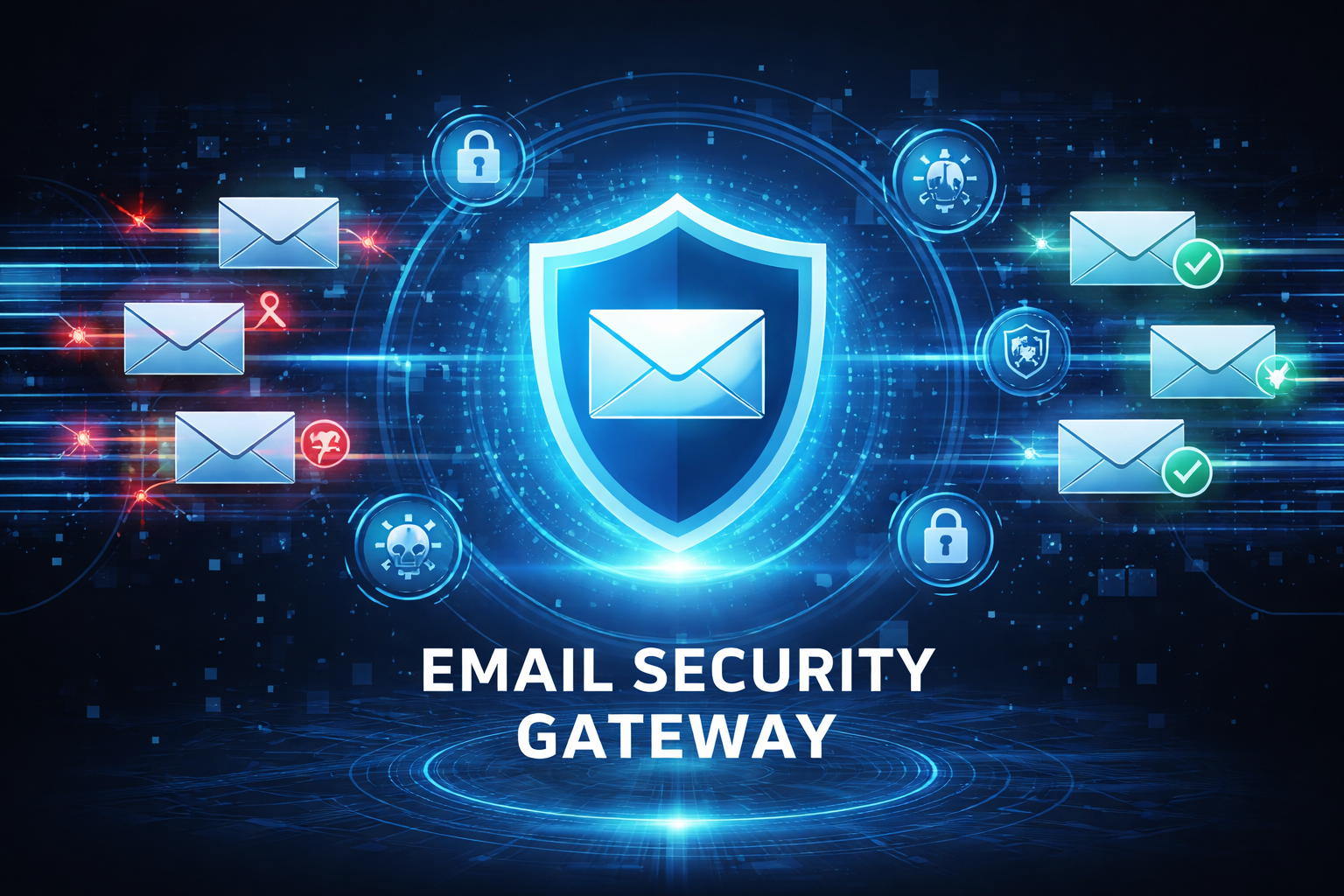
An email security gateway is a security solution that monitors, filters, and controls inbound and outbound email traffic to protect organizations from cyber threats, data leakage, and policy violations.
It sits between an organization’s email server and the internet, analyzing messages before they are delivered or sent.
In simple terms, an email security gateway acts like a security checkpoint—inspecting emails for malicious content, suspicious behavior, and sensitive data exposure.
Why Email Is the #1 Cybersecurity Target
To understand the importance of an email security gateway, it helps to know why attackers focus on email.
1. Email Is Universal
Every organization relies on email, making it an easy entry point.
2. Human Trust Is the Weak Link
Phishing emails exploit curiosity, urgency, and trust.
3. Low Cost, High Reward for Attackers
A single successful email attack can lead to ransomware, data theft, or financial fraud.
4. Remote Work Expands Risk
Employees access email from anywhere, often on unmanaged devices.
Common Email-Based Threats
An email security gateway is designed to stop a wide range of threats.
1. Phishing Attacks
Fraudulent emails that trick users into revealing credentials or clicking malicious links.
2. Malware and Ransomware
Malicious attachments or links that install harmful software.
3. Business Email Compromise (BEC)
Attackers impersonate executives or vendors to steal money or data.
4. Spam and Graymail
Unwanted emails that waste time and increase risk.
5. Data Loss and Leakage
Sensitive information sent outside the organization accidentally or maliciously.
How an Email Security Gateway Works
An email security gateway uses multiple layers of analysis to protect email traffic.
1. Email Scanning and Filtering
Each message is scanned for known malware signatures and suspicious patterns.
2. Reputation Analysis
The gateway checks sender reputation, IP addresses, and domains.
3. Content Inspection
Attachments, links, and message content are analyzed for threats.
4. Policy Enforcement
Emails violating security or compliance rules are blocked or quarantined.
5. Continuous Monitoring
Advanced gateways adapt to new attack techniques in real time.
Key Features of an Email Security Gateway
Not all solutions offer the same level of protection. The best email security gateways include the following features:
1. Advanced Phishing Detection
Identifies impersonation attempts, look-alike domains, and social engineering tactics.
2. Malware and Ransomware Protection
Stops malicious attachments and weaponized files before delivery.
3. URL and Link Protection
Analyzes links at click time to block malicious destinations.
4. Data Loss Prevention (DLP)
Prevents sensitive data from leaving the organization via email.
5. Encryption and Secure Delivery
Protects confidential messages in transit.
Email Security Gateway vs Built-In Email Security
Many email platforms include basic security—but it’s often not enough.
Built-In Email Security
Signature-based detection
Limited phishing prevention
Reactive protection
Dedicated Email Security Gateway
Behavioral and AI-driven detection
Proactive phishing and BEC prevention
Advanced policy controls
Best Practice
Organizations should layer a dedicated email security gateway on top of native email security.
Email Security Gateways and Zero Trust
Modern cybersecurity strategies follow Zero Trust principles—never trust, always verify.
An email security gateway supports Zero Trust by:
Verifying sender identity
Blocking unknown or suspicious content
Reducing reliance on user judgment
When combined with Zero Trust endpoint protection, email threats are contained before they spread.
Role of Email Security in Endpoint Protection
Email attacks rarely stop at email.
Once a malicious link or attachment is clicked, the endpoint becomes the next target. That’s why email security gateways must work in tandem with endpoint security platforms.
Advanced solutions that include automatic containment ensure that even if a threat executes, it cannot cause harm.
Email Security Gateway for Businesses
Email security is critical for organizations of all sizes.
Small and Medium Businesses (SMBs)
Often targeted due to weaker defenses
Benefit from automated, easy-to-deploy gateways
Enterprises
Face sophisticated phishing and BEC attacks
Require centralized visibility and policy enforcement
Compliance and Email Security Gateways
Email often carries regulated data.
Regulations That Impact Email Security
GDPR
HIPAA
PCI DSS
SOX
An email security gateway helps by:
Encrypting sensitive emails
Blocking unauthorized data sharing
Maintaining audit logs
How to Choose the Right Email Security Gateway
When evaluating an email security gateway, consider the following:
Selection Checklist
Does it stop phishing and BEC attacks?
Can it detect unknown threats?
Does it integrate with endpoint security?
Is it easy to manage?
Does it support compliance requirements?
The strongest solutions focus on prevention plus containment, not just detection.
Common Email Security Mistakes to Avoid
❌ Relying only on user training
❌ Trusting basic spam filters
❌ Ignoring outbound email risks
❌ Failing to integrate email and endpoint security
❌ Treating email security as a one-time setup
Future Trends in Email Security Gateways
Email security continues to evolve.
Emerging Trends
AI-driven phishing detection
Identity-based email protection
Deeper integration with XDR platforms
Zero Trust email verification
Automated threat containment
Organizations that adapt early gain a major defensive advantage.
Email Security Gateways and XDR
Extended Detection and Response (XDR) platforms connect email security with endpoint, network, and cloud protection.
This unified visibility allows security teams to:
Detect attacks earlier
Correlate email and endpoint activity
Automatically contain threats
Frequently Asked Questions (FAQ)
1. What is an email security gateway?
It is a security solution that filters and monitors email traffic to block threats and protect sensitive data.
2. Do I still need an email security gateway if I use Microsoft 365 or Google Workspace?
Yes. Built-in security helps, but advanced threats often bypass native protections.
3. Can an email security gateway stop phishing attacks?
Yes. Advanced gateways detect impersonation, malicious links, and social engineering attempts.
4. How does an email security gateway prevent ransomware?
By blocking malicious attachments and links before users interact with them.
5. Is email security part of endpoint protection?
Yes. Email is a primary attack vector that often leads to endpoint compromise.
Final Thoughts
Email remains the most dangerous entry point for cyberattacks. A modern email security gateway is essential for stopping phishing, malware, ransomware, and data leaks before they reach users.
When combined with Zero Trust endpoint protection and automatic containment, organizations can dramatically reduce email-borne risk and protect business continuity.
👉 Ready to strengthen your security with Zero Trust containment and advanced endpoint protection?
Register for Xcitium OpenEDR® today:
https://openedr.platform.xcitium.com/register/

 Loading...