Updated on March 6, 2026, by OpenEDR
The definition of cyber security is becoming more important than ever in today’s digital world. Every organization—whether a startup, enterprise, or government agency—relies on digital systems to operate. But with this dependence comes risk. Cybercriminals are constantly looking for vulnerabilities to exploit, making cybersecurity a critical priority.
According to global cybersecurity reports, cybercrime damages are expected to cost trillions of dollars annually. Data breaches, ransomware attacks, and phishing campaigns continue to threaten businesses and individuals alike. Understanding the definition of cyber security is the first step toward building strong digital defenses.
In this comprehensive guide, we will explain the definition of cyber security, explore its importance, examine key types of cybersecurity, and discuss practical strategies organizations can use to stay protected.
What Is the Definition of Cyber Security?
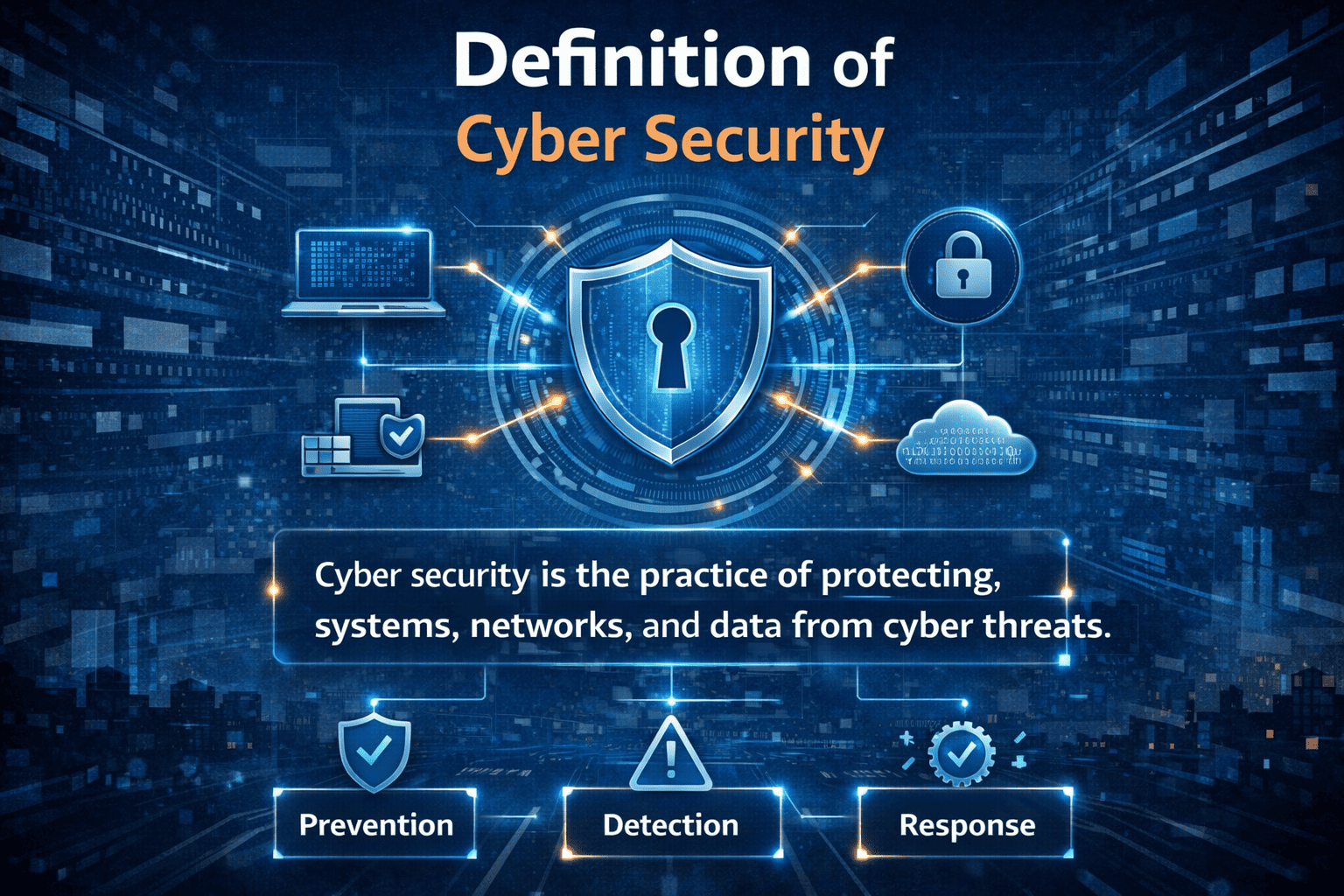
The definition of cyber security refers to the practice of protecting computer systems, networks, software, and data from cyber threats, unauthorized access, and digital attacks.
Cyber security involves technologies, processes, and best practices designed to ensure the confidentiality, integrity, and availability of information.
In simple terms, cyber security aims to protect digital assets from hackers, malware, data breaches, and other cyber risks.
Core Goals of Cyber Security
The definition of cyber security is often explained through three fundamental principles known as the CIA triad:
Confidentiality
Confidentiality ensures that sensitive information is accessible only to authorized users.
Examples include:
Encryption of sensitive data
Access control policies
Identity verification systems
Integrity
Integrity ensures that data remains accurate and unaltered.
Security controls such as checksums, digital signatures, and access permissions help maintain data integrity.
Availability
Availability ensures that systems and data are accessible when needed.
Organizations use redundancy, backups, and disaster recovery strategies to maintain system availability.
Why Cyber Security Is Important
Understanding the definition of cyber security is essential because cyber threats can disrupt operations, damage reputations, and lead to financial losses.
Rising Cyber Threats
Cyber attacks are increasing in both frequency and sophistication. Attackers target organizations of all sizes.
Common consequences of cyber incidents include:
Financial losses
Data breaches
Regulatory penalties
Operational downtime
Loss of customer trust
Organizations that implement strong cybersecurity practices reduce these risks significantly.
Types of Cyber Security
Cyber security consists of multiple specialized areas designed to protect different parts of digital infrastructure.
Network Security
Network security focuses on protecting internal and external networks from unauthorized access and cyber threats.
Network Security Tools
Common tools include:
Firewalls
Intrusion detection systems
Intrusion prevention systems
Network monitoring tools
These technologies help identify and block malicious activity.
Application Security
Application security protects software applications from vulnerabilities that attackers could exploit.
Key Application Security Practices
Security teams often implement:
Secure coding practices
Regular vulnerability testing
Software updates and patches
Application firewalls
These measures prevent attackers from exploiting software flaws.
Cloud Security
As organizations adopt cloud platforms, cloud security has become a major component of the definition of cyber security.
Cloud Security Controls
Organizations protect cloud environments using:
Identity and access management
Data encryption
Cloud monitoring tools
Secure configuration policies
Cloud security ensures data stored in cloud environments remains protected.
Endpoint Security
Endpoint security protects devices connected to corporate networks.
Devices That Require Protection
Examples include:
Laptops
Smartphones
Tablets
IoT devices
Endpoint protection platforms monitor device activity and detect threats.
Information Security
Information security focuses specifically on protecting data from unauthorized access or theft.
This includes:
Encryption technologies
Data classification policies
Access control systems
Information security is a central component of the definition of cyber security.
Common Cyber Security Threats
Understanding threats is essential to understanding the definition of cyber security.
Malware
Malware refers to malicious software designed to damage systems or steal data.
Examples include:
Viruses
Trojans
Spyware
Ransomware
Malware attacks often spread through phishing emails or malicious downloads.
Phishing Attacks
Phishing attacks trick users into revealing sensitive information.
Attackers often impersonate trusted organizations through email or websites.
Phishing remains one of the most common cyber threats worldwide.
Ransomware
Ransomware attacks encrypt files and demand payment for decryption.
These attacks can halt business operations and cause major financial damage.
Insider Threats
Insider threats occur when employees or contractors misuse their access privileges.
These threats may involve intentional data theft or accidental security breaches.
Cyber Security Frameworks and Standards
Many organizations rely on cybersecurity frameworks to strengthen their defenses.
Popular Cyber Security Frameworks
Examples include:
NIST Cybersecurity Framework
ISO 27001
CIS Critical Security Controls
Zero Trust Architecture
These frameworks provide structured guidance for managing cybersecurity risks.
Key Components of an Effective Cyber Security Strategy
Understanding the definition of cyber security also involves recognizing the elements of a strong security strategy.
Risk Management
Risk management helps organizations identify potential threats and prioritize mitigation strategies.
Risk Management Activities
These may include:
Vulnerability assessments
Threat intelligence analysis
Security audits
Managing risk helps organizations prevent security incidents.
Security Monitoring
Continuous monitoring helps detect suspicious activity across systems and networks.
Security teams often use:
Security Information and Event Management (SIEM) systems
Endpoint detection tools
Network monitoring solutions
These tools provide visibility into security events.
Incident Response
Incident response ensures organizations can react quickly to cyber incidents.
Incident Response Process
Typical steps include:
Detect the incident
Contain the threat
Investigate the cause
Recover affected systems
Prevent future attacks
Prepared incident response plans reduce downtime and damage.
Best Practices for Improving Cyber Security
Organizations can strengthen their defenses by following cybersecurity best practices.
Use Strong Password Policies
Encourage the use of complex passwords and multi-factor authentication.
Keep Systems Updated
Regular updates and patches protect systems from known vulnerabilities.
Train Employees on Security Awareness
Employees should understand how to recognize phishing attempts and suspicious activity.
Human awareness plays a critical role in cyber security.
Implement Data Encryption
Encryption protects sensitive data both in transit and at rest.
Conduct Regular Security Assessments
Routine audits and vulnerability scans help identify security gaps.
The Role of Cyber Security in Business Success
Cybersecurity is no longer just an IT issue—it’s a business priority.
Organizations that invest in cybersecurity gain several advantages.
Benefits of Strong Cyber Security
Businesses benefit from:
Reduced risk of data breaches
Improved customer trust
Compliance with regulations
Protection of intellectual property
For CEOs and founders, cybersecurity is essential for long-term business resilience.
Future Trends in Cyber Security
Cybersecurity continues to evolve as technology advances.
Emerging Cyber Security Technologies
Key trends include:
Artificial intelligence in threat detection
Zero Trust security frameworks
Cloud-native security solutions
Automated security operations
These technologies will shape the future of cyber defense.
Frequently Asked Questions (FAQ)
1. What is the definition of cyber security?
The definition of cyber security refers to the practice of protecting digital systems, networks, and data from cyber threats and unauthorized access.
2. Why is cyber security important?
Cyber security protects organizations from data breaches, financial losses, and operational disruptions caused by cyber attacks.
3. What are the main types of cyber security?
Major types include network security, cloud security, endpoint security, application security, and information security.
4. What are common cyber threats?
Common threats include malware, phishing attacks, ransomware, insider threats, and denial-of-service attacks.
5. How can organizations improve cyber security?
Organizations can improve security by implementing strong authentication, employee training, system updates, and continuous monitoring.
Final Thoughts: Understanding the Definition of Cyber Security
The definition of cyber security goes far beyond protecting computers. It involves safeguarding entire digital ecosystems—from networks and applications to sensitive business data.
As cyber threats continue to grow, organizations must adopt proactive cybersecurity strategies that combine technology, processes, and employee awareness.
Investing in strong cybersecurity practices not only protects digital assets but also strengthens business resilience in an increasingly connected world.
👉 Register today to strengthen your cybersecurity knowledge:
https://openedr.platform.xcitium.com/register/
Build the skills and strategies needed to protect your organization in today’s rapidly evolving threat landscape.

 Loading...