Updated on December 9, 2025, by OpenEDR
What is the cyber security definition, and why does it matter more than ever? As cyber threats accelerate—ransomware, phishing, identity theft, AI-powered attacks, and data breaches—organizations across all industries urgently need to understand what cybersecurity truly encompasses. Cybersecurity is no longer just an IT function; it is a foundational requirement for business continuity, digital trust, and long-term resilience.
In this guide, we break down the modern cyber security definition with clarity while exploring the technologies, practices, and strategies organizations must use to protect their systems, networks, and data in 2025 and beyond.
Cyber Security Definition (Simple & Professional)
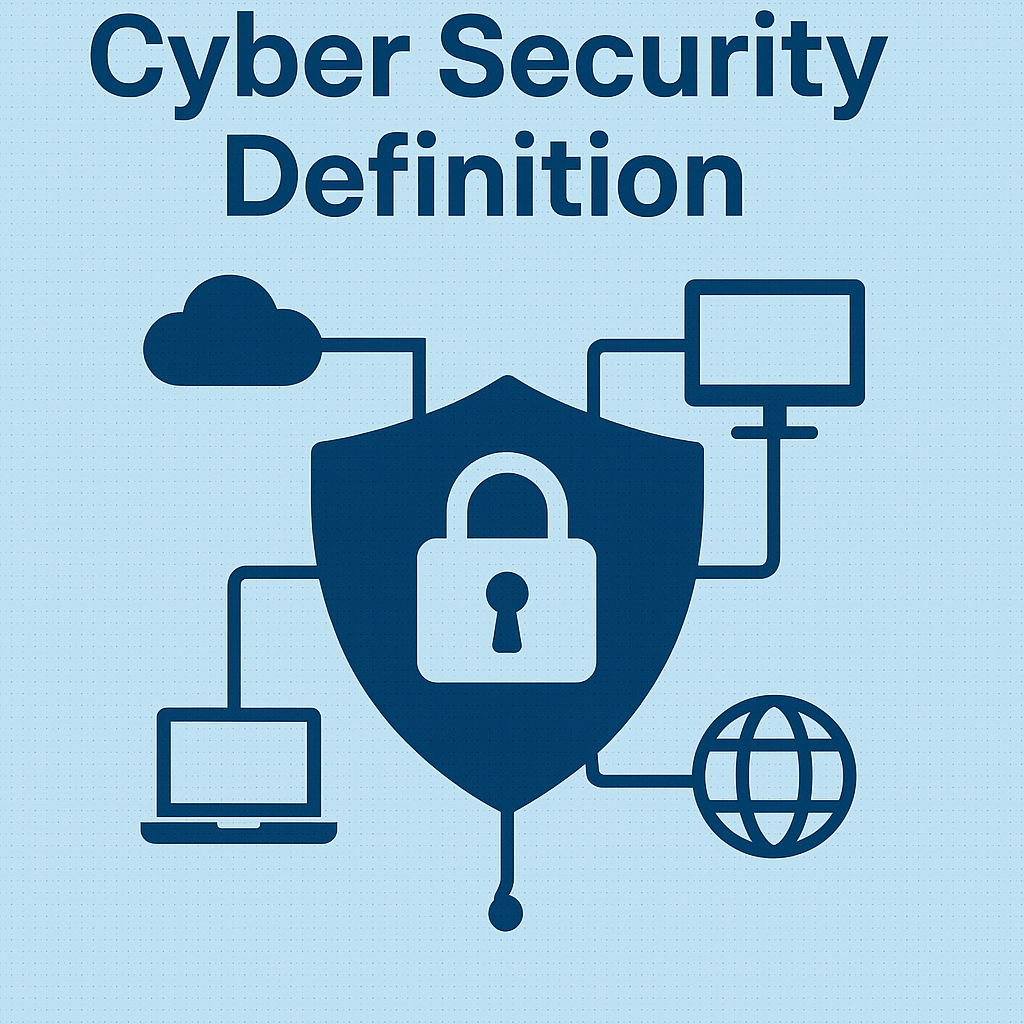
Cyber security (also written as “cybersecurity”) refers to the practices, technologies, policies, and processes designed to protect digital systems, networks, devices, and data from unauthorized access, attacks, damage, or theft.
It includes:
Threat prevention
Threat detection
Incident response
Data protection
Identity and access management
Network and endpoint security
Cyber security focuses on defending against both external threats (like hackers and malware) and internal risks (such as insider misuse or human error).
Why Understanding the Cyber Security Definition Matters
Understanding the cyber security definition is crucial for:
• IT Managers — to build strong defense strategies
• CEOs & Founders — to protect business continuity and customer trust
• Cybersecurity Professionals — to align with modern best practices
• Employees & Remote Workers — to reduce risks in daily operations
Cybersecurity failures can result in:
financial losses
legal consequences
data breaches
ransomware shutdowns
reputation damage
A single weak endpoint can compromise the entire organization.
Core Components of Cyber Security
The cyber security definition expands into several foundational domains. Let’s break them down.
1. Network Security
Protects the integrity of internal and external networks.
Includes:
firewalls
intrusion prevention systems (IPS)
secure access controls
network segmentation
Network security ensures unauthorized users cannot access internal systems.
2. Endpoint Security
Protects devices such as:
laptops
mobile phones
desktops
servers
IoT devices
Modern endpoint security includes:
antivirus
EDR (Endpoint Detection and Response)
Zero Trust controls
containment technology (such as Xcitium ZeroDwell)
With remote work expanding attack surfaces, endpoint protection is now indispensable.
3. Application Security
Secures software from vulnerabilities.
Techniques include:
code scanning
patch management
secure development practices
runtime protection
Attackers often exploit outdated or poorly secured applications.
4. Information Security (InfoSec)
Protects the confidentiality, integrity, and availability (CIA Triad) of data.
InfoSec includes:
encryption
identity management
secure storage
data classification
5. Cloud Security
With growing cloud adoption, cybersecurity must protect:
SaaS applications
cloud storage
virtual machines
hybrid cloud networks
Tools include:
CASB (Cloud Access Security Brokers)
secure APIs
cloud firewalls
6. Identity & Access Management (IAM)
Controls who has access to what.
IAM tools ensure:
authentication
authorization
access governance
MFA (multi-factor authentication) is one of the strongest IAM safeguards.
7. Zero Trust Security
A modern cybersecurity philosophy based on:
“Never trust, always verify.”
Zero Trust assumes:
all devices are untrusted
all users must be verified
micro-segmentation is required
It aligns perfectly with remote work and cloud environments.
8. Incident Response
Defines how organizations detect, contain, and recover from cyberattacks.
IR plans include:
playbooks
communication procedures
forensic analysis
threat eradication
system restoration
Without a strong IR plan, even small incidents become disasters.
The Evolution of the Cyber Security Definition
Cybersecurity has evolved dramatically over the last decade.
Past Focus
antivirus
firewalls
perimeter defense
Modern Focus
AI-powered threat detection
ransomware prevention
cloud and mobile security
threat intelligence
Zero Trust frameworks
containment-first strategies
Organizations must adopt a proactive—not reactive—approach to cybersecurity.
Why Cybersecurity Is More Important Than Ever
1. Cyberattacks Are Increasing in Volume
Over 2,200 cyberattacks occur every single day.
2. Ransomware Is More Sophisticated
Modern ransomware groups target businesses, governments, hospitals, and schools.
3. Remote Work Expanded Attack Surfaces
Employees now work across:
laptops
mobile devices
home networks
4. AI-Powered Attacks Are Rising
Cybercriminals use AI tools for phishing, identity spoofing, and malware generation.
5. Data Is the Most Valuable Digital Asset
Businesses must protect:
customer data
financial data
intellectual property
internal communications
Cyber Security Definition in Enterprise Context
For businesses, cybersecurity must address:
1. Regulatory Compliance
Industries face strict laws:
HIPAA
GDPR
PCI-DSS
NIST
ISO 27001
2. Business Continuity
Cyberattacks can halt operations for days—or weeks.
3. Financial Protection
Average cost of a data breach: $4.45 million.
4. Customer Trust
Breaches permanently damage brand reputation.
5. Competitive Advantage
Companies with strong cybersecurity outperform those without it.
Common Cybersecurity Threats to Know in 2026
Understanding threats helps deepen understanding of the cyber security definition.
1. Phishing
Fake emails or messages that steal credentials.
2. Ransomware
Malicious software that encrypts files and demands payment.
3. Malware
Viruses, worms, trojans, keyloggers, and spyware.
4. Social Engineering
Manipulating users to share sensitive information.
5. Zero-Day Exploits
Attacks on undiscovered software vulnerabilities.
6. DDoS Attacks
Overwhelming networks to cause service outages.
7. Insider Threats
Employees misusing or leaking data.
8. IoT Attacks
Smart devices with weak security make easy entry points.
How Cybersecurity Solutions Detect and Prevent Threats
1. AI-Powered Threat Detection
AI analyzes behavior to detect suspicious activity.
2. Endpoint Containment
Xcitium ZeroDwell prevents unknown threats before execution.
3. Behavioral Analytics
Detects anomalies in user logins, file access, and device usage.
4. Network Monitoring
Tracks unusual traffic patterns.
5. Encryption
Protects data in transit and at rest.
6. Multi-Factor Authentication
Prevents unauthorized account access.
Best Cybersecurity Practices for Organizations
To strengthen cybersecurity, organizations should:
✔ Use endpoint protection & EDR
✔ Implement Zero Trust Architecture
✔ Conduct regular security awareness training
✔ Use strong identity & access management policies
✔ Patch software frequently
✔ Monitor networks continuously
✔ Encrypt sensitive data
✔ Back up systems regularly
These practices align with the expanded cyber security definition used by top enterprises.
Cyber Security Definition for Different Industries
Healthcare
Protects patient records and medical devices.
Finance
Secures transactions and prevents identity theft.
Education
Guards student data and protects digital campuses.
Retail
Protects POS systems and online shopping platforms.
Government
Secures national infrastructure and public services.
Cybersecurity strategies must be adapted to each industry’s unique vulnerabilities.
The Future of Cybersecurity
The cyber security definition will continue expanding as technology evolves.
Emerging Trends
AI-driven automation
Quantum-resistant encryption
Autonomous security systems
Full Zero Trust adoption
Continuous adaptive risk assessments
Organizations must remain agile and proactive to stay secure.
Conclusion: Cyber Security Definition for the Modern World
The cyber security definition goes far beyond protecting computers. It encompasses everything from identity protection to endpoint security, cloud defense, access control, and incident response. As businesses expand digitally and cyber threats rise, cybersecurity has become a core part of enterprise strategy.
Whether you are a CEO, IT manager, or cybersecurity analyst, understanding and implementing the modern cyber security definition is essential to protecting your systems, data, and operations.
Strengthen Your Cybersecurity with Free Enterprise-Grade Tools
Protect your devices and network with powerful endpoint detection and real-time containment.
👉 Register for Xcitium OpenEDR today:
https://openedr.platform.xcitium.com/register/
FAQ: Cyber Security Definition
1. What is the simple definition of cyber security?
Cybersecurity is the protection of digital systems, networks, and data from cyber threats.
2. Why is cybersecurity important today?
Because cyberattacks are increasing, and digital systems hold sensitive information.
3. Is cybersecurity the same as information security?
They overlap, but cybersecurity focuses on digital threats, while InfoSec covers broader data protection.
4. What are the main types of cybersecurity?
Network security, endpoint security, cloud security, application security, and Zero Trust.
5. Who needs cybersecurity?
Everyone—from businesses and government agencies to individual users.

 (1 votes, average: 4.00 out of 5)
 Loading...