Updated on January 12, 2026, by OpenEDR
How secure is your computer network right now? With cyberattacks growing more frequent and sophisticated, organizations can no longer afford weak defenses. Computer network security has become a foundational requirement for protecting data, maintaining uptime, and preserving business trust.
Every email sent, file shared, or cloud application accessed travels through a network. If that network is not properly secured, attackers can exploit it to steal data, disrupt operations, or launch ransomware attacks. This is why computer network security is a top priority for IT teams, cybersecurity leaders, and business executives alike.
This guide explains what computer network security is, why it matters, and how organizations can implement it effectively.
What Is Computer Network Security?
Computer network security refers to the policies, tools, and technologies used to protect computer networks from unauthorized access, misuse, and cyber threats. It focuses on safeguarding both hardware and software components while ensuring data confidentiality, integrity, and availability.
Network security protects internal systems as well as external connections to the internet, cloud platforms, and third-party services.
Core Objectives of Computer Network Security
Prevent unauthorized network access
Detect and block malicious activity
Protect sensitive data in transit
Ensure continuous network availability
By strengthening computer network security, organizations reduce the risk of breaches and operational disruptions.
Why Computer Network Security Is More Important Than Ever
The modern network environment is complex. Cloud services, remote workforces, IoT devices, and mobile endpoints all increase exposure to cyber threats.
Here’s why computer network security is critical in today’s business environment:
1. Rising Cyber Threats
Attackers use malware, phishing, ransomware, and advanced persistent threats to infiltrate networks.
2. Expanding Attack Surface
Remote work and cloud adoption introduce more access points and vulnerabilities.
3. Financial and Reputational Damage
A single breach can lead to lost revenue, legal penalties, and brand damage.
4. Compliance Requirements
Regulations such as GDPR, HIPAA, PCI DSS, and ISO 27001 require strong network protections.
Without proper computer network security, organizations face unacceptable levels of risk.
How Computer Network Security Works
Computer network security relies on layered defenses that monitor, control, and protect network traffic.
Key Security Layers
Perimeter security – Firewalls and gateways filter incoming and outgoing traffic
Internal network security – Segmentation limits lateral movement
Endpoint security – Protects devices connected to the network
Monitoring and response – Detects and responds to threats in real time
This layered approach ensures that if one control fails, others still protect the network.
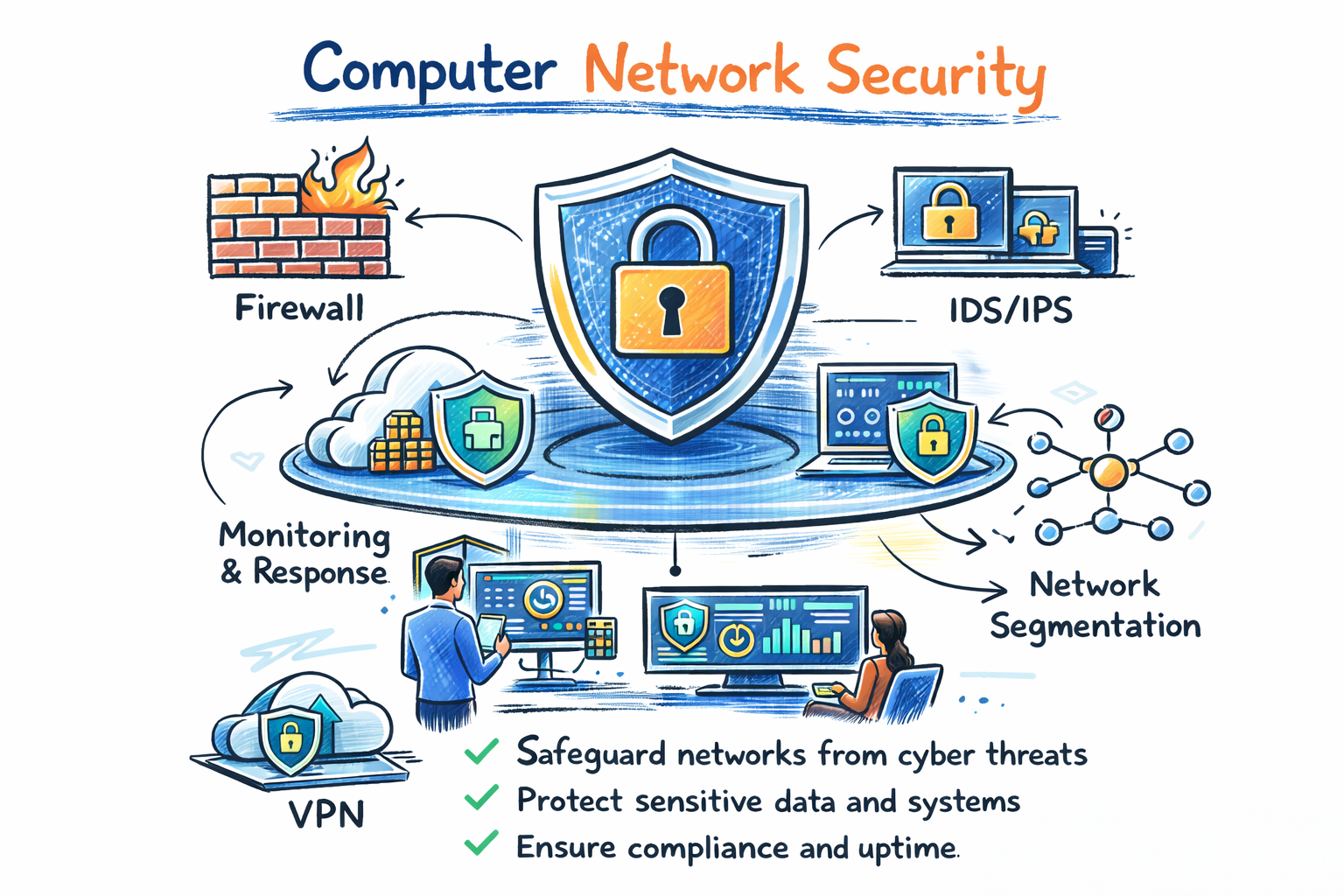
Key Components of Computer Network Security
A strong network security strategy includes multiple technologies working together.
1. Firewalls
Firewalls control traffic based on security rules and policies.
2. Intrusion Detection and Prevention Systems (IDS/IPS)
These tools detect suspicious activity and block potential attacks.
3. Network Segmentation
Separates critical systems to limit the spread of threats.
4. Virtual Private Networks (VPNs)
Encrypt data traveling over public networks.
5. Network Monitoring Tools
Provide visibility into traffic, performance, and threats.
Each component strengthens overall computer network security.
Common Threats Addressed by Computer Network Security
Understanding threats helps organizations defend against them.
Most Common Network Attacks
Malware and ransomware
Phishing and social engineering
Distributed Denial-of-Service (DDoS) attacks
Man-in-the-middle attacks
Insider threats
Effective computer network security detects and blocks these attacks before damage occurs.
Benefits of Strong Computer Network Security
Investing in network security delivers both technical and business benefits.
Security Benefits
Reduced risk of data breaches
Faster threat detection and response
Improved visibility across the network
Business Benefits
Improved system uptime
Increased customer and partner trust
Lower incident recovery costs
Organizations with mature computer network security programs are more resilient and competitive.
Computer Network Security vs Network Performance
A common misconception is that security slows networks down. In reality, modern tools improve efficiency.
| Aspect | Without Security | With Network Security |
|---|---|---|
| Visibility | Limited | Full |
| Downtime Risk | High | Low |
| Threat Response | Reactive | Proactive |
| Compliance | Difficult | Simplified |
Well-designed computer network security enhances reliability rather than hindering it.
Best Practices for Computer Network Security
To maximize protection, organizations should follow proven best practices.
1. Implement a Zero Trust Model
Never trust traffic automatically—verify every request.
2. Keep Systems Updated
Patch vulnerabilities promptly to prevent exploitation.
3. Use Network Segmentation
Limit access to sensitive systems and data.
4. Monitor Network Activity Continuously
Real-time visibility enables faster response.
5. Educate Employees
Human error remains a leading cause of breaches.
Following these steps strengthens computer network security significantly.
Industries That Depend on Computer Network Security
Some industries face higher risk due to sensitive data and regulatory pressure.
High-Risk Industries Include:
Healthcare
Financial services
Government
Manufacturing
Retail and eCommerce
For these sectors, computer network security is essential to daily operations.
The Future of Computer Network Security
As technology evolves, network security continues to advance.
Emerging Trends
AI-driven threat detection
Zero Trust Network Access (ZTNA)
Secure Access Service Edge (SASE)
Automated incident response
The future of computer network security is intelligent, adaptive, and cloud-first.
Frequently Asked Questions (FAQ)
1. What is computer network security?
Computer network security protects networks from unauthorized access, cyberattacks, and data breaches.
2. Why is computer network security important for businesses?
It prevents downtime, data loss, and financial damage while ensuring compliance and trust.
3. How does network security differ from endpoint security?
Network security protects traffic and infrastructure, while endpoint security focuses on individual devices.
4. Can small businesses benefit from computer network security?
Yes. Small businesses are frequent targets and need strong network defenses.
5. Does network security help with compliance?
Absolutely. It supports regulatory requirements by protecting data and monitoring access.
Final Thoughts: Strengthen Your Defense with Computer Network Security
Cyber threats will continue to evolve, but organizations can stay ahead by investing in robust computer network security. Protecting your network protects your data, your customers, and your business reputation.
If you’re ready to improve your security posture with modern, enterprise-grade protection, take the next step today.
👉 Get started with advanced security now:
https://openedr.platform.xcitium.com/register/

 Loading...