Updated on March 5, 2026, by OpenEDR
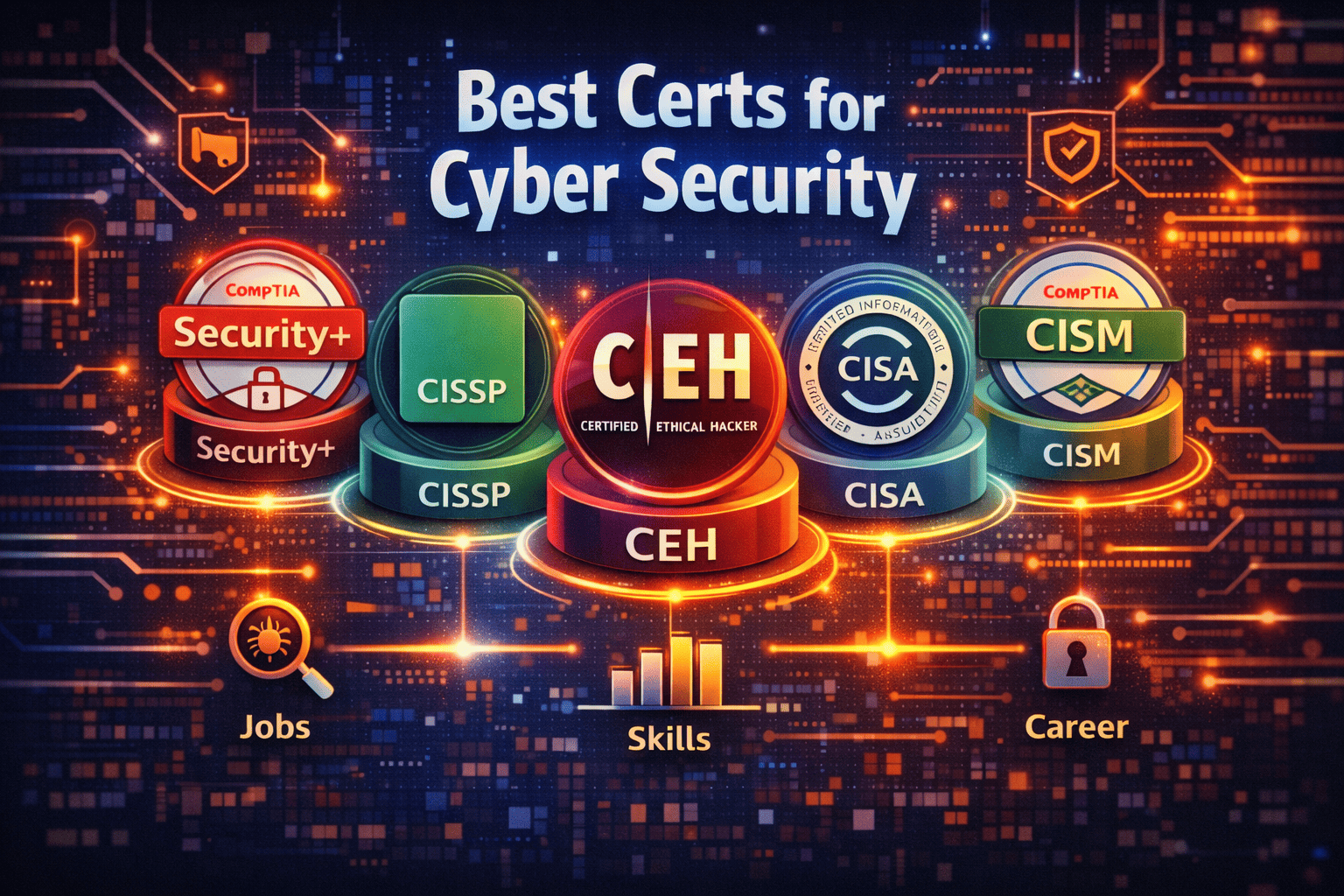
Cybersecurity has become one of the fastest-growing fields in technology. With cyber threats increasing every year, organizations are actively searching for skilled security professionals. This demand has made the best certs for cyber security more valuable than ever for IT professionals, cybersecurity analysts, and business leaders.
According to industry reports, the global cybersecurity workforce gap is still in the millions. Companies need qualified experts to protect their infrastructure, manage risk, and respond to attacks. One of the best ways to demonstrate expertise in this field is by earning recognized certifications.
In this guide, we’ll explore the best certs for cyber security, explain what they offer, and help you choose the right certification based on your career goals.
Why Cyber Security Certifications Matter
Cybersecurity certifications validate technical knowledge and practical skills. They demonstrate that professionals understand how to defend systems against modern cyber threats.
For employers, certifications provide confidence that candidates have verified expertise.
Key Benefits of Cyber Security Certifications
The best certs for cyber security offer several advantages:
Increased career opportunities
Higher earning potential
Industry recognition
Up-to-date security knowledge
Competitive advantage in job markets
For IT managers and cybersecurity teams, certifications also help maintain compliance with industry standards.
How to Choose the Best Certs for Cyber Security
Before selecting a certification, professionals should consider several factors.
Experience Level
Some certifications are designed for beginners, while others require years of experience.
Career Goals
Cybersecurity has multiple career paths such as:
Security analyst
Penetration tester
Security architect
Incident responder
Chief information security officer (CISO)
The best certs for cyber security depend on the career path you choose.
Industry Recognition
Choose certifications recognized by employers and cybersecurity organizations worldwide.
Best Entry-Level Cyber Security Certifications
Entry-level certifications help beginners build foundational security knowledge.
CompTIA Security+
CompTIA Security+ is widely considered one of the best certs for cyber security beginners.
Key Topics Covered
Security+ focuses on core cybersecurity concepts such as:
Network security
Risk management
Threat detection
Cryptography
Identity management
Who Should Take It
This certification is ideal for:
IT professionals starting in cybersecurity
System administrators
Network engineers transitioning into security roles
Security+ provides a solid foundation for advanced certifications.
Certified Ethical Hacker (CEH)
The Certified Ethical Hacker (CEH) certification focuses on penetration testing and offensive security techniques.
Skills Covered
CEH teaches professionals how attackers exploit vulnerabilities.
Topics include:
Ethical hacking methodologies
Network scanning
Malware analysis
Social engineering techniques
Why CEH Is Valuable
Understanding how hackers think helps cybersecurity professionals build stronger defenses.
Mid-Level Cyber Security Certifications
Professionals with some experience can pursue intermediate certifications.
Certified Information Security Manager (CISM)
CISM is one of the best certs for cyber security professionals interested in leadership roles.
Key Focus Areas
CISM emphasizes security management, including:
Risk management
Governance
Incident response planning
Security program development
This certification is widely respected among enterprise security teams.
Certified Information Systems Auditor (CISA)
CISA focuses on auditing, governance, and risk management.
Skills Covered
Professionals learn how to evaluate security controls and compliance frameworks.
This certification is popular among:
IT auditors
Compliance specialists
Risk management professionals
Organizations often require CISA certification for audit and compliance roles.
Advanced Cyber Security Certifications
Advanced certifications are designed for experienced professionals.
Certified Information Systems Security Professional (CISSP)
CISSP is widely regarded as one of the best certs for cyber security professionals.
Core Domains
CISSP covers eight domains, including:
Security architecture
Identity and access management
Security operations
Software development security
Why CISSP Is Highly Respected
CISSP demonstrates advanced expertise in designing and managing enterprise security programs.
Many senior cybersecurity roles require CISSP certification.
Offensive Security Certified Professional (OSCP)
OSCP is considered one of the most challenging penetration testing certifications.
Key Skills
Professionals must demonstrate hands-on skills in:
Exploiting system vulnerabilities
Privilege escalation
Network penetration testing
OSCP focuses on real-world attack simulations.
Cloud Security Certifications
Cloud environments introduce new cybersecurity challenges.
Several certifications focus specifically on cloud security.
Certified Cloud Security Professional (CCSP)
CCSP is designed for professionals securing cloud environments.
Topics Covered
Cloud architecture security
Data protection
Cloud governance
Compliance management
Cloud security expertise is increasingly valuable as organizations migrate to cloud infrastructure.
Google Professional Cloud Security Engineer
This certification focuses on securing applications and infrastructure on Google Cloud.
Key Skills
Professionals learn to:
Manage identity access
Implement cloud security controls
Protect cloud workloads
Cloud certifications are among the fastest-growing areas in cybersecurity training.
Specialized Cyber Security Certifications
Some professionals choose niche cybersecurity certifications.
Examples include:
GIAC Security Essentials (GSEC)
GIAC Certified Incident Handler (GCIH)
Certified Threat Intelligence Analyst (CTIA)
These certifications focus on specific cybersecurity domains.
Cyber Security Certification Comparison
Here’s a simplified comparison of the best certs for cyber security.
| Certification | Level | Best For |
|---|---|---|
| Security+ | Beginner | Entry-level security roles |
| CEH | Beginner / Intermediate | Ethical hacking |
| CISM | Intermediate | Security management |
| CISA | Intermediate | Auditing and compliance |
| CISSP | Advanced | Security architecture and leadership |
| OSCP | Advanced | Penetration testing |
| CCSP | Advanced | Cloud security |
Choosing the right certification depends on your experience and career goals.
Best Certification Paths for Different Cyber Security Roles
Different career paths require different certifications.
Security Analyst
Recommended certifications:
Security+
CISSP
GSEC
Penetration Tester
Recommended certifications:
CEH
OSCP
GPEN
Security Manager
Recommended certifications:
CISM
CISSP
CRISC
Cloud Security Specialist
Recommended certifications:
CCSP
Google Cloud Security Engineer
AWS Security Specialty
Tips for Passing Cyber Security Certification Exams
Preparing for cybersecurity certifications requires discipline and structured learning.
Study Strategies
Follow these tips:
Use official training resources
Practice with labs and simulations
Join cybersecurity study groups
Take practice exams regularly
Hands-on experience significantly improves exam success rates.
How Cyber Security Certifications Impact Careers
The best certs for cyber security can significantly boost career growth.
Professionals with recognized certifications often experience:
Higher salaries
Faster promotions
Greater job security
Increased credibility
For organizations, certified teams improve overall security maturity.
The Future of Cyber Security Certifications
Cybersecurity certifications will continue evolving as threats become more sophisticated.
Emerging trends include:
AI security certifications
Cloud security specialization
Zero Trust architecture training
DevSecOps certifications
Professionals who continually update their certifications remain competitive in the cybersecurity field.
Frequently Asked Questions (FAQ)
1. What are the best certs for cyber security beginners?
Security+ and CEH are widely considered the best entry-level certifications.
2. Which cyber security certification is most respected?
CISSP is one of the most respected certifications globally.
3. Are cyber security certifications worth it?
Yes. Certifications improve career prospects, validate skills, and increase earning potential.
4. How long does it take to earn a cyber security certification?
Preparation time varies, but most professionals spend 3–6 months studying.
5. Can certifications replace experience in cybersecurity?
No. Certifications complement practical experience but cannot fully replace real-world expertise.
Final Thoughts: Choosing the Best Certs for Cyber Security
The cybersecurity field continues expanding rapidly, and organizations need skilled professionals to defend against evolving threats. Earning the best certs for cyber security can open doors to new career opportunities while strengthening your technical expertise.
Whether you’re starting your career or advancing into leadership roles, the right certification can help you stand out in a competitive industry.
Cybersecurity professionals who invest in continuous learning will remain ahead of emerging threats and industry demands.
👉 Register today to expand your cybersecurity knowledge:
https://openedr.platform.xcitium.com/register/
Start building the skills that today’s organizations need to stay secure in an increasingly digital world.

 Loading...