Updated on January 23, 2026, by OpenEDR
Have you ever upgraded an operating system only to discover that critical business applications suddenly stop working? This is exactly the problem an application compatibility toolkit is designed to solve. For IT managers, cybersecurity teams, and business leaders, application compatibility issues can cause downtime, security gaps, and costly disruptions.
An application compatibility toolkit helps organizations identify, test, and fix software compatibility problems before they impact users. In today’s fast-moving IT landscape—where OS upgrades, patches, and cloud migrations are constant—this toolkit has become essential.
In this guide, we’ll explain what an application compatibility toolkit is, how it works, and why enterprises rely on it to keep systems stable and secure.
What Is an Application Compatibility Toolkit?
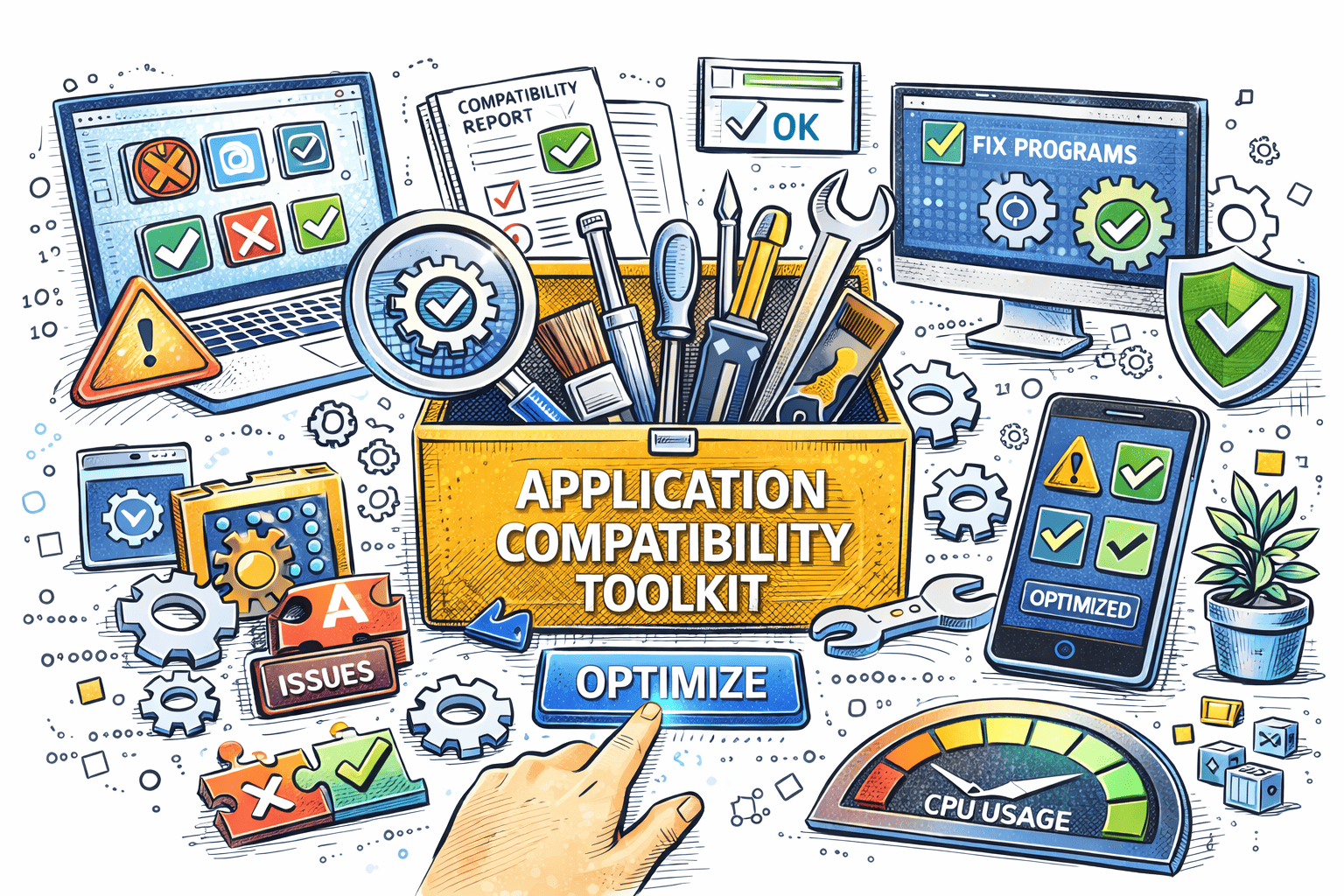
An application compatibility toolkit is a set of tools and frameworks designed to detect and resolve software compatibility issues when applications run on newer operating systems, platforms, or environments.
These toolkits help IT teams:
Identify incompatible applications
Analyze root causes of failures
Apply compatibility fixes or shims
Test applications before deployment
Instead of reacting to failures, organizations can proactively ensure applications work as intended.
Why Application Compatibility Is a Growing Challenge
Modern IT environments change rapidly. New operating systems, security updates, and hardware refresh cycles often break older applications.
Common Causes of Compatibility Issues
OS version upgrades
Deprecated APIs and libraries
Security hardening changes
Legacy application dependencies
Virtualization and cloud migrations
An application compatibility toolkit provides visibility and control in these complex environments.
Why Businesses Need an Application Compatibility Toolkit
For enterprises, compatibility failures are more than technical issues—they are business risks.
Business Impact of Compatibility Failures
Application downtime
Lost employee productivity
Increased support costs
Security vulnerabilities
Delayed digital transformation
By using an application compatibility toolkit, organizations reduce risk while accelerating modernization.
Key Components of an Application Compatibility Toolkit
Most application compatibility toolkits include several core components that work together.
1. Compatibility Analyzers
These tools scan applications to detect known compatibility issues with operating systems or environments.
2. Monitoring and Logging Tools
They track how applications behave in real-world conditions and identify failure patterns.
3. Fix and Shim Engines
Shims allow applications to run without modifying source code by redirecting incompatible calls.
4. Testing Frameworks
They enable safe testing before deployment to production systems.
Together, these components form a complete application compatibility toolkit.
How an Application Compatibility Toolkit Works
Understanding the workflow helps clarify the value.
Typical Workflow
Inventory existing applications
Analyze compatibility against target OS
Identify breaking changes
Apply fixes or shims
Test in controlled environments
Deploy with confidence
This structured process minimizes surprises during upgrades.
Application Compatibility Toolkit vs Manual Testing
Some organizations still rely on manual testing—but that approach doesn’t scale.
| Feature | Toolkit-Based Approach | Manual Testing |
|---|---|---|
| Speed | Fast and repeatable | Slow |
| Accuracy | High | Error-prone |
| Scalability | Enterprise-ready | Limited |
| Cost | Lower long-term | High over time |
An application compatibility toolkit provides consistency that manual testing cannot match.
Application Compatibility Toolkit in Cybersecurity
Compatibility and security are closely linked.
Security Benefits
Enables timely OS patching
Reduces reliance on outdated software
Prevents insecure workarounds
Supports secure configuration baselines
Without an application compatibility toolkit, organizations often delay security updates—creating unnecessary risk.
Use Cases for an Application Compatibility Toolkit
Application compatibility toolkits support many enterprise initiatives.
Common Use Cases
Operating system upgrades
Windows feature updates
Application modernization projects
Virtual desktop infrastructure (VDI)
Cloud migration readiness
Each use case benefits from predictable, tested application behavior.
Application Compatibility Toolkit for IT Managers
For IT managers, compatibility issues often lead to user complaints and emergency fixes.
Operational Advantages
Reduced helpdesk tickets
Faster upgrade cycles
Better planning and forecasting
Clear reporting for leadership
An application compatibility toolkit turns reactive firefighting into proactive management.
How CEOs and Founders Benefit from Compatibility Toolkits
Executives may not deal with compatibility directly—but they feel the impact.
Executive-Level Benefits
Lower operational risk
Faster digital transformation
Improved security posture
Predictable IT costs
Using an application compatibility toolkit supports long-term business resilience.
Application Compatibility Toolkit and Legacy Applications
Legacy applications are often the biggest challenge.
Why Legacy Apps Break
Hard-coded OS dependencies
Deprecated APIs
Older security models
An application compatibility toolkit allows these applications to run safely while modernization plans are developed.
Best Practices for Using an Application Compatibility Toolkit
To maximize value, follow proven practices.
Best Practices
Maintain an updated application inventory
Test early, not just before deployment
Prioritize business-critical applications
Document fixes and workarounds
Review compatibility after major updates
Consistency is key to long-term success.
Common Mistakes to Avoid
Even powerful tools can fail if misused.
Mistakes to Avoid
Skipping testing phases
Relying on end-users to report issues
Ignoring security implications
Treating compatibility as a one-time task
An application compatibility toolkit works best as an ongoing process.
Application Compatibility Toolkit and Cloud Environments
Cloud and hybrid environments add complexity.
Cloud-Specific Challenges
OS image updates
Containerized applications
Platform-specific dependencies
A modern application compatibility toolkit supports cloud-ready testing and validation.
How to Choose the Right Application Compatibility Toolkit
Not all toolkits offer the same capabilities.
Evaluation Criteria
OS and platform support
Security and compliance features
Reporting and analytics
Ease of integration
Vendor support and updates
Choosing the right application compatibility toolkit ensures long-term value.
Future of Application Compatibility Toolkits
Compatibility management continues to evolve.
Emerging Trends
AI-driven compatibility analysis
Automated remediation
Integration with DevOps pipelines
Security-first compatibility testing
Future application compatibility toolkits will focus on automation and intelligence.
Industries That Rely on Application Compatibility Toolkits
Compatibility challenges affect nearly every sector.
Key Industries
Cybersecurity
Healthcare
Finance
Manufacturing
Government
In regulated industries, compatibility failures can also mean compliance violations.
Frequently Asked Questions (FAQ)
1. What is an application compatibility toolkit used for?
An application compatibility toolkit helps identify, analyze, and fix software compatibility issues across operating systems and platforms.
2. Is an application compatibility toolkit only for Windows?
Many toolkits focus on Windows, but modern solutions support multiple operating systems and environments.
3. Does using a compatibility toolkit improve security?
Yes. It allows faster OS patching and reduces reliance on outdated, vulnerable software.
4. Can compatibility toolkits fix legacy applications?
They can apply workarounds and shims, allowing legacy apps to run while modernization plans are developed.
5. How often should compatibility testing be done?
Testing should occur before major updates and as part of continuous IT operations.
Final Thoughts: Compatibility Is a Strategic Advantage
An application compatibility toolkit is no longer optional—it’s a strategic asset. By ensuring applications run smoothly across updates and environments, organizations reduce downtime, strengthen security, and accelerate transformation.
In a world of constant change, compatibility planning is what keeps businesses moving forward.
Take the Next Step Toward Secure, Stable IT Operations
Application compatibility is just one part of a strong security and operations strategy. If you’re ready to gain better visibility, control, and protection across your environment, now is the time to act.
👉 Register and get started today:
🔗 https://openedr.platform.xcitium.com/register/

 Loading...