Updated on June 10, 2026, by OpenEDR
Cyber threats continue to evolve at an alarming pace. From ransomware and phishing attacks to fileless malware and zero-day exploits, organizations face increasingly sophisticated risks every day. As a result, selecting the right endpoint protection solution is more important than ever.
One solution that has remained popular among users for years is antivirus software NOD32. Known for its lightweight design and malware detection capabilities, antivirus software NOD32 has built a reputation for protecting devices without significantly affecting system performance. However, as modern cyber threats become more advanced, businesses must evaluate whether traditional antivirus solutions are enough to meet today’s security challenges.
In this guide, we’ll explore antivirus software NOD32, its features, advantages, limitations, and what organizations should consider when evaluating endpoint security solutions in today’s threat landscape.
What Is Antivirus Software NOD32?
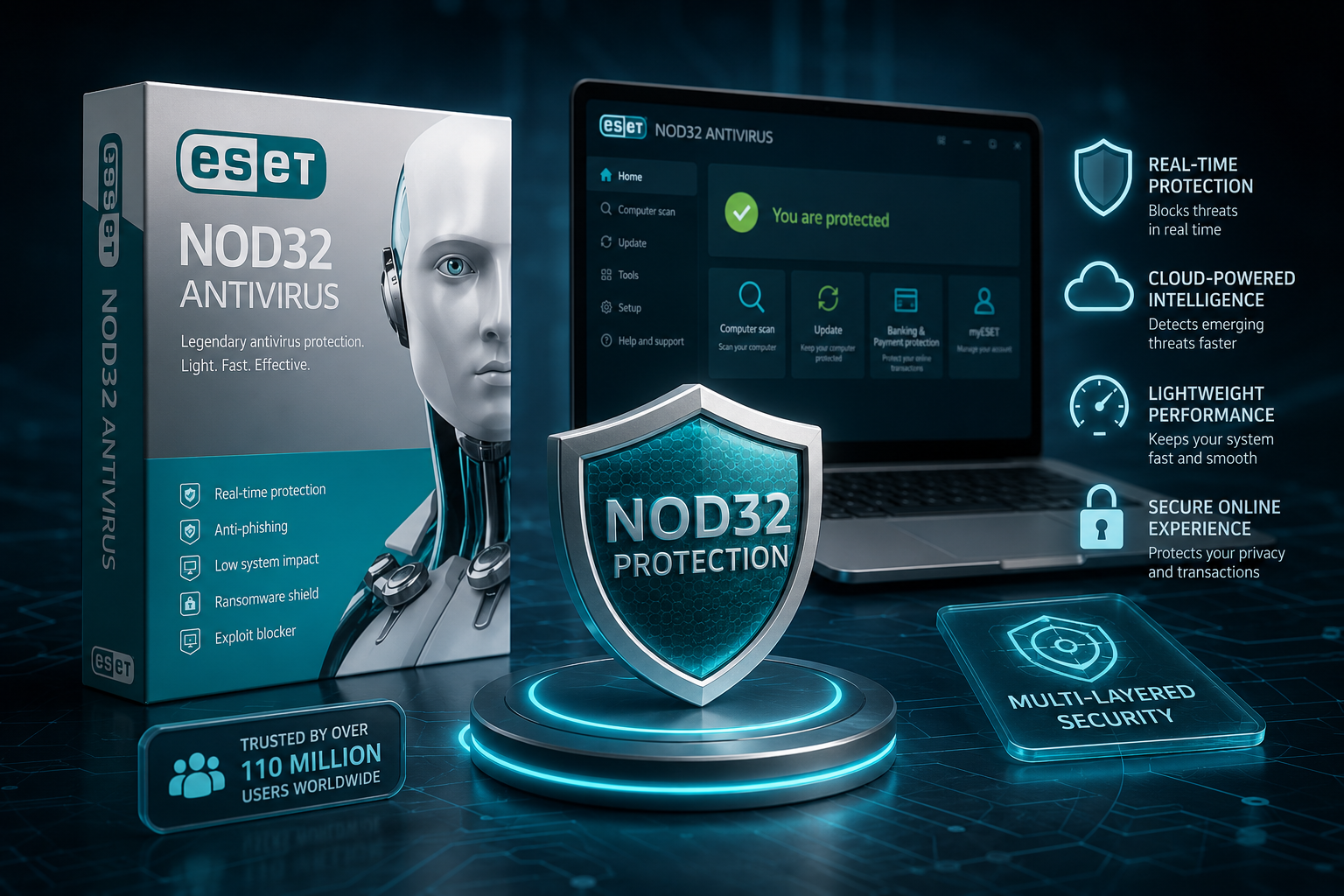
Antivirus software NOD32 is an endpoint security solution developed by ESET. It is designed to detect, block, and remove malware, including viruses, spyware, trojans, worms, and ransomware.
The software uses multiple layers of threat detection, including:
- Signature-based detection
- Heuristic analysis
- Machine learning technologies
- Behavioral monitoring
- Cloud-assisted threat intelligence
For many users, antivirus software NOD32 is known for offering strong malware detection while maintaining low system resource consumption.
Key Features of Antivirus Software NOD32
Modern endpoint protection solutions must do more than simply identify known viruses. Antivirus software NOD32 incorporates several security features designed to address evolving threats.
Advanced Malware Detection
The primary function of antivirus software NOD32 is detecting malicious files before they can compromise systems. The platform scans applications, downloads, email attachments, and system processes to identify suspicious activity.
Detection capabilities include:
- Viruses
- Trojans
- Worms
- Spyware
- Rootkits
- Ransomware
- Potentially unwanted applications (PUAs)
Real-Time Protection
Real-time scanning helps prevent malware from executing on endpoints. When a file is downloaded, opened, or modified, antivirus software NOD32 analyzes it for indicators of malicious behavior.
This proactive approach reduces the risk of infections spreading across devices and networks.
Exploit Blocker Technology
Cybercriminals frequently exploit vulnerabilities in popular applications such as browsers, office software, and PDF readers.
Exploit protection helps identify suspicious behavior associated with vulnerability exploitation attempts before attackers gain control of systems.
UEFI Scanner
Modern threats increasingly target firmware layers to establish persistence.
The UEFI scanning feature helps detect malicious code that may reside outside traditional operating system environments, adding another layer of protection.
Anti-Phishing Protection
Phishing remains one of the most common attack vectors used by cybercriminals.
Antivirus software NOD32 includes anti-phishing capabilities that help identify fraudulent websites designed to steal credentials, financial information, or sensitive business data.
Benefits of Antivirus Software NOD32
Many organizations and individual users choose antivirus software NOD32 for several reasons.
Lightweight Performance
One of the most frequently cited advantages is minimal system impact.
Unlike some security solutions that consume significant CPU and memory resources, antivirus software NOD32 is designed to run efficiently in the background.
This can be particularly beneficial for:
- Small businesses
- Remote workers
- Legacy hardware environments
- Organizations prioritizing endpoint performance
Strong Malware Detection Rates
Security testing organizations have consistently recognized ESET products for malware detection performance.
By combining multiple detection techniques, antivirus software NOD32 can identify both known and emerging threats.
Easy Deployment and Management
For organizations with limited IT resources, simplicity matters.
The platform offers:
- Centralized management capabilities
- Automated updates
- Scheduled scanning
- Policy enforcement
These features help reduce administrative overhead while maintaining security coverage.
Limitations of Traditional Antivirus Approaches
While antivirus software NOD32 provides valuable protection, businesses should recognize that modern threat environments require broader security capabilities.
Advanced Threats Are Evolving
Cybercriminals increasingly use:
- Fileless malware
- Living-off-the-land techniques
- Zero-day exploits
- Advanced persistent threats (APTs)
- Credential theft attacks
These threats often bypass traditional signature-based defenses.
Limited Visibility
Traditional antivirus solutions focus primarily on preventing malware execution.
However, modern security teams often require visibility into:
- User behavior
- Endpoint activity
- Lateral movement
- Threat hunting data
- Attack timelines
This is where Endpoint Detection and Response (EDR) and Extended Detection and Response (XDR) technologies become increasingly important.
Incident Response Challenges
When a security incident occurs, organizations need rapid investigation and remediation capabilities.
Modern cybersecurity platforms increasingly provide:
- Automated threat containment
- Endpoint isolation
- Attack visualization
- Behavioral analytics
- Incident response workflows
These capabilities extend beyond the scope of conventional antivirus protection.
Antivirus Software NOD32 vs Modern Endpoint Security Platforms
| Capability | Antivirus Software NOD32 | Modern EDR/XDR Platforms |
|---|---|---|
| Malware Detection | Yes | Yes |
| Real-Time Protection | Yes | Yes |
| Behavioral Analytics | Limited | Advanced |
| Threat Hunting | Limited | Comprehensive |
| Automated Response | Basic | Advanced |
| Endpoint Isolation | Limited | Yes |
| Attack Timeline Analysis | No | Yes |
| Incident Investigation | Limited | Extensive |
| Zero-Day Detection | Partial | Advanced |
Organizations evaluating endpoint security should consider not only malware prevention but also detection, investigation, response, and recovery capabilities.
Best Practices for Endpoint Protection
Regardless of which security solution is deployed, organizations should implement a layered cybersecurity strategy.
Keep Systems Updated
Unpatched software remains a leading cause of successful cyberattacks.
Organizations should:
- Update operating systems regularly
- Patch applications promptly
- Monitor vulnerability disclosures
Train Employees
Human error remains a significant security risk.
Effective security awareness programs help employees:
- Identify phishing emails
- Avoid malicious links
- Recognize social engineering attempts
Implement Multi-Factor Authentication
MFA significantly reduces the risk of account compromise.
Even if credentials are stolen, additional verification requirements help prevent unauthorized access.
Maintain Secure Backups
Reliable backups remain essential for ransomware recovery.
Best practices include:
- Offline backups
- Immutable storage
- Regular restoration testing
Deploy Advanced Threat Detection
Organizations increasingly supplement antivirus software with technologies such as:
- EDR
- XDR
- Threat intelligence
- Security analytics
- Automated response solutions
This layered approach improves resilience against sophisticated attacks.
How to Choose the Right Endpoint Security Solution
Before selecting a security platform, organizations should evaluate:
- Detection accuracy
- Ransomware protection
- Management complexity
- Scalability
- Incident response capabilities
- Integration options
- Compliance requirements
- Total cost of ownership
The ideal solution should align with both current security needs and future growth plans.
The Future of Endpoint Security
Cybersecurity is moving beyond traditional antivirus solutions.
Modern organizations increasingly require:
- AI-powered threat detection
- Behavioral analysis
- Zero Trust architectures
- Continuous monitoring
- Automated remediation
- Extended detection and response
While antivirus software NOD32 remains a recognized endpoint protection solution, businesses should continuously evaluate whether their security stack provides the visibility and response capabilities needed to combat modern threats.
Frequently Asked Questions
Is antivirus software NOD32 good for business use?
Yes. Antivirus software NOD32 offers malware protection, real-time scanning, and centralized management features that can benefit small and medium-sized businesses.
Does antivirus software NOD32 protect against ransomware?
Yes. Antivirus software NOD32 includes ransomware detection and prevention capabilities. However, organizations should also implement backups, employee training, and advanced threat monitoring for comprehensive protection.
What is the difference between antivirus software NOD32 and EDR?
Antivirus software NOD32 focuses primarily on malware prevention and detection. EDR solutions provide additional capabilities such as behavioral analytics, threat hunting, endpoint isolation, and incident response.
Can antivirus software NOD32 detect zero-day threats?
The platform uses heuristic analysis and machine learning technologies that can help identify some previously unknown threats. However, advanced EDR and XDR solutions often provide broader visibility into sophisticated attacks.
Is traditional antivirus enough for modern cybersecurity?
For many organizations, traditional antivirus alone is no longer sufficient. Modern security strategies typically combine antivirus protection with EDR, XDR, threat intelligence, and security awareness training.
Strengthen Your Security Beyond Traditional Antivirus
Cyber threats continue to evolve, and organizations need security solutions that go beyond basic malware detection. Whether you’re evaluating antivirus software NOD32 or exploring more advanced endpoint protection strategies, visibility, response capabilities, and threat containment are essential for modern cybersecurity success.
Ready to experience enterprise-grade endpoint detection and response? Register for OpenEDR today and discover how advanced threat detection, real-time monitoring, and automated response can strengthen your organization’s security posture:

 Loading...