Updated on June 8, 2026, by OpenEDR
Advanced Data Protection: Why Modern Organizations Can’t Afford to Ignore It
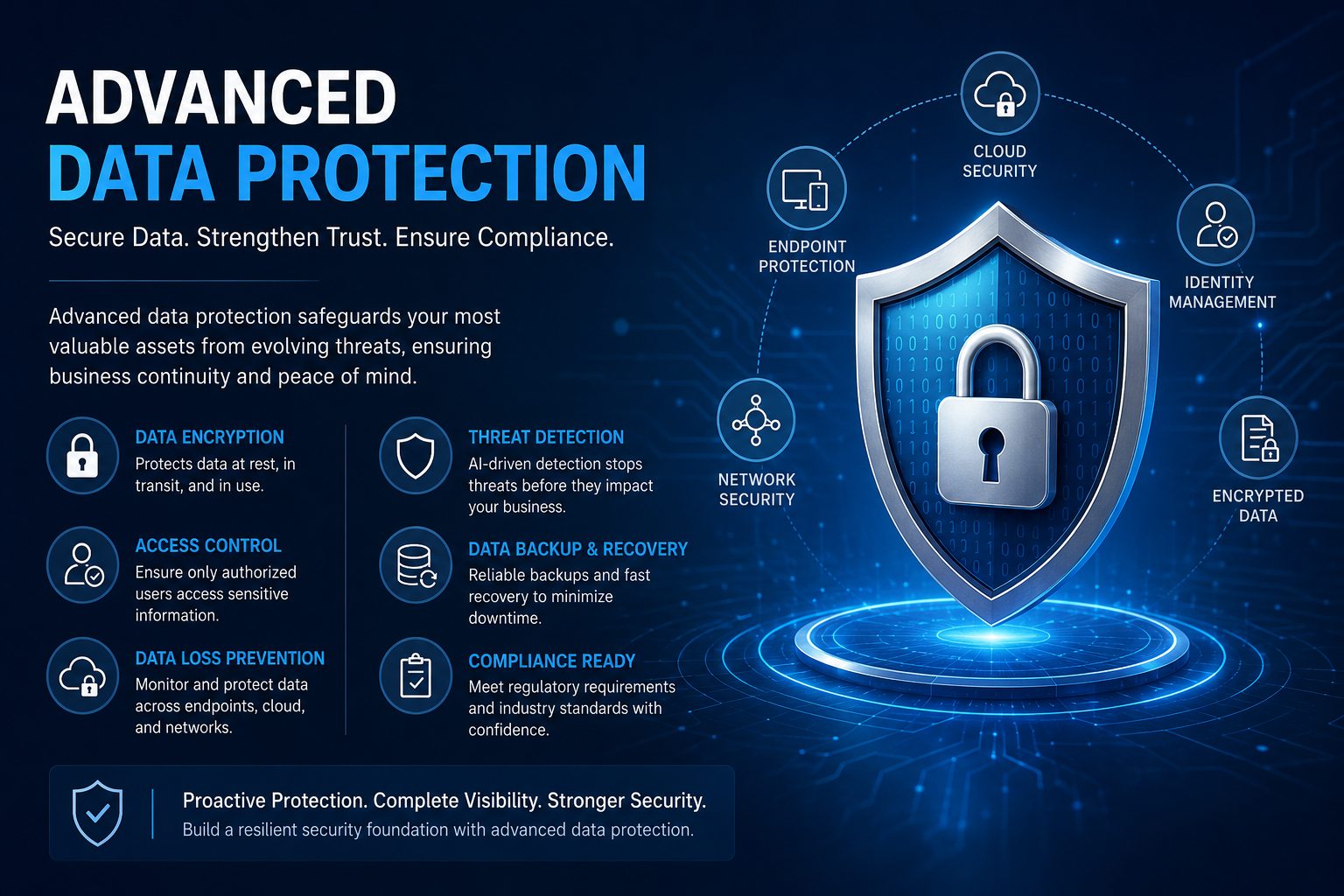
Data has become one of the most valuable assets for organizations today. From customer records and intellectual property to financial information and operational data, businesses rely on digital information to function efficiently. However, cybercriminals are increasingly targeting these assets through ransomware, phishing attacks, insider threats, and advanced persistent threats (APTs). This is where advanced data protection becomes essential.
According to industry reports, the average cost of a data breach continues to rise each year, causing financial losses, operational disruption, and reputational damage. Organizations that fail to implement advanced data protection strategies often struggle to recover from these incidents. As cyber threats evolve, businesses must move beyond traditional security measures and adopt comprehensive protection approaches designed for modern environments.
This guide explores advanced data protection, why it matters, key technologies involved, and practical steps organizations can take to strengthen their security posture.
What Is Advanced Data Protection?
Advanced data protection refers to a comprehensive set of technologies, policies, and security controls designed to safeguard sensitive information from unauthorized access, theft, corruption, and loss.
Unlike traditional security solutions that focus on perimeter defenses, advanced data protection secures information throughout its entire lifecycle—from creation and storage to transmission and disposal.
Key objectives include:
- Protecting sensitive business data
- Preventing unauthorized access
- Detecting and stopping cyber threats
- Ensuring regulatory compliance
- Maintaining business continuity
- Reducing the impact of data breaches
Modern advanced data protection strategies combine multiple layers of security to address today’s sophisticated threat landscape.
Why Advanced Data Protection Matters More Than Ever
Organizations face a growing number of cybersecurity challenges. Hybrid work environments, cloud adoption, and increasing digital transformation have expanded the attack surface significantly.
Several factors make advanced data protection a business priority:
Rising Cyber Threats
Attackers continuously develop new techniques to bypass traditional defenses. Ransomware, credential theft, and supply chain attacks have become more sophisticated and difficult to detect.
Regulatory Compliance Requirements
Many industries must comply with regulations such as:
- GDPR
- HIPAA
- PCI DSS
- CCPA
- SOX
- NIST Frameworks
Advanced data protection helps organizations meet these requirements while reducing compliance risks.
Increasing Data Volumes
Organizations generate and store more data than ever before. Without effective protection mechanisms, managing and securing this information becomes increasingly challenging.
Remote and Hybrid Work
Employees now access business resources from multiple locations and devices. Advanced data protection ensures sensitive information remains secure regardless of where users work.
Core Components of Advanced Data Protection
A successful advanced data protection strategy relies on several interconnected technologies and processes.
Data Encryption
Encryption converts sensitive information into unreadable code that can only be accessed using authorized decryption keys.
Benefits include:
- Protection against unauthorized access
- Secure data transmission
- Reduced breach impact
- Enhanced compliance support
Encryption should be applied to:
- Data at rest
- Data in transit
- Data in use where possible
Access Control and Identity Management
Strong access controls ensure only authorized users can access sensitive information.
Best practices include:
- Multi-factor authentication (MFA)
- Role-based access control (RBAC)
- Least-privilege access
- Single sign-on (SSO)
- Continuous authentication
By limiting access permissions, organizations reduce the risk of insider threats and compromised accounts.
Data Loss Prevention (DLP)
Data Loss Prevention solutions help prevent sensitive information from leaving the organization without authorization.
DLP tools can:
- Monitor data movement
- Identify sensitive content
- Block unauthorized transfers
- Alert security teams to suspicious activity
Advanced DLP solutions provide visibility across endpoints, cloud environments, email systems, and networks.
Endpoint Protection
Endpoints remain a primary target for cybercriminals. Advanced endpoint protection solutions help prevent malware, ransomware, and unauthorized access attempts.
Effective endpoint security includes:
- Behavioral analysis
- Threat containment
- Endpoint Detection and Response (EDR)
- Extended Detection and Response (XDR)
- Continuous monitoring
Securing endpoints is a critical element of any advanced data protection framework.
Advanced Data Protection Technologies Every Organization Should Consider
As cyber threats evolve, organizations must leverage modern security technologies to stay protected.
Artificial Intelligence and Machine Learning
AI-powered security solutions can analyze large volumes of data in real time to identify anomalies and suspicious behavior.
Benefits include:
- Faster threat detection
- Reduced false positives
- Automated response actions
- Improved risk assessment
Zero Trust Security
The Zero Trust model assumes that no user, device, or application should be trusted automatically.
Core Zero Trust principles include:
- Verify every request.
- Apply least-privilege access.
- Continuously monitor activity.
- Segment networks and resources.
- Validate device security posture.
Zero Trust significantly strengthens advanced data protection by limiting opportunities for attackers.
Threat Intelligence
Threat intelligence provides organizations with information about emerging threats, attack techniques, and indicators of compromise.
This intelligence helps security teams:
- Anticipate attacks
- Improve detection accuracy
- Strengthen defenses
- Prioritize security efforts
Backup and Recovery Solutions
Even the strongest security controls cannot guarantee complete protection. Reliable backup and recovery capabilities remain essential.
Organizations should:
- Maintain regular backups
- Store backups securely
- Test restoration procedures
- Use immutable backups when possible
This approach minimizes downtime following ransomware or data loss incidents.
Common Threats That Advanced Data Protection Helps Prevent
Organizations face numerous cyber threats targeting sensitive data.
Ransomware
Ransomware encrypts files and demands payment for restoration. Advanced data protection helps prevent ransomware execution and limits its impact.
Phishing Attacks
Phishing remains one of the most common attack methods. Security awareness training and email protection solutions help reduce successful attacks.
Insider Threats
Not all threats originate externally. Employees, contractors, and partners may intentionally or accidentally expose sensitive information.
Credential Theft
Attackers frequently target passwords and authentication credentials to gain unauthorized access.
Cloud Misconfigurations
Improperly configured cloud environments can expose sensitive data to public access or attackers.
Advanced data protection addresses these risks through layered security controls and continuous monitoring.
Best Practices for Implementing Advanced Data Protection
Building an effective advanced data protection strategy requires more than deploying technology.
Conduct Data Discovery
Identify:
- Sensitive information
- Critical assets
- Data locations
- Access requirements
You cannot protect data effectively if you don’t know where it resides.
Classify Data
Establish classification levels such as:
- Public
- Internal
- Confidential
- Restricted
Classification helps determine appropriate security controls.
Train Employees
Human error remains a leading cause of data breaches.
Provide regular training on:
- Phishing awareness
- Password security
- Data handling procedures
- Incident reporting
Monitor Continuously
Continuous monitoring helps identify suspicious activities before they become major incidents.
Key monitoring areas include:
- User behavior
- Endpoint activity
- Network traffic
- Cloud environments
Regularly Assess Security Controls
Conduct periodic:
- Security audits
- Vulnerability assessments
- Penetration tests
- Compliance reviews
These assessments help identify weaknesses and improve overall protection.
The Future of Advanced Data Protection
The cybersecurity landscape continues to evolve rapidly. Emerging technologies such as AI-driven attacks, quantum computing, and increasingly sophisticated ransomware campaigns will create new challenges.
Future advanced data protection strategies will likely focus on:
- Automated threat response
- Predictive security analytics
- Enhanced cloud-native security
- Continuous identity verification
- Stronger data-centric security models
Organizations that proactively adapt to these changes will be better positioned to protect their most valuable assets.
Conclusion
Advanced data protection is no longer optional. As cyber threats become more sophisticated and data volumes continue to grow, organizations must implement comprehensive security strategies that protect information across its entire lifecycle.
By combining encryption, access controls, endpoint security, Zero Trust principles, threat intelligence, and continuous monitoring, businesses can significantly reduce the risk of data breaches and improve cyber resilience.
The most successful organizations view advanced data protection as an ongoing business strategy rather than a one-time security initiative. Investing in the right technologies, processes, and people today can help safeguard critical data for years to come.
Frequently Asked Questions
What is advanced data protection?
Advanced data protection is a collection of security technologies and practices that protect sensitive information from unauthorized access, theft, loss, and cyberattacks throughout its lifecycle.
Why is advanced data protection important?
It helps organizations prevent data breaches, maintain regulatory compliance, protect sensitive information, and ensure business continuity in the face of evolving cyber threats.
What technologies are used in advanced data protection?
Common technologies include encryption, Data Loss Prevention (DLP), endpoint protection, Zero Trust security, threat intelligence, identity management, and backup solutions.
How does Zero Trust support advanced data protection?
Zero Trust continuously verifies users and devices, applies least-privilege access, and limits opportunities for attackers to access sensitive data.
Can advanced data protection help prevent ransomware?
Yes. Advanced data protection solutions use layered security controls, endpoint protection, threat detection, backup systems, and access controls to reduce ransomware risks and minimize damage.
Strengthen Your Data Protection Strategy Today
Cyber threats are constantly evolving, but your defenses can evolve faster. Discover how Xcitium OpenEDR helps organizations prevent advanced threats, improve endpoint visibility, and strengthen overall security posture.
Get started today: https://openedr.platform.xcitium.com/register/

 Loading...