Updated on June 3, 2026, by OpenEDR
Interface Security: Why Securing Every Access Point Matters
Every day, businesses rely on countless digital interfaces to connect users, applications, devices, and networks. But here’s the challenge: every interface creates a potential entry point for cybercriminals. Without proper interface security, attackers can exploit vulnerabilities to gain unauthorized access, steal data, or disrupt operations.
According to industry reports, many successful cyberattacks begin by targeting exposed interfaces such as login portals, APIs, web applications, and cloud services. As organizations continue expanding their digital ecosystems, interface security has become a critical component of modern cybersecurity strategies.
Whether you’re an IT manager, cybersecurity professional, CEO, or business owner, understanding interface security is essential for protecting sensitive information, maintaining compliance, and ensuring business continuity.
In this guide, we’ll explore what interface security is, why it matters, common threats, and best practices for securing digital interfaces.
What Is Interface Security?
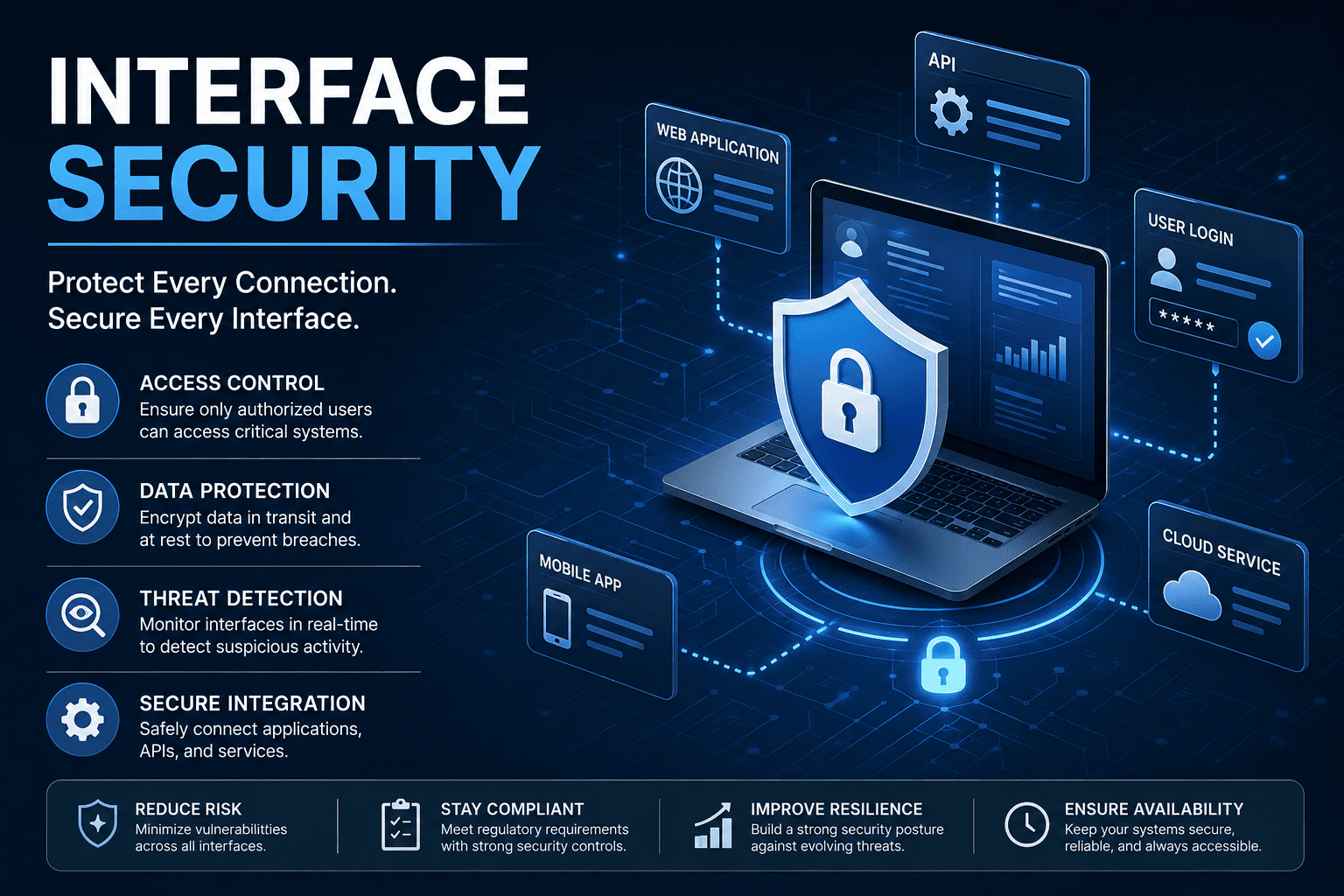
Interface security refers to the protection of communication points where users, applications, systems, or devices interact. These interfaces can include web applications, APIs, cloud platforms, operating systems, mobile applications, network management consoles, and user authentication portals.
The goal of interface security is to prevent:
- Unauthorized access
- Data breaches
- Malware infections
- Privilege escalation
- Application abuse
- System compromise
By implementing strong interface security controls, organizations can reduce attack surfaces and protect critical business assets.
Why Interface Security Is Important
Modern organizations depend on interconnected technologies. Every interaction between users and systems occurs through an interface.
Without proper interface security, attackers can exploit vulnerabilities to:
- Access sensitive data
- Hijack user accounts
- Deploy ransomware
- Manipulate business processes
- Disrupt services
- Steal intellectual property
As digital transformation accelerates, securing interfaces becomes increasingly important.
Growing Attack Surfaces
Organizations now manage:
- Cloud applications
- Remote work environments
- Mobile devices
- Internet of Things (IoT) devices
- Third-party integrations
- Software-as-a-Service (SaaS) platforms
Each new connection introduces additional security risks.
Common Types of Interfaces That Require Security
Different interfaces require different protection strategies.
User Interfaces (UI)
User interfaces allow people to interact with applications and systems.
Examples include:
- Login portals
- Web dashboards
- Customer portals
- Administrative consoles
Protecting these interfaces helps prevent credential theft and unauthorized access.
Application Programming Interfaces (APIs)
APIs enable communication between applications.
Organizations use APIs for:
- Cloud integrations
- Mobile applications
- Payment processing
- Data sharing
API security is a major component of modern interface security programs.
Network Interfaces
Network interfaces facilitate communication between systems and networks.
Examples include:
- Routers
- Firewalls
- Switches
- VPN gateways
Attackers frequently target network interfaces to gain access to enterprise environments.
Cloud Interfaces
Cloud platforms provide management interfaces that control access to workloads, storage, and applications.
Misconfigured cloud interfaces remain a common source of security incidents.
Common Threats to Interface Security
Understanding threats helps organizations develop stronger defenses.
Credential Theft
Attackers steal usernames and passwords through:
- Phishing attacks
- Keyloggers
- Credential stuffing
- Social engineering
Compromised credentials often provide direct access to critical interfaces.
API Attacks
Cybercriminals exploit:
- Weak authentication
- Broken access controls
- Insecure endpoints
- API misconfigurations
API attacks continue to increase as organizations expand digital services.
Session Hijacking
Attackers intercept active sessions to gain unauthorized access without needing passwords.
Injection Attacks
Common examples include:
- SQL injection
- Command injection
- Cross-site scripting (XSS)
These attacks exploit insecure interfaces and application inputs.
Ransomware
Compromised interfaces may provide attackers with access to deploy ransomware across an environment.
Core Principles of Effective Interface Security
Strong interface security requires multiple layers of protection.
Authentication
Authentication verifies user identities.
Best practices include:
- Multi-factor authentication (MFA)
- Password policies
- Biometric verification
- Single sign-on (SSO)
Strong authentication significantly reduces unauthorized access risks.
Authorization
Authorization determines what users can access after authentication.
Organizations should implement:
- Role-based access control (RBAC)
- Least-privilege access
- Just-in-time access
These controls limit potential damage if accounts are compromised.
Encryption
Encryption protects data as it moves through interfaces.
Key protections include:
- TLS encryption
- HTTPS connections
- Secure API communications
- Encrypted credentials
Encryption helps prevent data interception.
Monitoring and Logging
Continuous monitoring helps identify suspicious behavior.
Organizations should log:
- Login attempts
- Access requests
- Configuration changes
- Privileged actions
These logs support threat detection and incident investigations.
Interface Security Best Practices
Organizations can significantly improve security by following proven practices.
Implement Multi-Factor Authentication
MFA adds an additional layer of protection beyond passwords.
Benefits include:
- Reduced account compromise risk
- Stronger identity verification
- Improved compliance
Secure APIs
API security should include:
- Authentication tokens
- Rate limiting
- Input validation
- API gateways
- Continuous monitoring
Secure APIs are essential for effective interface security.
Apply Zero Trust Principles
Zero Trust follows the principle:
“Never trust, always verify.”
Organizations should continuously verify:
- Users
- Devices
- Sessions
- Applications
Zero Trust reduces attack opportunities across interfaces.
Conduct Regular Security Assessments
Assessments help identify:
- Misconfigurations
- Vulnerabilities
- Weak access controls
- Compliance gaps
Regular testing improves overall security posture.
The Role of Interface Security in Compliance
Many regulations require strong access controls and interface protection.
Common frameworks include:
- NIST Cybersecurity Framework
- ISO 27001
- HIPAA
- PCI DSS
- GDPR
- SOC 2
Strong interface security helps organizations meet compliance obligations while reducing operational risks.
Interface Security and Cloud Environments
Cloud adoption has transformed how businesses operate.
However, cloud interfaces introduce unique challenges.
Organizations must secure:
- Administrative dashboards
- Cloud APIs
- Identity systems
- Storage interfaces
- Container management platforms
Cloud-specific security controls help reduce exposure to misconfigurations and unauthorized access.
Emerging Trends in Interface Security
The cybersecurity landscape continues to evolve.
AI-Powered Threat Detection
Artificial intelligence helps identify:
- Anomalous behavior
- Credential misuse
- Interface abuse
- Automated attacks
API Security Expansion
Organizations are investing more heavily in:
- API discovery
- Runtime protection
- API threat detection
Identity-Centric Security
Modern security increasingly focuses on identity verification and user behavior analysis.
Extended Detection and Response (XDR)
XDR solutions improve visibility across:
- Endpoints
- Networks
- Cloud environments
- User activities
This enhances overall interface protection.
Building a Strong Interface Security Strategy
A successful interface security program should include:
- Asset discovery
- Authentication controls
- Access management
- API security
- Encryption
- Monitoring and logging
- Security testing
- Incident response planning
Organizations that follow these principles significantly reduce cyber risk.
Frequently Asked Questions
What is interface security?
Interface security is the protection of communication points where users, applications, devices, and systems interact. It helps prevent unauthorized access, data breaches, and cyberattacks.
Why is interface security important?
Interface security protects digital entry points that attackers often target to gain access to systems, applications, and sensitive data.
What are examples of interfaces that need protection?
Examples include login portals, APIs, cloud dashboards, administrative consoles, mobile applications, and network management interfaces.
How can organizations improve interface security?
Organizations can strengthen interface security through MFA, encryption, API security, Zero Trust principles, continuous monitoring, and regular security assessments.
What role does API security play in interface security?
API security protects application communication channels from unauthorized access, data exposure, abuse, and cyberattacks.
Conclusion
As organizations become more connected, interfaces continue to serve as critical gateways between users, applications, and business systems. Every interface represents both an opportunity and a potential security risk.
Implementing a strong interface security strategy helps organizations protect sensitive data, secure access points, reduce attack surfaces, and improve cyber resilience. By combining authentication, authorization, encryption, monitoring, and Zero Trust principles, businesses can better defend against evolving threats.
Ready to strengthen your security posture and improve threat detection capabilities?
Get started today: https://openedr.platform.xcitium.com/register/

 Loading...