Updated on May 28, 2026, by OpenEDR
Security Services in Computer Security: Protecting Modern Businesses From Cyber Threats
Cyberattacks are becoming faster, smarter, and more damaging every year. From ransomware attacks to phishing scams and insider threats, organizations face constant risks that can disrupt operations and expose sensitive data. This is why security services in computer security have become essential for businesses of every size.
Whether you manage a startup, enterprise, healthcare organization, or financial institution, strong cybersecurity is no longer optional. A single security breach can lead to financial losses, legal penalties, operational downtime, and reputational damage.
Modern security services in computer security help organizations detect threats early, prevent unauthorized access, secure endpoints, and respond to incidents before attackers can cause widespread damage. In this guide, we’ll explore the different types of security services, their benefits, and how businesses can build a stronger cybersecurity strategy in 2026.
What Are Security Services in Computer Security?
Security services in computer security refer to technologies, processes, and managed solutions designed to protect systems, networks, applications, and data from cyber threats.
These services help organizations:
- Prevent malware infections
- Detect suspicious activity
- Block unauthorized access
- Monitor network traffic
- Respond to cyber incidents
- Maintain compliance requirements
- Protect sensitive business data
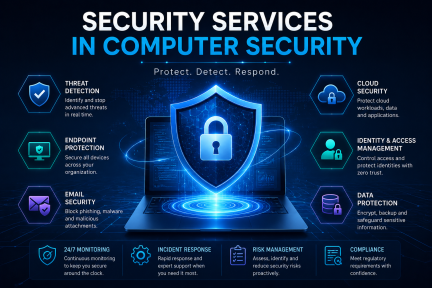
Cybersecurity services work together to create multiple layers of protection across an organization’s digital environment.
Common examples include:
- Endpoint security
- Network security
- Email security
- Cloud security
- Threat detection and response
- Identity and access management
- Managed security services
As cyber threats evolve, businesses increasingly rely on advanced security services in computer security to reduce risk and maintain operational continuity.
Why Security Services Matter More Than Ever
Cybercriminals are targeting organizations across every industry. Small businesses, healthcare providers, financial institutions, manufacturers, and government agencies are all vulnerable to cyberattacks.
Several factors are increasing cybersecurity risks:
- Remote and hybrid work environments
- Cloud adoption
- IoT devices
- Sophisticated ransomware campaigns
- Third-party supply chain risks
- AI-powered phishing attacks
Without proper cybersecurity protection, attackers can exploit vulnerabilities to steal customer information, encrypt critical files, or disrupt operations.
Security services in computer security help businesses stay ahead of these threats through proactive monitoring, automated protection, and rapid incident response.
Types of Security Services in Computer Security
Organizations need multiple layers of security to defend against modern threats. Below are the most important cybersecurity services businesses should consider.
1. Endpoint Security Services
Endpoints include laptops, desktops, servers, smartphones, and other connected devices. These devices are common entry points for attackers.
Endpoint security services help:
- Detect malware and ransomware
- Monitor suspicious activity
- Isolate infected devices
- Prevent unauthorized software execution
- Secure remote work environments
Advanced endpoint detection and response (EDR) solutions provide real-time visibility into threats and help security teams contain attacks quickly.
2. Network Security Services
Network security focuses on protecting internal and external communication systems from unauthorized access and cyberattacks.
Common network security services include:
- Firewalls
- Intrusion detection systems (IDS)
- Intrusion prevention systems (IPS)
- VPN security
- Network segmentation
- Traffic monitoring
These solutions help organizations block malicious traffic and prevent attackers from moving laterally across networks.
3. Cloud Security Services
As businesses move applications and data to the cloud, cloud security has become a top priority.
Cloud security services protect:
- SaaS applications
- Cloud workloads
- Remote access environments
- Hybrid cloud infrastructure
- Cloud storage systems
Strong cloud security helps organizations maintain visibility and control across distributed environments.
4. Email Security Services
Email remains one of the most common attack vectors for phishing and malware delivery.
Email security services help organizations:
- Block phishing emails
- Detect malicious attachments
- Prevent business email compromise (BEC)
- Filter spam
- Protect employee communications
Modern email protection uses AI and threat intelligence to identify suspicious behavior before users click dangerous links.
5. Managed Detection and Response (MDR)
Many organizations lack the internal resources needed to monitor threats 24/7.
Managed Detection and Response (MDR) services provide:
- Continuous threat monitoring
- Incident investigation
- Threat hunting
- Security analytics
- Expert incident response
MDR helps organizations improve visibility while reducing the burden on internal IT teams.
Key Benefits of Security Services in Computer Security
Implementing strong cybersecurity services provides both operational and financial benefits.
Reduced Risk of Cyberattacks
Layered security services reduce the chances of successful attacks by detecting and stopping threats early.
Faster Threat Detection
Modern cybersecurity tools use behavioral analytics and AI-driven monitoring to identify suspicious activity in real time.
Improved Regulatory Compliance
Many industries must comply with regulations such as:
- GDPR
- HIPAA
- PCI DSS
- SOX
- GLBA
Security services help organizations maintain compliance through monitoring, reporting, and access controls.
Business Continuity
Cyberattacks can disrupt operations for days or even weeks. Security services help organizations minimize downtime and recover faster after incidents.
Better Protection for Remote Work
Remote and hybrid work environments create new security challenges. Endpoint protection, VPN security, and identity management services help secure remote access.
Common Cyber Threats Businesses Face
Understanding cyber threats helps organizations choose the right security services in computer security.
Ransomware Attacks
Ransomware encrypts files and demands payment for restoration. These attacks can shut down business operations and cause major financial losses.
Phishing Attacks
Phishing emails trick users into revealing passwords or downloading malware.
Insider Threats
Employees or contractors with access to systems may intentionally or accidentally expose sensitive data.
Zero-Day Exploits
Attackers use previously unknown vulnerabilities before security patches become available.
Credential Theft
Weak or stolen passwords remain one of the most common causes of data breaches.
Businesses need proactive security services to detect and stop these evolving threats.
How Zero Trust Improves Cybersecurity
Traditional security models assumed users and devices inside the network could be trusted. Modern cybersecurity strategies no longer rely on that assumption.
Zero Trust security follows the principle:
“Never trust, always verify.”
Zero Trust frameworks require:
- Continuous authentication
- Multi-factor authentication (MFA)
- Least-privilege access
- Device verification
- Network segmentation
Security services in computer security increasingly rely on Zero Trust principles to reduce insider risk and limit attacker movement.
Best Practices for Choosing Security Services
Not all cybersecurity solutions offer the same level of protection. Businesses should evaluate providers carefully before making decisions.
Look for Real-Time Threat Detection
Choose solutions that provide:
- Continuous monitoring
- AI-driven analytics
- Automated threat response
Prioritize Scalability
Your cybersecurity infrastructure should grow with your organization.
Evaluate Incident Response Capabilities
Fast incident response can significantly reduce damage during attacks.
Choose Integrated Security Platforms
Integrated security solutions improve visibility and simplify management across endpoints, networks, and cloud systems.
Verify Compliance Support
Businesses operating in regulated industries should ensure their cybersecurity services support compliance reporting and auditing.
Future Trends in Security Services in Computer Security
Cybersecurity continues to evolve rapidly as attackers adopt more sophisticated techniques.
Key trends shaping the future include:
- AI-powered threat detection
- Extended Detection and Response (XDR)
- Zero Trust adoption
- Automated incident response
- Cloud-native security
- Identity-first security strategies
- Threat intelligence sharing
Organizations that invest in modern cybersecurity services will be better positioned to manage future risks.
How Businesses Can Build a Strong Cybersecurity Strategy
A strong cybersecurity strategy requires more than installing antivirus software.
Businesses should:
- Conduct regular risk assessments
- Implement endpoint protection
- Use multi-factor authentication
- Train employees on cybersecurity awareness
- Monitor systems continuously
- Backup critical data regularly
- Develop incident response plans
- Patch vulnerabilities quickly
Combining these practices with advanced security services in computer security creates a stronger defense against cyber threats.
FAQ: Security Services in Computer Security
What are security services in computer security?
Security services in computer security are solutions designed to protect systems, networks, applications, and data from cyber threats such as malware, ransomware, phishing, and unauthorized access.
Why are cybersecurity services important for businesses?
Cybersecurity services help businesses reduce the risk of data breaches, ransomware attacks, financial losses, and operational disruptions while improving compliance and threat visibility.
What is the difference between EDR and antivirus software?
Antivirus software primarily detects known malware signatures, while Endpoint Detection and Response (EDR) solutions provide continuous monitoring, behavioral analysis, and advanced threat response capabilities.
How does Zero Trust improve security?
Zero Trust improves security by continuously verifying users and devices instead of automatically trusting internal network activity.
What industries need cybersecurity services the most?
Industries handling sensitive data face the highest risks, including healthcare, financial services, manufacturing, education, government, and retail organizations.
Final Thoughts
Cyber threats are becoming more advanced, frequent, and costly for organizations worldwide. Businesses can no longer rely on outdated security models or basic antivirus software alone.
Modern security services in computer security provide the visibility, automation, and protection organizations need to defend against ransomware, phishing, insider threats, and advanced cyberattacks.
By adopting layered cybersecurity strategies, implementing Zero Trust principles, and investing in proactive threat detection, businesses can improve resilience and protect critical operations.
Ready to strengthen your cybersecurity posture?
Start protecting your endpoints, networks, and business operations with advanced enterprise security solutions today.

 Loading...