Updated on May 18, 2026, by OpenEDR
Cyber threats are growing faster than ever. From ransomware attacks to phishing scams, businesses of all sizes face constant risks every day. In fact, a single cyberattack can lead to financial loss, damaged reputation, and operational downtime. That’s why investing in the right cyber security tools is no longer optional—it’s essential.
Whether you are an IT manager, a CEO, or a startup founder, choosing the right security solutions can protect your organization from evolving threats. But with so many options available, how do you know which tools are worth your investment?
This guide explores the most effective cyber security tools, their benefits, and how businesses can use them to strengthen digital protection in 2026 and beyond.
Why Cyber Security Tools Matter More Than Ever
Modern businesses rely heavily on digital infrastructure. Cloud platforms, remote work, connected devices, and online transactions create new opportunities—but they also create more entry points for cybercriminals.
Without strong cyber security tools, organizations may face:
- Data breaches
- Financial fraud
- Malware infections
- Compliance violations
- Loss of customer trust
- Business interruption
The right security solutions help businesses detect, prevent, and respond to threats before they cause damage.
What Are Cyber Security Tools?
Cyber security tools are software or hardware solutions designed to protect systems, networks, applications, and data from cyber threats. These tools monitor suspicious activity, block attacks, secure sensitive information, and help businesses maintain compliance.
Some tools focus on prevention, while others specialize in threat detection and response.
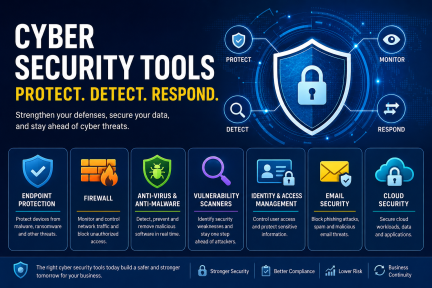
Common categories include:
- Antivirus and anti-malware tools
- Firewalls
- Endpoint security solutions
- Network monitoring tools
- Identity and access management tools
- Email security solutions
- Vulnerability scanners
- SIEM platforms
Each tool plays a unique role in a complete cybersecurity strategy.
Essential Cyber Security Tools Every Business Needs
1. Endpoint Protection Tools
Endpoints include laptops, desktops, servers, smartphones, and tablets connected to your network. Since employees often work remotely, endpoint security has become a top priority.
Endpoint protection tools help:
- Detect malware
- Prevent ransomware attacks
- Monitor suspicious activity
- Secure remote devices
Modern endpoint security solutions use AI and behavioral analysis to identify threats before they spread.
Key Features to Look For
- Real-time threat detection
- Automated response capabilities
- Device management
- Cloud-based monitoring
- Zero-trust security support
Businesses with remote or hybrid teams should prioritize advanced endpoint security.
2. Firewall Security Tools
Firewalls act as the first line of defense between trusted internal networks and external threats. They monitor incoming and outgoing traffic and block unauthorized access.
There are several types of firewall solutions:
- Hardware firewalls
- Software firewalls
- Next-generation firewalls (NGFW)
- Cloud firewalls
Advanced firewall cyber security tools now include intrusion prevention, deep packet inspection, and AI-driven analytics.
Benefits of Firewall Solutions
- Blocks malicious traffic
- Prevents unauthorized access
- Monitors network activity
- Protects sensitive data
- Supports compliance requirements
Every business network should include firewall protection as part of its security framework.
3. Antivirus and Anti-Malware Tools
Antivirus software remains one of the most widely used cyber security tools. However, today’s threats are far more advanced than traditional viruses.
Modern anti-malware solutions protect against:
- Trojans
- Spyware
- Ransomware
- Fileless malware
- Zero-day attacks
Many modern solutions combine machine learning with cloud intelligence to detect new threats in real time.
Best Practices
- Keep antivirus databases updated
- Enable automatic scanning
- Train employees to avoid suspicious downloads
- Combine antivirus with endpoint detection tools
Antivirus software alone is not enough, but it remains an important layer of protection.
Advanced Cyber Security Tools for Enterprise Protection
SIEM Platforms (Security Information and Event Management)
SIEM tools collect and analyze security data from multiple systems across an organization. These platforms help IT teams identify suspicious behavior quickly.
SIEM solutions provide:
- Real-time monitoring
- Centralized logging
- Threat intelligence
- Automated alerts
- Incident response workflows
Large organizations often rely on SIEM platforms to manage complex environments and maintain regulatory compliance.
Why SIEM Matters
Cyberattacks can happen within seconds. SIEM tools help businesses detect unusual activity before attackers gain full access.
Organizations handling sensitive customer or financial data should strongly consider SIEM deployment.
Vulnerability Assessment Tools
Cybercriminals often exploit outdated software or misconfigured systems. Vulnerability assessment tools scan networks and applications to identify security weaknesses.
These cyber security tools help organizations:
- Detect vulnerabilities
- Prioritize security patches
- Reduce attack surfaces
- Improve compliance
Regular vulnerability scanning is critical for proactive cybersecurity management.
Common Vulnerabilities Businesses Face
- Weak passwords
- Unpatched software
- Open ports
- Misconfigured cloud settings
- Legacy systems
Identifying these weaknesses early reduces the risk of major incidents.
Identity and Access Management (IAM) Tools
Not every employee should have access to every system. IAM tools control who can access company resources and under what conditions.
Key IAM features include:
- Multi-factor authentication (MFA)
- Single sign-on (SSO)
- Role-based access control
- Privileged access management
Strong identity protection reduces insider threats and prevents unauthorized access.
Why MFA Is Essential
Passwords alone are no longer enough. Multi-factor authentication adds another security layer by requiring additional verification steps.
Businesses using MFA significantly reduce the risk of account compromise.
Cloud Security Tools for Modern Businesses
As organizations move to cloud environments, cloud-specific cyber security tools have become increasingly important.
Cloud security solutions protect:
- Cloud applications
- SaaS platforms
- Cloud storage
- Hybrid environments
- Remote access systems
Important Cloud Security Features
- Cloud workload protection
- Data encryption
- Access management
- API security
- Continuous monitoring
Businesses should ensure their cloud providers follow strong security standards while also implementing their own protection layers.
Email Security Tools: Stopping Phishing Attacks
Email remains one of the most common attack methods used by cybercriminals. Phishing emails can trick employees into sharing passwords, financial details, or confidential information.
Email security tools help organizations:
- Filter spam
- Detect phishing attempts
- Scan attachments
- Block malicious links
- Prevent business email compromise (BEC)
Employee Awareness Matters
Even the best cyber security tools cannot replace cybersecurity training. Employees should learn how to:
- Identify suspicious emails
- Avoid clicking unknown links
- Report phishing attempts
- Use strong passwords
Human error remains one of the leading causes of security breaches.
How AI Is Changing Cyber Security Tools
Artificial intelligence is transforming modern cybersecurity. AI-powered tools can analyze massive amounts of data and identify threats much faster than humans.
AI-driven cyber security tools can:
- Detect anomalies
- Predict attack patterns
- Automate responses
- Reduce false positives
- Improve threat hunting
As cyber threats become more sophisticated, AI-based security solutions are becoming essential for businesses of all sizes.
Choosing the Right Cyber Security Tools for Your Business
Not every organization needs the same security stack. The right tools depend on your:
- Industry
- Business size
- Compliance requirements
- IT infrastructure
- Budget
- Risk profile
Questions to Ask Before Choosing Tools
- What are your biggest security risks?
- Do you support remote employees?
- Are you storing sensitive customer data?
- Do you need compliance support?
- Can your IT team manage advanced tools?
Evaluating these factors helps businesses select effective solutions without overspending.
Common Mistakes Businesses Make
Even companies that invest in cyber security tools sometimes make costly mistakes.
1. Relying on One Security Solution
No single tool can stop every threat. Businesses need layered security strategies.
2. Ignoring Software Updates
Outdated software creates vulnerabilities attackers can exploit.
3. Lack of Employee Training
Employees are often targeted through phishing and social engineering.
4. Weak Password Policies
Poor password practices increase the risk of unauthorized access.
5. No Incident Response Plan
Businesses should know exactly how to respond when attacks occur.
Avoiding these mistakes strengthens overall cybersecurity posture.
Cyber Security Trends Businesses Should Watch
The cybersecurity landscape continues to evolve rapidly. Businesses should stay informed about emerging trends.
Key Trends in 2026
- AI-powered cyberattacks
- Zero-trust security adoption
- Extended Detection and Response (XDR)
- Cloud-native security
- Increased ransomware targeting
- Supply chain attacks
- Security automation
Organizations that adapt quickly will be better prepared to handle future threats.
Building a Strong Cybersecurity Strategy
Effective cybersecurity is not just about buying software. It requires a long-term strategy that combines technology, processes, and people.
A Strong Security Strategy Includes
- Risk assessments
- Continuous monitoring
- Employee training
- Incident response planning
- Regular vulnerability testing
- Security policy enforcement
Businesses that take a proactive approach can significantly reduce security risks.
Why Businesses Need Integrated Cyber Security Tools
Managing multiple disconnected security solutions can create gaps in protection. Integrated security platforms provide centralized visibility and easier management.
Benefits include:
- Faster threat detection
- Simplified operations
- Better reporting
- Reduced response time
- Improved scalability
Modern businesses increasingly prefer unified cybersecurity ecosystems instead of isolated tools.
Final Thoughts
Cyber threats are not slowing down. As attacks become more advanced, businesses must invest in reliable cyber security tools to protect their systems, employees, and customers.
From endpoint protection and firewalls to AI-powered detection and cloud security, the right tools can dramatically reduce risk and improve resilience. However, cybersecurity is not just about technology—it also requires employee awareness, strong policies, and continuous monitoring.
Organizations that prioritize cybersecurity today will be better prepared for tomorrow’s evolving threat landscape.
If you’re ready to strengthen your cybersecurity posture and protect your business with advanced security solutions, start here:
👉 https://openedr.platform.xcitium.com/register/
Frequently Asked Questions (FAQ)
1. What are the most important cyber security tools for businesses?
The most important cyber security tools include endpoint protection, firewalls, antivirus software, SIEM platforms, vulnerability scanners, and identity management solutions. Businesses should use multiple layers of protection for better security.
2. How do cyber security tools help prevent ransomware attacks?
Cyber security tools detect suspicious behavior, block malicious files, monitor network activity, and isolate infected devices before ransomware spreads across the organization.
3. Are cloud-based cyber security tools effective?
Yes. Cloud-based security solutions provide scalability, real-time updates, centralized management, and remote monitoring, making them highly effective for modern businesses.
4. Why is employee training important in cybersecurity?
Employees are often targeted through phishing attacks and social engineering. Proper training helps staff recognize threats and follow safe security practices.
5. How often should businesses update their cyber security tools?
Businesses should update security tools regularly—preferably automatically—to ensure protection against the latest threats and vulnerabilities.

 (1 votes, average: 4.00 out of 5)
 Loading...