Updated on March 23, 2026, by OpenEDR
How secure are the devices connected to your network right now? In today’s hybrid and cloud-driven environment, endpoints—laptops, mobile devices, and servers—are the most targeted entry points for cyberattacks. That’s why investing in endpoint security solutions is no longer optional.
Modern organizations rely on distributed workforces and multiple devices, which significantly expands the attack surface. Without strong endpoint security solutions, even a single compromised device can lead to data breaches, ransomware attacks, or system-wide disruptions.
For IT managers, cybersecurity professionals, CEOs, and founders, understanding and implementing the right endpoint security strategy is critical. In this guide, we’ll explore how endpoint security solutions work, key features, benefits, and best practices to protect your organization.
What Are Endpoint Security Solutions?
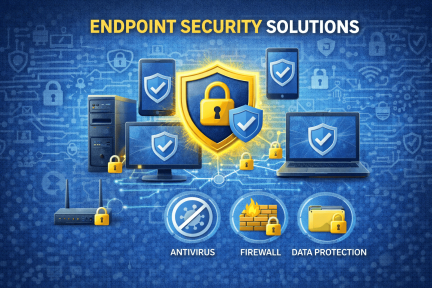
Endpoint security solutions are cybersecurity tools and practices designed to protect devices connected to a network from threats such as malware, phishing, and unauthorized access.
Endpoints include:
- Laptops and desktops
- Smartphones and tablets
- Servers and cloud workloads
- IoT devices
The goal of endpoint security solutions is to secure every device that interacts with your network.
Why Endpoint Security Solutions Are Important
Cybercriminals increasingly target endpoints because they are often the weakest link.
Key Risks Without Endpoint Protection
Organizations without proper endpoint security solutions may face:
- Malware infections
- Ransomware attacks
- Data breaches
- Unauthorized access
- Insider threats
Because employees access systems from various locations, endpoints are constantly exposed to risks.
Real-World Impact
A compromised endpoint can:
- Spread malware across networks
- Expose sensitive data
- Disrupt business operations
This makes endpoint security a critical component of any cybersecurity strategy.
How Endpoint Security Solutions Work
Modern endpoint security goes beyond traditional antivirus.
Core Functions
- Threat Detection
Identifies malicious activity using signatures and behavior analysis - Real-Time Monitoring
Continuously monitors endpoint activity - Threat Prevention
Blocks threats before they execute - Incident Response
Detects and responds to security incidents - Data Protection
Secures sensitive information
These capabilities make endpoint security solutions essential for proactive defense.
Key Features of Endpoint Security Solutions
Choosing the right solution requires understanding key features.
1. Endpoint Detection and Response (EDR)
EDR tools monitor endpoint activity and detect threats in real time.
2. Antivirus and Anti-Malware Protection
Protects against known and unknown malware.
3. Behavioral Analysis
Detects suspicious activity based on behavior patterns.
4. Data Encryption
Protects sensitive data stored on devices.
5. Device Control
Manages access to USB drives and external devices.
6. Centralized Management
Allows IT teams to manage security from a single dashboard.
Types of Endpoint Security Solutions
Different organizations require different approaches.
Traditional Antivirus
Provides basic malware protection.
Next-Generation Antivirus (NGAV)
Uses AI and machine learning for advanced detection.
Endpoint Detection and Response (EDR)
Focuses on monitoring and responding to threats.
Extended Detection and Response (XDR)
Integrates endpoint, network, and cloud security.
Managed Endpoint Security
Outsourced security managed by third-party providers.
Benefits of Endpoint Security Solutions
Implementing strong endpoint security solutions offers multiple advantages.
Improved Threat Detection
Detects threats before they cause damage.
Reduced Risk of Data Breaches
Protects sensitive data from unauthorized access.
Enhanced Visibility
Provides insights into endpoint activity.
Faster Incident Response
Responds quickly to security incidents.
Compliance Support
Helps meet regulatory requirements.
Endpoint Security in Remote and Hybrid Work
Remote work has transformed endpoint security.
Key Challenges
- Use of personal devices
- Unsecured home networks
- Increased phishing attacks
- Limited visibility for IT teams
Solutions
Organizations should:
- Implement zero trust security
- Use VPNs and secure access tools
- Monitor remote endpoints continuously
Best Practices for Endpoint Security
Organizations should follow best practices to strengthen protection.
1. Keep Systems Updated
Regular updates patch vulnerabilities.
2. Enforce Strong Authentication
Use multi-factor authentication (MFA).
3. Limit User Access
Apply least privilege access controls.
4. Monitor Endpoint Activity
Track user behavior and system activity.
5. Train Employees
Educate users on cybersecurity risks.
6. Use Encryption
Protect data stored on devices.
Common Endpoint Security Challenges
Organizations face several challenges.
Device Diversity
Different devices require different security approaches.
Evolving Threat Landscape
Cyber threats continue to evolve rapidly.
Lack of Visibility
IT teams may struggle to monitor all endpoints.
User Behavior
Human error remains a major risk factor.
Endpoint Security Solutions for Different Industries
Different industries have unique requirements.
Healthcare
Protect patient data and medical devices.
Finance
Secure financial transactions and customer data.
Retail
Protect payment systems and customer information.
Technology
Secure cloud environments and intellectual property.
A tailored approach improves effectiveness.
The Role of AI in Endpoint Security
Artificial intelligence is transforming endpoint protection.
AI Capabilities
- Detect unknown threats
- Analyze behavior patterns
- Automate threat response
- Improve detection accuracy
AI enhances the effectiveness of endpoint security solutions.
Future Trends in Endpoint Security
Endpoint security continues to evolve.
Emerging Trends
- Zero trust architecture
- Cloud-based security platforms
- Automated incident response
- Integration with identity security
Organizations must stay updated to remain secure.
Frequently Asked Questions (FAQ)
What are endpoint security solutions?
They are tools and practices used to protect devices connected to a network from cyber threats.
Why are endpoints vulnerable?
Endpoints are frequently exposed to external networks and user activity, making them prime targets.
What is the difference between EDR and antivirus?
Antivirus focuses on prevention, while EDR provides monitoring and response capabilities.
How can businesses improve endpoint security?
By implementing strong authentication, monitoring, and employee training.
Are endpoint security solutions necessary for small businesses?
Yes. Small businesses are often targeted due to weaker security measures.
Strengthen Your Endpoint Security Today
Endpoints are the front line of your organization’s cybersecurity. Without strong protection, they can become easy targets for attackers. Implementing advanced endpoint security solutions helps protect data, prevent breaches, and ensure business continuity.
Cybersecurity is an ongoing process—staying proactive is key.
👉 Register for cybersecurity training today:
https://openedr.platform.xcitium.com/register/
Learn how to secure endpoints, detect threats early, and build a stronger cybersecurity strategy for your organization.

 Loading...