Updated on February 27, 2026, by OpenEDR
When was the last time you checked your browser version? A missed chrome software update might seem minor, but outdated browsers are one of the most common entry points for cyberattacks. Google releases frequent security patches to fix vulnerabilities, improve performance, and block emerging threats.
For IT managers, cybersecurity teams, CEOs, and founders, managing the chrome software update process is not just a technical task—it’s a business risk decision. An unpatched browser can expose sensitive data, weaken endpoint security, and compromise compliance efforts.
In this guide, we’ll explore why chrome software update management is critical, how updates work, enterprise best practices, troubleshooting steps, and how to ensure your organization stays protected.
Why Chrome Software Updates Are Critical for Cybersecurity
Google Chrome is the world’s most widely used browser. That popularity makes it a prime target for attackers.
Every chrome software update typically includes:
Security patches for known vulnerabilities
Fixes for zero-day exploits
Stability improvements
Performance enhancements
Updated sandbox protections
Failing to install updates leaves systems exposed.
The Risk of Delayed Updates
Cybercriminals monitor patch releases closely. Once Google announces a fix, attackers reverse-engineer the vulnerability to exploit unpatched systems.
This means delaying a chrome software update—even by days—can increase risk dramatically.
How Chrome Software Update Works
Understanding how chrome software update processes function helps IT teams manage them effectively.
Automatic Updates
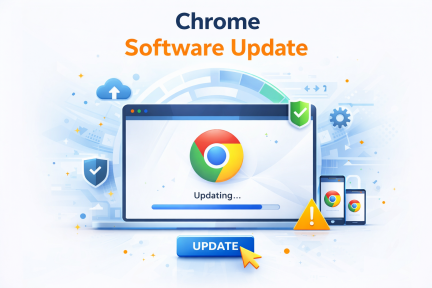
By default, Chrome updates automatically in the background. The browser downloads new versions and applies them when restarted.
Automatic updates ensure most users stay protected without manual intervention.
Manual Updates
Users can manually check for a chrome software update by:
Opening Chrome
Clicking the three-dot menu
Navigating to “Help”
Selecting “About Google Chrome”
Chrome will automatically check and install updates if available.
Enterprise Update Controls
Organizations often manage chrome software update policies using:
Group Policy (Windows)
Chrome Enterprise policies
Mobile device management (MDM)
Endpoint management platforms
These tools allow IT teams to control update timing and deployment.
Common Chrome Vulnerabilities and Threats
Outdated browsers expose users to several risks.
Zero-Day Exploits
These are vulnerabilities actively exploited before patches are widely applied.
Chrome frequently patches zero-day flaws in its updates.
Malicious Extensions
Outdated browsers may lack enhanced security checks for extensions.
Cross-Site Scripting (XSS)
Older browser versions may be vulnerable to XSS attacks that steal session cookies or credentials.
Sandbox Escape Attacks
Chrome uses sandboxing to isolate processes. Updates strengthen these protections.
Regular chrome software update cycles help close these gaps quickly.
Best Practices for Managing Chrome Software Updates in Enterprises
1. Enable Automatic Updates Organization-Wide
Disabling updates creates unnecessary risk. Ensure automatic updates are enabled unless a testing phase is required.
2. Implement a Staged Rollout Strategy
For large enterprises:
Test updates in a pilot group
Monitor compatibility
Deploy organization-wide
This minimizes operational disruption.
3. Monitor Browser Version Compliance
Use endpoint management tools to:
Track Chrome versions
Identify outdated installations
Trigger alerts for non-compliance
Version visibility improves security posture.
4. Educate Employees on Restart Requirements
Chrome updates require browser restarts to apply patches fully.
Encourage regular restarts to complete the chrome software update process.
5. Integrate Browser Updates with Patch Management
Browser updates should align with broader patch management policies.
Include Chrome updates in:
Monthly patch cycles
Emergency patch procedures
Compliance audits
Chrome Software Update and Endpoint Security
Browsers act as gateways to enterprise networks.
An outdated browser can:
Allow drive-by downloads
Enable phishing exploitation
Bypass endpoint protection layers
Strong endpoint security strategies require updated browsers.
Troubleshooting Chrome Software Update Issues
Sometimes, chrome software update errors occur.
Common Problems
Update failed error messages
Network restrictions
Insufficient disk space
Corrupted installations
Fixing Update Errors
Try these steps:
Restart Chrome
Restart the device
Check firewall settings
Clear temporary files
Reinstall Chrome if needed
Enterprise IT teams may need to review group policies.
Chrome Software Update in Regulated Industries
Industries with compliance requirements must maintain strict patch management.
Healthcare (HIPAA)
Outdated browsers can expose protected health information.
Financial Services (PCI-DSS)
Patch management is mandatory for compliance.
Government and Defense
Timely updates reduce vulnerability to advanced persistent threats (APTs).
Regular chrome software update processes support regulatory alignment.
Chrome Software Update and Zero Trust Architecture
Zero Trust security requires continuous verification of devices and software health.
Browser version status can be used to:
Restrict access to sensitive systems
Block outdated devices
Enforce compliance policies
Up-to-date software supports stronger Zero Trust enforcement.
The Business Impact of Ignoring Browser Updates
The cost of a breach far exceeds the cost of maintaining updates.
Potential consequences include:
Data loss
Reputation damage
Regulatory fines
Operational downtime
Proactive chrome software update management reduces long-term risk.
How CEOs and Founders Should View Browser Updates
Leadership often focuses on large-scale security investments. However, small operational gaps can lead to major incidents.
Ensuring proper chrome software update governance:
Demonstrates due diligence
Strengthens cyber resilience
Reduces board-level risk
Cybersecurity is everyone’s responsibility—from end users to executives.
Frequently Asked Questions
1. Why is chrome software update important?
It patches security vulnerabilities and protects against cyber threats.
2. Does Chrome update automatically?
Yes, by default it updates automatically in the background.
3. How often does Chrome release updates?
Google releases updates frequently, including emergency security patches.
4. Can IT teams control Chrome updates?
Yes. Enterprise policies allow centralized update management.
5. What happens if I ignore updates?
Unpatched browsers remain vulnerable to exploits and data breaches.
Final Thoughts
A simple chrome software update can prevent serious cybersecurity incidents. While browser updates may seem routine, they close critical security gaps that attackers actively target.
For IT managers and business leaders, maintaining updated browsers should be part of a structured security and patch management strategy. Strong update governance supports compliance, reduces attack surfaces, and aligns with Zero Trust principles.
If you’re ready to strengthen your organization’s cybersecurity strategy and improve endpoint protection, take the next step.
👉 Register today and enhance your cybersecurity readiness:
https://openedr.platform.xcitium.com/register/
Stay updated. Stay secure. Protect your business.

 Loading...