Updated on February 13, 2026, by OpenEDR
Business continuity solutions are no longer optional. They are essential for survival. One ransomware attack, system failure, or natural disaster can stop operations in minutes. The real question is this: How quickly can your business recover?
According to industry studies, extended downtime costs companies thousands—or even millions—of dollars per hour. For IT managers, cybersecurity teams, CEOs, and founders, investing in reliable business continuity solutions is not just risk management. It is strategic protection.
In this guide, we will explore what business continuity solutions are, why they matter, key components, best practices, and how to choose the right approach for your industry.
What Are Business Continuity Solutions?
Business continuity solutions are strategies, tools, and processes designed to keep operations running during and after unexpected disruptions. These disruptions may include:
Cyberattacks
Ransomware incidents
Hardware failures
Power outages
Natural disasters
Human error
Effective business continuity solutions ensure that critical systems, data, and workflows remain accessible—even during crises.
At their core, these solutions focus on resilience, recovery, and risk mitigation.
Why Business Continuity Solutions Matter More Than Ever
The digital economy depends on uptime. Cloud systems, SaaS platforms, and remote teams mean operations rarely stop. However, threats are increasing.
Cybersecurity Risks
Ransomware attacks continue to rise. Without strong business continuity solutions, recovery may take weeks.
Compliance Requirements
Industries like healthcare and finance require documented continuity planning.
Brand Reputation
Downtime damages customer trust quickly.
Financial Impact
Revenue loss during outages can escalate rapidly.
For IT leaders and executives, business continuity solutions protect revenue, reputation, and regulatory standing.
Key Components of Business Continuity Solutions
To build effective business continuity solutions, organizations must focus on several critical areas.
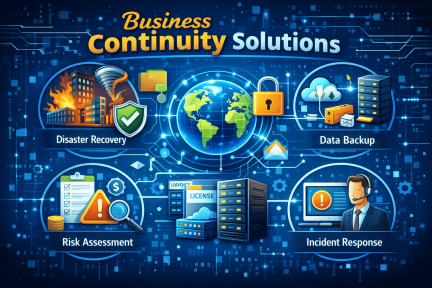
1. Risk Assessment and Business Impact Analysis (BIA)
You cannot protect what you have not identified.
A proper Business Impact Analysis helps:
Identify critical systems
Determine downtime tolerance
Assess financial impact
Prioritize recovery efforts
This step forms the foundation of strong business continuity solutions.
2. Disaster Recovery Planning
Disaster recovery (DR) is a core element of business continuity solutions.
Key DR components include:
Backup strategies
Data replication
Recovery time objectives (RTO)
Recovery point objectives (RPO)
Failover systems
Clear recovery targets ensure faster response during incidents.
3. Data Backup and Recovery
Reliable data backup is central to business continuity solutions.
Best practices include:
Automated backups
Offsite or cloud storage
Encrypted data storage
Regular backup testing
Without tested backups, recovery plans fail.
4. Incident Response Planning
Business continuity solutions must integrate with cybersecurity incident response plans.
A strong incident response strategy includes:
Defined response roles
Communication protocols
Containment procedures
Post-incident review
Quick response reduces damage.
5. Redundancy and Infrastructure Resilience
Redundant systems minimize downtime.
Examples include:
Secondary data centers
Cloud failover environments
Network redundancy
Power backups
Resilience ensures operations continue even when systems fail.
Types of Business Continuity Solutions
Different organizations require different continuity approaches.
Cloud-Based Business Continuity Solutions
Cloud platforms offer:
Scalable backup storage
Rapid failover
Geographic redundancy
Reduced hardware dependency
Cloud continuity is often cost-effective for growing companies.
On-Premises Continuity Solutions
Some industries require local control.
Benefits include:
Direct infrastructure oversight
Compliance alignment
Customized configurations
However, they may require higher maintenance.
Hybrid Continuity Models
Many organizations use hybrid business continuity solutions.
This approach combines:
On-prem systems
Cloud backups
Distributed recovery environments
Hybrid strategies offer flexibility and scalability.
Business Continuity vs. Disaster Recovery: Understanding the Difference
Many leaders confuse these terms.
Business Continuity
Focuses on maintaining operations during disruption.
Disaster Recovery
Focuses on restoring systems after disruption.
Disaster recovery is part of broader business continuity solutions.
Benefits of Strong Business Continuity Solutions
Organizations that implement structured business continuity solutions gain significant advantages.
Reduced Downtime
Fast recovery protects revenue.
Enhanced Cyber Resilience
Integrated security reduces breach impact.
Regulatory Compliance
Preparedness supports audit requirements.
Customer Confidence
Reliability builds trust.
Operational Stability
Employees can continue working with minimal interruption.
Business Continuity Solutions for Different Industries
Each industry faces unique risks.
Healthcare
Requires continuous access to patient data and systems.
Financial Services
Must maintain transaction integrity and regulatory compliance.
Manufacturing
Operational downtime affects production lines and supply chains.
Technology Companies
Depend heavily on cloud infrastructure and SaaS platforms.
CEOs and founders must tailor business continuity solutions to industry-specific risks.
Best Practices for Implementing Business Continuity Solutions
If you want a strong framework, follow these actionable steps.
1. Identify Critical Assets
Map systems, applications, and data.
2. Define Recovery Objectives
Establish clear RTO and RPO targets.
3. Automate Backups
Manual processes increase risk.
4. Test Continuity Plans Regularly
Simulate incidents at least annually.
5. Train Employees
Human error often causes disruption.
6. Integrate Cybersecurity Controls
Strong endpoint detection and monitoring reduce risk exposure.
The Role of Cybersecurity in Business Continuity Solutions
Business continuity solutions and cybersecurity must work together.
Without advanced endpoint protection:
Malware spreads quickly
Recovery becomes harder
Data loss increases
Combining endpoint detection and response (EDR) with business continuity solutions strengthens overall resilience.
Zero Trust models further limit risk by restricting unauthorized access during crises.
Common Mistakes Organizations Make
Avoid these pitfalls when implementing business continuity solutions:
Failing to test recovery plans
Ignoring insider threats
Not backing up SaaS data
Overlooking cloud misconfigurations
Treating continuity planning as a one-time task
Continuity requires ongoing attention.
Emerging Trends in Business Continuity Solutions
The future of business continuity solutions includes:
AI-driven risk detection
Automated failover systems
Integrated XDR security platforms
Continuous monitoring dashboards
Cloud-native disaster recovery
Forward-thinking leaders invest early in resilient systems.
Measuring ROI from Business Continuity Investments
Executives often ask about measurable value.
Track:
Downtime reduction
Recovery speed improvements
Audit compliance scores
Reduced ransomware impact
Incident response time
Quantifiable metrics justify investment.
Frequently Asked Questions (FAQ)
1. What are business continuity solutions?
Business continuity solutions are tools and strategies that keep operations running during disruptions like cyberattacks or natural disasters.
2. How are business continuity solutions different from disaster recovery?
Business continuity focuses on maintaining operations, while disaster recovery focuses on restoring systems.
3. How often should business continuity plans be tested?
At least once per year, with additional tests after major infrastructure changes.
4. Can small businesses benefit from business continuity solutions?
Yes. Even small organizations face cyber and operational risks that require protection.
5. What role does cybersecurity play in business continuity?
Cybersecurity reduces the likelihood and severity of disruptions, strengthening overall resilience.
Final Thoughts: Protect Your Business Before Disruption Strikes
Business continuity solutions protect more than systems. They protect revenue, customer trust, and long-term growth. Without a proactive strategy, even minor disruptions can escalate into major crises.
IT managers, cybersecurity leaders, and executives must treat continuity planning as a core business priority.
If you’re ready to strengthen your cyber resilience and ensure your organization stays operational—even during unexpected threats—
👉 Get started today:
https://openedr.platform.xcitium.com/register/
Protect your operations. Safeguard your future. Stay resilient.

 Loading...