
Updated on February 12, 2026, by OpenEDR
Software defined WAN is transforming how businesses connect branch offices, cloud platforms, and remote employees. Traditional WAN architectures were built for a different era—one centered around data centers and static traffic flows. Today, organizations rely on cloud apps, SaaS platforms, and hybrid workforces. That shift demands a smarter, more agile solution.
So, what is software defined WAN, and why is it gaining rapid adoption across industries? Simply put, software defined WAN (SD-WAN) is a virtualized network architecture that uses software to manage and optimize wide area network connections. It improves performance, enhances security, and reduces costs.
For IT managers, cybersecurity professionals, CEOs, and founders, understanding software defined WAN is essential for building scalable and secure digital infrastructure.
What Is Software Defined WAN?
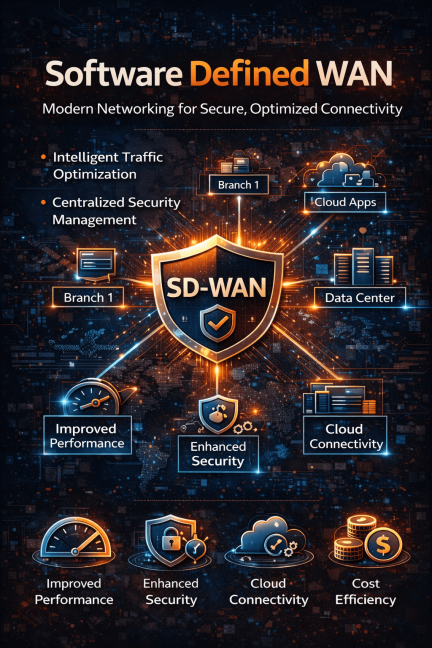
Software defined WAN is a networking technology that separates the control layer from the hardware layer in a wide area network. Instead of relying on traditional routers and MPLS circuits alone, SD-WAN uses centralized software controllers to manage traffic intelligently.
In traditional WAN setups, traffic typically routes through a central data center. This approach creates bottlenecks, especially for cloud-based applications. Software defined WAN changes this by allowing direct, secure access to cloud services.
Core Characteristics of Software Defined WAN
Centralized management console
Application-aware routing
Automated traffic optimization
Secure direct internet access
Multi-link connectivity (MPLS, broadband, LTE, 5G)
In short, software defined WAN brings flexibility and intelligence to enterprise networking.
How Software Defined WAN Works
Understanding software defined WAN requires a look at its architecture.
SD-WAN uses edge devices deployed at branch locations. These devices connect to a central controller hosted in the cloud or data center. The controller monitors network performance and dynamically routes traffic based on predefined policies.
Traffic Optimization
Software defined WAN identifies application types and assigns priority accordingly.
For example:
Video conferencing receives high priority.
Email traffic receives standard routing.
Background updates use low-priority bandwidth.
This intelligent routing improves user experience and operational efficiency.
Key Benefits of Software Defined WAN
Organizations adopt software defined WAN for several compelling reasons.
1. Improved Network Performance
Application-aware routing reduces latency and packet loss.
2. Cost Efficiency
Businesses can reduce reliance on expensive MPLS circuits by using broadband links.
3. Simplified Management
Centralized dashboards allow IT teams to manage multiple locations from one interface.
4. Enhanced Security
Integrated encryption and secure tunneling protect data across networks.
Software defined WAN delivers both operational and financial advantages.
Software Defined WAN vs Traditional WAN
To appreciate software defined WAN, compare it to traditional architectures.
| Feature | Traditional WAN | Software Defined WAN |
|---|---|---|
| Traffic Routing | Static | Dynamic |
| Cloud Access | Backhauled | Direct |
| Cost | High (MPLS-heavy) | Optimized |
| Scalability | Limited | Flexible |
| Management | Manual | Centralized |
Traditional WAN was built for centralized infrastructure. Software defined WAN supports distributed and cloud-first environments.
Security Considerations in Software Defined WAN
Security is a top concern for cybersecurity leaders.
Software defined WAN integrates several security features:
End-to-end encryption
Secure VPN tunnels
Intrusion detection integration
Firewall capabilities
Zero Trust alignment
However, SD-WAN does not replace comprehensive cybersecurity solutions.
Organizations should combine software defined WAN with:
Endpoint detection and response (EDR)
Secure access service edge (SASE)
Multi-factor authentication (MFA)
Continuous threat monitoring
Security remains layered, not singular.
Software Defined WAN and Cloud Transformation
Cloud adoption is one of the primary drivers behind software defined WAN growth.
Traditional WAN forces cloud traffic through centralized data centers. This creates unnecessary delays.
Software defined WAN allows direct, secure access to:
Microsoft 365
Google Workspace
AWS
Azure
SaaS applications
This improves performance while reducing infrastructure strain.
For CEOs and founders, faster cloud performance translates to better employee productivity.
Industry Use Cases for Software Defined WAN
Financial Services
Banks require secure, reliable connectivity between branches. Software defined WAN enhances compliance and performance.
Healthcare
Hospitals rely on uninterrupted connectivity for electronic health records and telemedicine.
Manufacturing
Industrial IoT devices demand reliable low-latency connections.
Retail
Retail chains connect multiple stores to centralized inventory systems.
Each industry benefits from the agility of software defined WAN.
Challenges of Implementing Software Defined WAN
While powerful, software defined WAN implementation comes with considerations.
1. Initial Deployment Complexity
Planning is required to ensure smooth migration.
2. Integration with Legacy Systems
Older infrastructure may need upgrades.
3. Security Misconfiguration Risks
Improper policies can expose networks to threats.
Careful planning and experienced oversight mitigate these risks.
Best Practices for Deploying Software Defined WAN
To maximize value, organizations should follow structured deployment steps.
Conduct a Network Assessment
Evaluate current WAN performance and bottlenecks.
Define Application Priorities
Identify critical workloads that require optimization.
Strengthen Security Policies
Integrate SD-WAN with firewall and endpoint protection systems.
Train IT Teams
Ensure staff understand centralized management tools.
Monitor Continuously
Use analytics dashboards to optimize performance and security.
Proactive management ensures long-term success.
Software Defined WAN and Zero Trust Architecture
Zero Trust security models assume no user or device is inherently trusted.
Software defined WAN supports Zero Trust by:
Enforcing granular access policies
Encrypting data flows
Segmenting traffic
However, Zero Trust requires additional components such as identity verification and endpoint monitoring.
Combining software defined WAN with modern cybersecurity frameworks enhances resilience.
Future Trends in Software Defined WAN
Networking technology continues evolving.
Emerging trends include:
AI-driven traffic optimization
SASE integration
Edge computing support
5G-enabled branch connectivity
Organizations investing in software defined WAN position themselves for digital transformation.
Frequently Asked Questions (FAQ)
1. What is software defined WAN?
Software defined WAN is a virtualized networking technology that uses centralized software controllers to manage and optimize wide area network traffic.
2. How does software defined WAN improve security?
It encrypts traffic, integrates firewall features, and supports Zero Trust architectures.
3. Is software defined WAN cheaper than MPLS?
Yes, it reduces dependence on expensive MPLS circuits by leveraging broadband connections.
4. Can small businesses use software defined WAN?
Yes. Cloud-based SD-WAN solutions scale for small and mid-sized businesses.
5. Does software defined WAN replace traditional firewalls?
No. It enhances connectivity but should complement dedicated cybersecurity solutions.
Final Thoughts: Is Software Defined WAN Right for Your Business?
Software defined WAN is not just a networking upgrade—it is a strategic shift. It enables secure cloud access, improves performance, and reduces operational costs.
However, networking alone does not stop cyber threats. Modern organizations must combine:
Secure network architecture
Endpoint protection
Continuous monitoring
Threat containment
Employee awareness
If you want to deepen your cybersecurity expertise and strengthen your understanding of advanced network technologies, take action today.
👉 Expand your knowledge and enhance your cybersecurity skills with Xcitium’s OpenEDR training platform.
Register now:
https://openedr.platform.xcitium.com/register/
The future of connectivity is intelligent, secure, and software defined.

 Loading...