Updated on February 2, 2026, by OpenEDR
With employees working from anywhere and using multiple devices, organizations face a growing challenge: how do you secure company data without slowing productivity? This is where an MDM solution becomes critical. If you manage laptops, smartphones, tablets, or remote endpoints, an MDM solution is no longer optional—it’s foundational.
An MDM solution gives IT teams centralized control over devices, applications, and data. For cybersecurity professionals, IT managers, and business leaders, it provides visibility, compliance, and risk reduction in an increasingly mobile workforce.
In this guide, we’ll explain what an MDM solution is, how it works, why it matters, and how to choose the right one for your organization.
What Is an MDM Solution?
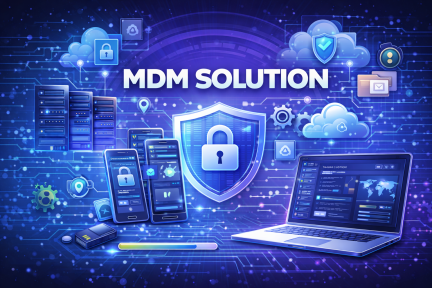
An MDM solution (Mobile Device Management solution) is a security platform that allows organizations to monitor, manage, and secure devices used to access corporate resources.
In simple terms:
An MDM solution helps organizations control devices, enforce security policies, and protect data—no matter where those devices are located.
MDM solutions are commonly used to manage:
Smartphones and tablets
Laptops and desktops
Corporate-owned devices
Bring Your Own Device (BYOD) environments
Why MDM Solutions Are Essential Today
The modern workplace has expanded far beyond the office. Employees now access sensitive data from home networks, public Wi-Fi, and personal devices.
Key Drivers for MDM Adoption
Remote and hybrid work models
BYOD policies
Rising mobile malware and phishing threats
Regulatory compliance requirements
Increased risk of device loss or theft
An MDM solution ensures security policies follow the device—not the location.
How an MDM Solution Works
Understanding how an MDM solution functions helps IT leaders deploy it effectively.
1. Device Enrollment
Devices are enrolled into the MDM solution manually, automatically, or through directory integration.
2. Policy Enforcement
IT teams define security rules such as:
Password requirements
Encryption settings
Screen lock policies
OS update enforcement
3. Application Management
The MDM solution controls which apps can be installed, used, or blocked.
4. Monitoring and Response
Admins monitor device health, compliance, and activity—and respond to incidents remotely.
This centralized control reduces operational risk significantly.
MDM Solution vs MAM vs UEM
Many organizations confuse MDM with related technologies.
| Solution | Focus |
|---|---|
| MDM | Device-level control |
| MAM (Mobile App Management) | App-level control |
| UEM (Unified Endpoint Management) | Devices + apps + users |
Modern MDM solutions often serve as part of a broader UEM strategy.
Key Features of a Modern MDM Solution
Not all MDM platforms are created equal. Enterprise-grade solutions typically include:
Core Capabilities
Remote device lock and wipe
Encryption enforcement
App whitelisting and blacklisting
Device compliance reporting
Role-based access control
Advanced Features
Zero Trust integration
Threat detection and remediation
Cloud and identity integration
Automated compliance enforcement
These features help reduce both cyber risk and administrative overhead.
Security Benefits of an MDM Solution
From a cybersecurity perspective, an MDM solution is a frontline defense.
Major Security Advantages
Prevents unauthorized access
Protects data on lost or stolen devices
Limits malware exposure
Enforces consistent security policies
Supports incident response
An MDM solution ensures endpoints don’t become the weakest link.
MDM Solutions and Compliance Requirements
Regulatory frameworks increasingly require device-level controls.
Compliance Use Cases
HIPAA: Protecting healthcare data
GDPR: Securing personal information
PCI DSS: Managing devices accessing payment systems
ISO standards: Enforcing access controls
MDM solutions simplify audits by providing centralized reporting and logs.
Common Challenges When Deploying an MDM Solution
Despite the benefits, organizations may face obstacles.
Typical Challenges
User resistance to device monitoring
BYOD privacy concerns
Integration with existing systems
Policy complexity
IT skill gaps
Clear communication and phased rollout strategies help overcome these challenges.
How to Choose the Right MDM Solution
Selecting the right MDM solution requires aligning technical needs with business goals.
Evaluation Checklist
Supports all required device types
Easy policy creation and enforcement
Strong security and encryption capabilities
Scales with organizational growth
Integrates with identity and security tools
A well-chosen MDM solution reduces long-term cost and complexity.
Best Practices for IT Managers and Security Teams
To maximize the value of your MDM solution:
Define clear BYOD policies
Automate compliance enforcement
Monitor device health continuously
Regularly review access permissions
Educate users on device security
Technology works best when paired with awareness and process.
Industry Use Cases for MDM Solutions
Healthcare
Secure clinician devices
Protect patient data
Finance
Control access to financial systems
Prevent data leakage
Retail
Manage point-of-sale devices
Secure mobile inventory systems
Technology
Support remote developers
Protect intellectual property
An MDM solution adapts to industry-specific risks.
Actionable Tips for Executives
Treat device security as a business risk
Demand visibility into endpoint compliance
Align MDM with Zero Trust initiatives
Balance security with employee experience
Invest in automation to reduce IT workload
Executives who understand the value of an MDM solution make better security decisions.
FAQ: MDM Solution Explained
1. What is an MDM solution used for?
An MDM solution is used to manage, secure, and monitor devices accessing corporate resources.
2. Is an MDM solution only for mobile devices?
No. Many MDM solutions also manage laptops, desktops, and other endpoints.
3. Does MDM invade employee privacy?
Properly configured MDM solutions focus on corporate data, not personal content.
4. Can an MDM solution prevent data breaches?
Yes. It significantly reduces risk by enforcing security controls and rapid response.
5. How long does it take to deploy an MDM solution?
Deployment can range from hours to days, depending on environment size and complexity.
Why an MDM Solution Is a Strategic Investment
An MDM solution is no longer just an IT tool—it’s a core security capability. As work becomes more distributed and device diversity increases, centralized device control protects both productivity and data integrity.
Organizations that invest in modern MDM solutions gain stronger security, better compliance, and improved operational efficiency.
Ready to Secure Your Devices and Endpoints?
Take control of your organization’s devices with a modern, automated approach.
👉 Register now:
https://openedr.platform.xcitium.com/register/
Discover how an advanced MDM solution can help you secure endpoints, reduce risk, and support a mobile workforce.

 Loading...