Updated on December 10, 2025, by OpenEDR
Modern industrial systems—from water treatment plants and oil pipelines to manufacturing plants and power grids—depend heavily on SCADA software for real-time monitoring and control. But as these critical systems become more interconnected, they also become attractive targets for cyberattacks. This raises a crucial question for IT managers, industrial leaders, and cybersecurity teams: What exactly is SCADA software, and how can we secure it?
In this comprehensive guide, you’ll learn what SCADA software is, how it works, why it’s essential for industrial operations, and how organizations can protect SCADA systems from cyber threats.
What Is SCADA Software? (Simple Definition)
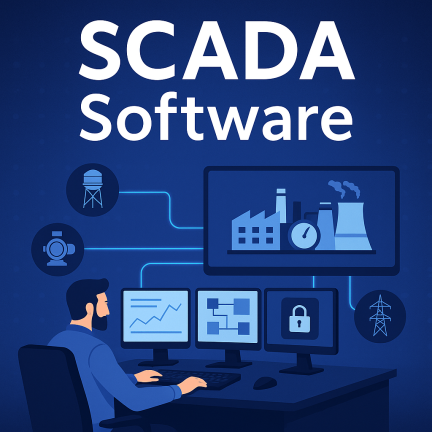
SCADA software (Supervisory Control and Data Acquisition) is a system used to monitor, control, and automate industrial processes across multiple locations in real time. It enables operators to collect data, view system dashboards, send commands to equipment, and ensure industrial operations run smoothly.
SCADA systems are used in:
Energy and utilities
Oil and gas
Manufacturing
Transportation
Water and wastewater treatment
Critical infrastructure
SCADA software plays a vital role in Operational Technology (OT), bridging physical equipment and digital control.
How SCADA Software Works
A SCADA system consists of several components that work together to collect, process, and visualize operational data.
1. Field Devices
These include PLCs (Programmable Logic Controllers), RTUs (Remote Terminal Units), and sensors that monitor physical processes like:
Temperature
Pressure
Flow
Voltage
Machinery performance
2. Communication Networks
Data is transmitted through:
Ethernet
Serial connections
Cellular networks
Radio
IoT protocols
3. SCADA Servers and Databases
Servers collect, store, and analyze industrial data.
4. Human-Machine Interface (HMI)
The HMI allows operators to:
View dashboards
Monitor alarms
Send commands
Adjust system settings
5. Control Logic
PLCs and RTUs execute automation programs to maintain optimal operation.
Key Features of SCADA Software
Modern SCADA software offers powerful capabilities that enable industrial efficiency and safety.
1. Real-Time Monitoring
Operators can instantly see:
Equipment status
Production levels
Environmental conditions
2. Automation and Control
SCADA systems automatically adjust operational parameters based on predefined logic.
3. Alarm Management
Alerts notify operators when:
Systems malfunction
Thresholds are exceeded
Safety risks emerge
4. Data Logging and Reporting
SCADA records operational data for:
Auditing
Compliance
Performance optimization
5. Remote Access
Engineers can securely oversee systems from mobile devices or remote stations.
6. Integration with IoT & Cloud
Modern SCADA integrates with:
Cloud analytics
Predictive maintenance systems
IoT devices
Types of SCADA Systems
SCADA software has evolved significantly over the years. Here are the main types.
1. Monolithic/First-Generation SCADA
Centralized computing
Low connectivity
High physical security
2. Distributed/Second-Generation SCADA
Servers distributed across nodes
Better scalability
3. Networked/Third-Generation SCADA
Connected through LAN & WAN
Increased efficiency
4. IoT/Cloud-Native SCADA
Cloud-enabled
Highly scalable
Integrates analytics & machine learning
Common Use Cases of SCADA Software
SCADA software is essential in industries that rely on continuous operations.
1. Energy and Utilities
Electrical grid monitoring
Substation automation
Renewable energy systems
2. Oil and Gas
Pipeline pressure monitoring
Leak detection
Refinery automation
3. Manufacturing
Production line monitoring
Robotics control
Quality assurance
4. Water and Wastewater
Pump monitoring
Chemical dosing
Treatment plant automation
5. Transportation
Railway control systems
Traffic monitoring
Airport operations
The Importance of SCADA Security
As SCADA systems connect to the internet and corporate networks, cybersecurity becomes a top concern. Compromised SCADA systems can cause:
Equipment damage
Environmental hazards
Utilities outages
Financial losses
National security threats
Top Cybersecurity Risks to SCADA Software
1. Legacy Systems
Many SCADA environments rely on outdated operating systems without modern security controls.
2. Lack of Encryption
Older SCADA protocols may transmit data in plain text.
3. Remote Access Vulnerabilities
Exposed remote desktop or VPN services are prime attack vectors.
4. Insider Threats
Disgruntled employees or unintentional mistakes can disrupt operations.
5. Malware and Ransomware
Industrial ransomware attacks have surged dramatically.
6. Insecure Networks
Flat networks without segmentation allow attackers to move laterally.
Best Practices for Securing SCADA Software
Securing SCADA systems requires a layered, Zero Trust approach.
1. Implement Strong Network Segmentation
Separate SCADA networks from:
Corporate IT
Public networks
Cloud applications
Use firewalls, VLANs, and access controls.
2. Enforce Multi-Factor Authentication
Especially for:
Remote access
Engineering workstations
SCADA admin panels
3. Deploy Endpoint Detection & Response (EDR)
Industrial systems need EDR tools that:
Detect malicious behavior
Block unauthorized executions
Monitor file integrity
Solutions like Xcitium OpenEDR® offer real-time protection with low overhead.
4. Patch and Update SCADA Components
Work with OT teams to:
Schedule updates
Replace unsupported OS versions
Mitigate vulnerabilities
5. Enable Secure Remote Access Gateways
Use:
Zero Trust Network Access (ZTNA)
Encrypted tunnels
Restricted roles
6. Monitor Log Activity
Monitor:
SCADA controllers
Engineering workstations
HMI systems
Communication gateways
7. Conduct Regular Penetration Testing
Red teams identify:
Network vulnerabilities
Authentication gaps
Configuration weaknesses
SCADA Software vs Industrial Control Systems (ICS)
Many people confuse these terms. Here’s the difference:
| Feature | SCADA Software | ICS |
|---|---|---|
| Purpose | Monitor & control remote processes | Control industrial machinery |
| Focus | Data visualization & remote control | Real-time machine operation |
| Components | HMIs, servers, dashboards | PLCs, RTUs, controllers |
| Industry Use | Utilities, oil & gas, water | Manufacturing, robotics |
SCADA is often a part of ICS, not a replacement for it.
Future Trends in SCADA Software
SCADA is evolving rapidly as industries digitize.
1. AI and Predictive Analytics
Machine learning helps forecast:
Equipment failures
Production issues
Efficiency improvements
2. Cloud-Native SCADA
Offers:
Remote scalability
Real-time analytics
Reduced infrastructure cost
3. Digital Twins
SCADA integrates with models that simulate operations.
4. Zero Trust for OT
Identity-based control becomes standard in industrial environments.
5. IT/OT Convergence
Businesses unify cybersecurity efforts across both networks.
Frequently Asked Questions (FAQ)
1. What is SCADA software used for?
It monitors, controls, and automates industrial processes.
2. Is SCADA software secure?
It can be—if organizations apply segmentation, authentication, monitoring, and OT-specific cybersecurity solutions.
3. What industries use SCADA systems?
Utilities, manufacturing, transportation, water treatment, oil and gas, and energy.
4. Can SCADA integrate with cloud technologies?
Yes. Modern SCADA supports cloud analytics, dashboards, and remote operations.
5. What is the biggest risk to SCADA systems?
Cyberattacks exploiting legacy systems, poor segmentation, and insecure remote access.
Final Thoughts
As industries become more connected and reliant on automation, securing SCADA software is no longer optional—it’s essential. SCADA systems operate the backbone of global infrastructure, making them prime targets for cybercriminals. Organizations must adopt modern cybersecurity practices, Zero Trust principles, and continuous monitoring to protect their industrial environments.
If you’re ready to strengthen your SCADA and OT cybersecurity posture:
👉 Start using Xcitium OpenEDR® today:
https://openedr.platform.xcitium.com/register/

 Loading...