Updated on December 3, 2025, by OpenEDR
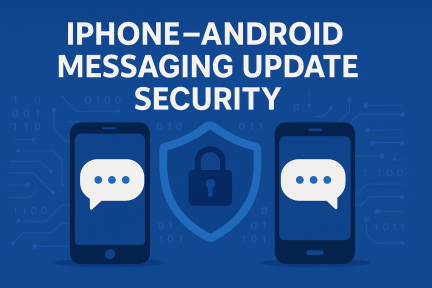
Are you wondering what the new iPhone Android messaging update security changes really mean for your privacy and business communications? For years, texting between iPhones and Android devices has been less secure, less reliable, and often frustrating—thanks to outdated SMS and MMS protocols.
But with Apple now adopting RCS (Rich Communication Services), the messaging world is finally shifting toward stronger encryption, better interoperability, and improved protection from cyber-threats.
In this friendly, easy-to-understand guide, we’ll break down everything you need to know: what changed, why it matters, and how businesses and IT teams should respond.
What Is the New iPhone–Android Messaging Update?
In 2024, Apple finally announced support for RCS messaging, a modern replacement for SMS/MMS. This update dramatically improves how iPhones and Android phones communicate.
For the first time ever:
iPhone and Android users will get encrypted messaging (for supported RCS channels).
High-quality media will send smoothly across platforms.
Typing indicators, read receipts, and group chat syncing will work reliably.
This update addresses long-standing frustration with the “green bubble vs blue bubble” divide while dramatically improving the iPhone Android messaging update security.
Why Apple’s Shift to RCS Matters for Security
To understand the importance of this update, consider that SMS and MMS were developed in the 1990s—before smartphones, Wi-Fi, or cybersecurity threats as we know them today.
The old system (SMS/MMS) had:
No encryption
Easy interception
Weak verification
No sender authentication
Outdated telecom infrastructure
By adopting RCS, Apple moves text messaging into the modern age. RCS supports:
End-to-end encryption (for compatible systems)
Verification of sender identity
Secure channel establishment
Better resistance to SIM-swap and spoofing attacks
This is a monumental upgrade for both privacy and business security.
Major Security Improvements in the New Messaging Update
1. Encrypted Messages (End-to-End)
Messages between iPhone and Android will now be encrypted if both sides support secure RCS.
This makes it nearly impossible for attackers, carriers, or third parties to read intercepted messages.
2. Stronger Protection Against Spoofing
SMS spoofing has been used for:
phishing
impersonation
fraudulent OTP messages
RCS includes sender verification, reducing spoofing attacks dramatically.
3. Improved Resistance to SIM-Swap Attacks
Attackers often redirect SMS messages after hijacking phone numbers.
RCS makes this harder because cloud-based encryption keys and device binding add layers of verification.
4. Safer Media Sharing
In SMS/MMS:
videos were compressible
media could be intercepted
unsafe files could deliver malware
In RCS:
high-quality encrypted transfers
file metadata is protected
fewer vectors for malware delivery
5. Better Group Chat Security
Old SMS groups could be hijacked or spoofed.
RCS offers authenticated participants and encrypted metadata for group communications.
iPhone vs Android Messaging Before the Update
Before RCS support, iPhone–Android communication fell back to SMS/MMS, an outdated technology with serious limitations.
Below is a simple comparison:
| Feature | iPhone → iPhone (iMessage) | iPhone ↔ Android (Before Update) |
|---|---|---|
| Encryption | Yes | No |
| Read Receipts | Yes | No |
| Typing Indicators | Yes | No |
| High-Quality Media | Yes | No |
| Group Chats | Stable | Unreliable |
| Security | High | Low |
The new update makes the Apple–Android experience significantly more secure—and far closer to iMessage.
Risks of SMS & MMS (Why the Old System Was a Problem)
SMS and MMS aren’t just outdated—they’re actively dangerous for cybersecurity.
Here’s why.
1. No Encryption
SMS is sent in plain text, meaning attackers can intercept your messages with the right tools.
2. Vulnerable Telecom Networks
SS7, the protocol telecom companies use to route SMS, has known vulnerabilities exploited by attackers internationally.
3. Easy for Hackers to Spoof
Scammers frequently impersonate:
banks
delivery services
government agencies
SMS messages don’t verify sender identities.
4. Weak for Business Use
SMS is not suitable for:
transmitting confidential data
managing corporate identities
secure authentication
5. Susceptible to Malware Links
SMS phishing (smishing) is one of the fastest-growing cyber-attack methods.
Put simply:
SMS is unsafe, and RCS fixes many of these issues.
Benefits of RCS Security for Businesses
For CEOs, IT managers, and security teams, the new messaging update has significant benefits.
1. More Secure Cross-Platform Communication
Employees using mixed devices (Android and iPhone) will now communicate on a safer channel.
2. Reduced Social Engineering Risks
Secure RCS messaging reduces the chance of:
SMS spoofing
impersonation
unauthorized OTP interception
fraud using fake numbers
3. Enhanced BYOD (Bring Your Own Device) Security
Many companies allow employees to use personal devices.
RCS adds a stronger baseline of protection without requiring extra setup.
4. Better Messaging Reliability for Remote Teams
RCS allows:
encrypted file sharing
high-quality video transfer
more stable group chats
cross-platform read receipts
Remote teams benefit tremendously.
5. Compliance & Data Governance
Encrypted messaging supports compliance with:
GDPR
HIPAA (with proper controls)
PCI DSS
SOC 2
Industry cybersecurity standards
It’s not a replacement for enterprise tools, but it strengthens the foundation.
How the Update Impacts IT, Cybersecurity & Enterprise Security
For enterprise environments, the iPhone–Android messaging update has specific implications.
1. Better Baseline Security But Not a Full Enterprise Solution
RCS is safer than SMS—but not a replacement for:
enterprise messaging platforms
secure collaboration suites
encrypted corporate communication systems
2. Reduced Exposure to SMS-Based Attacks
This update reduces:
SIM-swap exposure
SMS phishing attack rates
inter-carrier data interception risks
3. Impact on Multi-Factor Authentication (MFA)
Businesses should stop using SMS-based MFA altogether.
Instead, use:
authenticator apps
hardware tokens
push notifications
biometric authentication
4. IT Teams Need Updated Mobile Device Policies
Policies must define:
when RCS is allowed
logging & recordkeeping expectations
device OS minimum versions
encryption requirements
5. Vendor and Compliance Teams Benefit
Centralized encryption improves:
auditability
governance
risk assessments
security postures
Tips to Maximize Messaging Security on iPhone & Android
Here’s what users and IT teams can do to stay safe:
1. Enable RCS on Android
Most modern Android phones have RCS disabled by default.
2. Keep iOS & Android Updated
RCS encryption requires modern OS versions.
3. Avoid SMS for Sensitive Data
Even with RCS, fallbacks may occur.
4. Use a Zero-Trust EDR Solution
Mobile devices are entry points into corporate networks.
Use advanced endpoint protection like Xcitium OpenEDR.
5. Disable Unverified Apps
Reduce malware risk by limiting app installations.
6. Educate Employees
Awareness = the strongest security defense.
Final Thoughts
The iPhone Android messaging update security improvements are a long-awaited breakthrough in mobile communication. Apple’s support for RCS finally brings:
safer messaging
modern encryption
reduced spoofing risks
better cross-device privacy
more reliable group chats
But remember:
Even with RCS, SMS still exists, fallbacks still happen, and cybercriminals continue improving their tactics.
For true protection, organizations must use endpoint detection and response (EDR) to secure devices beyond messaging apps.
👉 Take the next step in mobile & endpoint protection. Get Xcitium OpenEDR FREE:
https://openedr.platform.xcitium.com/register/
Frequently Asked Questions (FAQ)
1. Does RCS guarantee end-to-end encryption?
RCS supports E2E encryption, but it requires both devices and carriers to support the encrypted profile.
2. Will all iPhones support RCS?
Only iPhones running newer iOS versions will receive full RCS support.
3. Is RCS safer than SMS?
Yes. RCS includes encryption, sender authentication, and secure data handling—unlike SMS.
4. Does this mean iMessage is going away?
No. iMessage still exists and remains Apple’s premium encrypted service.
5. Is texting now safe for business use?
Safer, yes. Fully compliant for sensitive business communication? No.
Businesses should still use secure enterprise communication platforms.

 Loading...