Updated on November 11, 2025, by OpenEDR
In today’s connected world, remote control software isn’t just a convenience — it’s a necessity. With hybrid work and global operations, IT teams rely on remote control tools to manage devices, troubleshoot systems, and support users from anywhere.
But there’s a catch — these tools are also prime targets for cybercriminals. According to Verizon’s Data Breach Investigations Report, more than 30% of cyberattacks exploit remote access vulnerabilities. That’s why every IT manager, cybersecurity professional, and business leader must understand how to use remote control software securely.
In this article, we’ll explore what remote control software is, how it works, its benefits, security challenges, and the best practices to protect your network from unauthorized access.
What Is Remote Control Software?
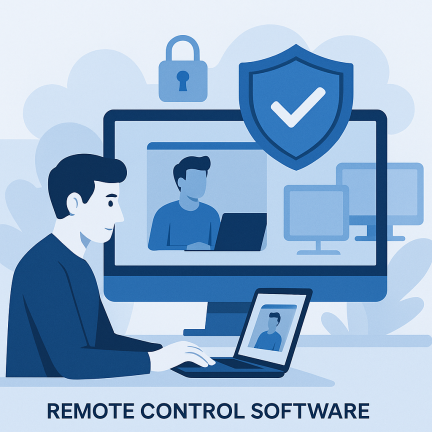
Remote control software allows a user to access and operate another computer, server, or device remotely as if they were physically in front of it. It’s widely used in IT support, system administration, and business operations where physical presence isn’t always possible.
How It Works
Remote control software establishes a secure connection between two endpoints — a controller (the user initiating access) and a target device (the remote system being controlled). Once connected, it allows file transfers, application management, system updates, or troubleshooting from anywhere in the world.
Common Examples
TeamViewer – Widely used for remote technical support.
AnyDesk – Offers fast remote access with encryption.
Xcitium Remote Tools – Enterprise-grade control with advanced cybersecurity integration.
These tools are vital, but when improperly configured, they become a gateway for hackers.
Why Remote Control Software Matters in Cybersecurity
For IT managers and cybersecurity experts, remote control software serves as both a lifeline and a potential liability. Here’s why it’s crucial:
1. Remote Workforce Enablement
Post-pandemic, remote and hybrid work models dominate. With remote control tools, employees securely access office systems, ensuring productivity without compromising data security.
2. IT Support and Endpoint Management
IT teams can fix software bugs, deploy patches, and monitor systems remotely — saving both time and operational costs.
3. Enhanced Collaboration
Global organizations leverage remote access to collaborate across time zones, enhancing communication and workflow efficiency.
4. Business Continuity
Even during crises, remote access software keeps business operations running by allowing remote infrastructure management.
Top Security Risks of Remote Control Software
While remote control tools provide flexibility, they also expand the attack surface. Cybercriminals often exploit poorly secured connections, stolen credentials, or outdated software.
1. Unauthorized Access
Attackers can hijack remote sessions through weak passwords or compromised accounts, gaining control over sensitive systems.
2. Malware and Ransomware Infiltration
Malware can be injected during remote sessions if encryption and endpoint protection are lacking.
3. Misconfiguration
Improperly configured permissions, open ports, or default settings can expose systems to external threats.
4. Credential Theft
Without multi-factor authentication (MFA), stolen credentials can grant hackers full control of enterprise devices.
5. Insider Threats
Employees with excessive remote privileges can intentionally or accidentally leak sensitive data.
Essential Security Features in Remote Control Software
Choosing the right remote control software requires looking beyond convenience — you must ensure enterprise-level protection.
Here are key security features to prioritize:
End-to-End Encryption – Encrypts data transmission to block interception.
Multi-Factor Authentication (MFA) – Adds an extra verification layer to prevent unauthorized access.
Role-Based Access Control (RBAC) – Limits user privileges based on roles.
Audit Logs & Session Recording – Tracks every remote session for compliance and forensic review.
Automatic Session Timeouts – Ends inactive sessions to reduce exposure.
Zero-Trust Architecture – Ensures continuous identity validation before granting access.
These measures collectively strengthen your remote access strategy and reduce vulnerabilities.
Best Practices for Secure Remote Control Software Deployment
Even the best software can be risky if implemented incorrectly. Follow these cybersecurity best practices to minimize threats:
1. Adopt a Zero Trust Model
Don’t assume any connection is safe — validate every access attempt continuously.
2. Use Multi-Factor Authentication
Combine passwords with biometric, hardware, or app-based verification methods.
3. Keep Software Updated
Outdated remote access tools often contain known vulnerabilities exploited by attackers.
4. Restrict Access
Implement least privilege access, allowing users only the rights necessary for their role.
5. Monitor and Log All Sessions
Track every remote session in real time to detect anomalies early.
6. Train Employees
Educate users about phishing, social engineering, and safe remote access habits.
7. Network Segmentation
Separate remote access systems from core networks to prevent lateral movement in case of breach.
Use Cases: How Organizations Benefit from Remote Control Software
1. IT Helpdesk Support
Support teams remotely fix user issues, reset credentials, or install software updates without physical contact.
2. System Administration
Administrators manage servers, cloud environments, and endpoints remotely, improving uptime.
3. Incident Response
During a cyberattack, security teams use remote tools to isolate infected endpoints and analyze threats.
4. Managed Service Providers (MSPs)
MSPs rely on remote control software to monitor and maintain client systems efficiently.
5. Compliance Auditing
Audit logs from remote sessions provide valuable insights for compliance and governance.
Choosing the Right Remote Control Software
When evaluating software options, consider the following checklist:
| Evaluation Criteria | What to Look For |
|---|---|
| Security & Encryption | AES-256 or TLS encryption standards |
| Authentication | MFA, passwordless access |
| User Access Control | Role-based and just-in-time permissions |
| Compatibility | Cross-platform (Windows, macOS, Linux) |
| Integration | Works with EDR, DLP, and SIEM tools |
| Compliance | GDPR, HIPAA, or ISO 27001 adherence |
| Scalability | Supports small and enterprise-level networks |
Future Trends in Remote Control Software
Technology is evolving, and so is remote access. Here’s what’s next:
AI-Powered Anomaly Detection: Identifies unusual remote activity automatically.
Passwordless Authentication: Biometrics and hardware tokens replace static credentials.
Cloud-Native Remote Access: Centralized management for hybrid and multi-cloud infrastructures.
Integration with XDR Platforms: Combining endpoint detection, network visibility, and threat intelligence.
Zero-Trust Remote Sessions: Continuous verification before, during, and after access.
The Cybersecurity Connection
From a cybersecurity standpoint, remote control software needs to integrate with:
Endpoint Detection and Response (EDR)
Data Loss Prevention (DLP)
Security Information and Event Management (SIEM)
Identity and Access Management (IAM)
By uniting these tools, businesses create a multi-layered defense system that ensures both access efficiency and data protection.
Conclusion
As organizations scale digitally, remote control software has become the backbone of secure IT operations. But with convenience comes responsibility — without the right safeguards, it can turn from a helpful asset into a dangerous attack vector.
To stay ahead, businesses must combine remote control efficiency with cybersecurity best practices such as MFA, encryption, and continuous monitoring.
When used responsibly, remote control software empowers teams, reduces downtime, and keeps operations running securely across the globe.
Take control of your cybersecurity posture with next-generation remote access protection.
👉 Register for Xcitium OpenEDR to secure your endpoints and ensure safe, monitored remote sessions.
Frequently Asked Questions (FAQ)
1. What is remote control software used for?
It’s used to access, control, and manage computers or devices remotely for IT support, maintenance, and administration.
2. Is remote control software secure?
Yes, if configured correctly with encryption, MFA, and access control. Poorly secured setups are vulnerable to hacking.
3. What are the best remote control software options?
Popular secure tools include Xcitium Remote Tools, AnyDesk, and TeamViewer, depending on business needs.
4. How does remote control software differ from remote desktop software?
While both provide remote access, remote control tools focus more on system management, troubleshooting, and enterprise security integration.
5. How can I secure remote control software from cyber threats?
Use strong passwords, enable MFA, limit user access, log sessions, and integrate with EDR/SIEM systems for real-time protection.

 Loading...