Updated on October 16, 2025, by OpenEDR
Did you know that 60% of small and mid-sized businesses lack in-house IT staff yet face the same cybersecurity and operational challenges as enterprises? With cyber threats increasing, remote work expanding, and IT costs climbing, many organizations are turning to managed IT solutions.
Introduction: Why Businesses Are Turning to Managed IT Solutions
But what exactly are managed IT solutions, and why are they becoming the backbone of modern business operations? In this guide, we’ll break down their value, explore their security benefits, and show you how they empower leaders to do more with less risk.
What Are Managed IT Solutions?
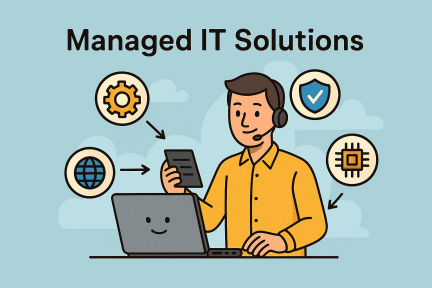
Managed IT solutions are outsourced services that handle your IT needs—from network security and data backups to cloud management and help desk support. Instead of relying on internal resources, businesses partner with Managed Service Providers (MSPs) who deliver proactive monitoring, maintenance, and protection.
Core Features of Managed IT Solutions:
24/7 Monitoring: Proactive detection of cyber threats and system failures.
Cybersecurity Services: Antivirus, firewalls, intrusion detection, and incident response.
Cloud Management: Secure deployment, migration, and optimization of cloud systems.
Help Desk Support: Remote and on-site troubleshooting for employees.
Backup & Disaster Recovery: Protection against data loss and downtime.
Benefits of Managed IT Solutions
1. Cost Savings
Hiring full-time IT staff is expensive. With managed IT solutions, businesses can access enterprise-grade expertise for a predictable monthly fee.
2. Enhanced Cybersecurity
MSPs implement advanced endpoint protection, firewalls, and patch management, significantly reducing risks of breaches.
3. Scalability
As your company grows, managed IT services easily scale up without heavy infrastructure investment.
4. Business Continuity
Disaster recovery and data backup solutions ensure that your business keeps running even after cyberattacks or outages.
5. Focus on Core Business
Leaders can prioritize growth and innovation while IT experts handle the technical complexities.
Why Cybersecurity Is at the Heart of Managed IT Solutions
In today’s digital-first environment, cybersecurity threats are the biggest concern for businesses. From ransomware to phishing campaigns, attackers are becoming more sophisticated—and IT managers cannot afford to be reactive.
Security Advantages of Managed IT Solutions:
Real-Time Threat Detection – Continuous monitoring detects unusual activity.
Zero Trust Principles – Access is verified continuously, reducing insider and external risks.
Data Encryption – Protects sensitive data both in transit and at rest.
Compliance Management – Ensures organizations meet regulations like GDPR, HIPAA, or PCI-DSS.
By outsourcing to experts, businesses gain enterprise-level defenses without draining internal resources.
Types of Managed IT Solutions
Managed IT services come in different forms depending on business needs.
Managed Network Services – Secures, monitors, and optimizes networks.
Managed Security Services (MSSP) – Specialized providers for cybersecurity defense.
Managed Cloud Services – Helps with migration, monitoring, and cloud cost control.
Managed Communication Services – Unified communications, VoIP, and collaboration tools.
Managed Backup & Disaster Recovery – Ensures rapid recovery from outages or cyberattacks.
Managed IT Solutions vs. In-House IT Teams
| Aspect | Managed IT Solutions | In-House IT Team |
|---|---|---|
| Cost | Predictable monthly fees | High salaries & overhead |
| Expertise | Broad skill set via MSP | Limited to staff expertise |
| Availability | 24/7 support & monitoring | Business hours only |
| Scalability | Easily scalable | Slow & resource-intensive |
| Cybersecurity | Advanced tools & threat intelligence | May lack latest tools |
Most businesses today use a hybrid approach, leveraging MSPs for complex tasks while maintaining minimal in-house staff for internal coordination.
How Managed IT Solutions Improve Business Productivity
Automated IT Maintenance
Regular updates, patches, and monitoring happen seamlessly in the background.
Faster Issue Resolution
Help desks ensure quick resolution of employee IT problems, minimizing downtime.
Optimized Cloud Resources
Managed IT providers streamline SaaS, IaaS, and hybrid cloud environments, reducing waste.
Strategic IT Planning
MSPs often act as virtual CIOs, advising on future technology investments.
Steps to Choosing the Right Managed IT Solutions Provider
Assess Your Needs – Identify gaps in IT operations and security.
Check Experience – Look for providers with industry-specific expertise.
Evaluate Security Offerings – Ensure they include EDR, MDR, and compliance support.
Review SLAs (Service Level Agreements) – Define uptime, response times, and accountability.
Ensure Scalability – Choose solutions that grow with your organization.
Request a Demo – Experience the services before committing.
Common Misconceptions About Managed IT Solutions
“Too Expensive” – In reality, they reduce costs compared to hiring a full IT team.
“Loss of Control” – Businesses maintain control while MSPs act as trusted partners.
“Only for Large Companies” – SMBs benefit significantly due to resource limitations.
“One-Size-Fits-All” – Providers tailor services to meet unique business needs.
The Future of Managed IT Solutions
The managed IT market is expected to grow beyond $500 billion by 2030. With AI-driven threat detection, automation, and Zero Trust architecture becoming standard, MSPs will play an even greater role in business resilience.
Organizations that adopt managed IT early will gain a competitive advantage in security, efficiency, and scalability.
FAQs About Managed IT Solutions
1. What types of businesses benefit most from managed IT solutions?
Companies of all sizes benefit, but SMBs gain the most since they lack internal IT resources.
2. How do managed IT solutions protect against cyberattacks?
They include real-time monitoring, EDR tools, firewall management, and backup solutions.
3. Can managed IT services help with compliance?
Yes, many MSPs provide compliance support for regulations like HIPAA, GDPR, and PCI-DSS.
4. Are managed IT solutions customizable?
Absolutely. Providers tailor services to align with specific business needs and budgets.
5. What’s the cost compared to hiring an internal IT team?
Generally, managed IT is more cost-effective, offering enterprise-grade support at predictable monthly fees.
Conclusion: The Business Case for Managed IT Solutions
In a world where cybersecurity, efficiency, and cost control are top business priorities, managed IT solutions offer the perfect balance of expertise and affordability. They empower organizations to focus on growth while IT experts handle complex technology challenges.
For CEOs, IT managers, and executives, adopting managed IT solutions is not just an IT strategy—it’s a business survival strategy.
👉 Ready to strengthen your IT operations? Register here to explore advanced managed IT solutions tailored to your business.

 Loading...